Nale Electric is willing to work together with domestic and foreign merchants to create brilliance!


| Quantity: | |
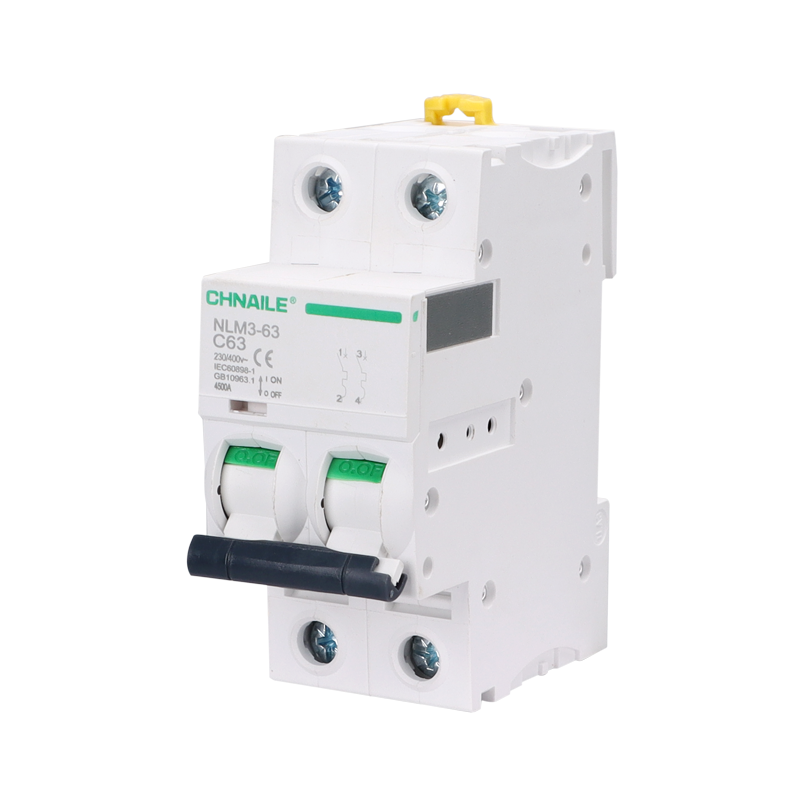
Navigating the intricate fiscal constraints of large-scale municipal infrastructure deployment and commercial real estate development necessitates a profound paradigm shift in how electrical enclosures are specified and assembled. For procurement directors and lead structural engineers operating within heavy-volume switchgear fabrication facilities, the habitual over-specification of internal protective components represents a massive, invisible drain on operational profitability. When drafting the internal architecture for secondary consumer units, commercial office lighting arrays, or localized HVAC branch circuits, specifying expensive 6kA or 10kA miniature circuit breakers universally across the entire network is a fundamental engineering miscalculation. Extensive short-circuit prospective calculations consistently demonstrate that fault currents at the absolute terminal ends of a commercial distribution grid rarely exceed a few thousand amperes due to the inherent dampening resistance of extensive cable runs. The CHNAILE NLM3-63 platform is deliberately architected to exploit this exact physical reality, providing an unyielding solution for aggressive Bill of Materials (BOM) rationalization. By engineering this specific 2-Pole 63-Ampere alternating current mechanism to safely and violently extinguish short-circuit plasmas up to a strict 4500-Ampere (4.5kA) threshold, we provide panel builders with the absolute optimum cost-to-performance ratio. Integrating this highly economized yet structurally resilient component into your downstream commercial circuits allows your purchasing department to drastically curtail aggregate raw material expenditures. This calculated value-engineering strategy directly empowers your enterprise to submit highly aggressive, financially compelling bids on high-volume government and private sector tenders without sacrificing a single degree of strict IEC 60898-1 regulatory compliance.

The commercial viability of a modern switchboard assembly plant extends far beyond raw component pricing; it is inextricably linked to the ergonomic efficiency and velocity of the factory floor itself. Time expended by assembly technicians struggling to mount, align, or replace stubborn components on a crowded DIN rail translates directly into escalating labor overhead and diminished profit margins. A meticulous mechanical examination of the CHNAILE NLM3-63 chassis reveals a structural enhancement explicitly designed to accelerate production throughput. Observing the uppermost crest of the polymer housing, one immediately identifies the integration of distinct, high-visibility yellow locking mechanisms. Unlike traditional circuit breakers that relegate the mounting spring-clips to the bottom of the device—a design that forces technicians to awkwardly pry underneath congested, fully wired copper comb busbars during a replacement or quality control rerouting—these top-mounted yellow clips fundamentally alter the extraction dynamics. Your assembly personnel can now effortlessly release the tension from the top of the rail, allowing the entire 2-Pole block to pivot smoothly away from the live busbar without disturbing the intricate wiring matrices below it. This sophisticated approach to human-machine ergonomics minimizes hand fatigue, radically reduces the potential for collateral damage to adjacent sensitive electronics during panel modifications, and ensures that the final distribution boards you deliver to municipal clients offer an unprecedented level of maintenance accessibility for their field electricians. Furthermore, the inclusion of vibrant green visual indicator windows directly beneath the operational toggles provides an unmistakable, physical confirmation of contact separation, a critical safety mandate during Lockout/Tagout (LOTO) procedures in complex commercial environments.
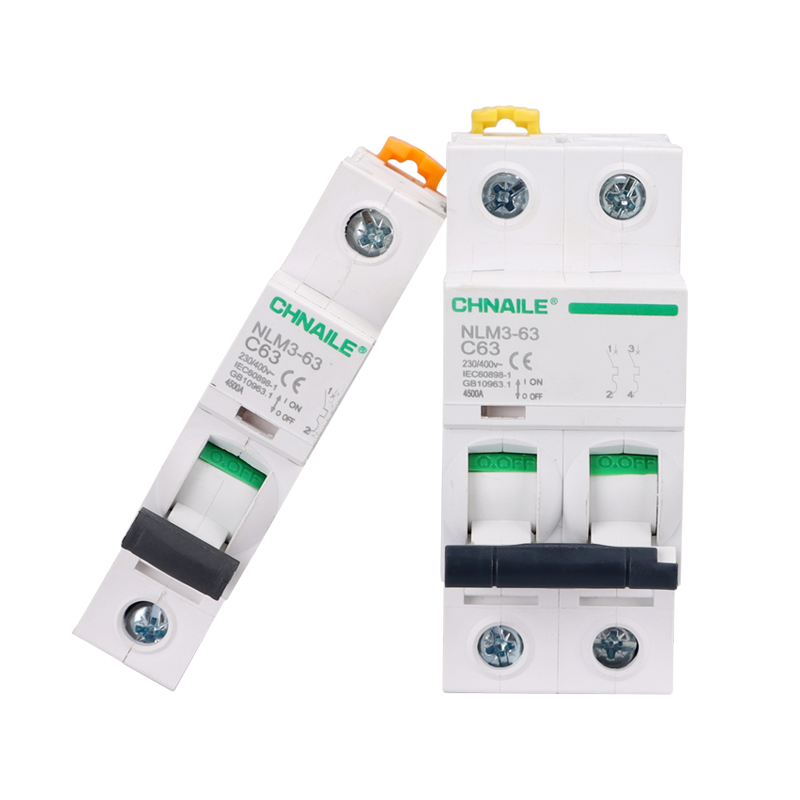
Securing long-term dominance in the global electrical infrastructure sector, however, requires more than economical procurement and rapid assembly; it demands absolute supply chain sovereignty and the capability to project a commanding, proprietary brand identity. Relying on an opaque network of intermediary wholesale distributors inevitably forces panel builders to populate their bespoke steel enclosures with generic, visually mismatched components, thereby diluting their manufacturing prestige and exposing their operations to volatile commodity fluctuations. CHNAILE is structurally positioned to completely dismantle this outdated sourcing model by functioning exclusively as your highly elastic, direct-to-factory production engine. We acknowledge that the featured 2-Pole 63A unit is merely a baseline requirement within a vast operational spectrum. We possess the sophisticated industrial agility to custom-fabricate this exact cost-optimized architectural profile across a comprehensive array of configurations, spanning from compact 1-Pole layouts for localized logic routing up to complete 4-Pole structures, with precise amperage tuning available from a sensitive 6 Amps up to the 63 Ampere maximum. We aggressively push this parametric scalability into the realm of absolute aesthetic control. Should your corporate design guidelines or a specific commercial contract require the exterior thermosetting polymer housing to be injection-molded in a proprietary brand color to differentiate your switchgear from market competitors, our facilities will execute those exact chromatic directives. We seamlessly manage the entire spectrum of OEM private-label branding, alongside designing bespoke retail and bulk packaging boxes to integrate flawlessly into your localized assembly line logistics. Guaranteeing this immense level of personalized customization whilst ensuring absolute electro-mechanical fidelity requires the complete abandonment of variable manual labor. The intricate bimetallic tensioning and the alignment of the internal arc-quenching chambers within these devices are executed exclusively by our state-of-the-art smart automated production lines, ensuring sub-millimeter robotic precision. Subsequently, every single custom-ordered unit must navigate a rigorous gauntlet of computerized smart inspection equipment, verifying exact thermal tripping latencies against international baselines prior to global export. We strongly encourage procurement executives, chief electrical designers, and switchboard fabricators seeking to eradicate generic component sourcing to initiate a direct, high-level technical dialogue with our manufacturing team via WhatsApp at +86 15985210820. Partner directly with our smart factory to engineer absolute power resilience, aggressive cost optimization, and unparalleled proprietary branding into your global commercial distribution boards.