Nale Electric is willing to work together with domestic and foreign merchants to create brilliance!

Views: 0 Author: Site Editor Publish Time: 2026-10-01 Origin: Site
Facility managers and system integrators face a critical challenge today. You must ensure absolute reliability in high-current low-voltage distribution networks. These demanding electrical systems frequently handle massive loads up to 6300A. A single failure can cause catastrophic facility downtime and compromise personnel safety. You need hardware capable of providing seamless integration alongside flawless electrical protection.
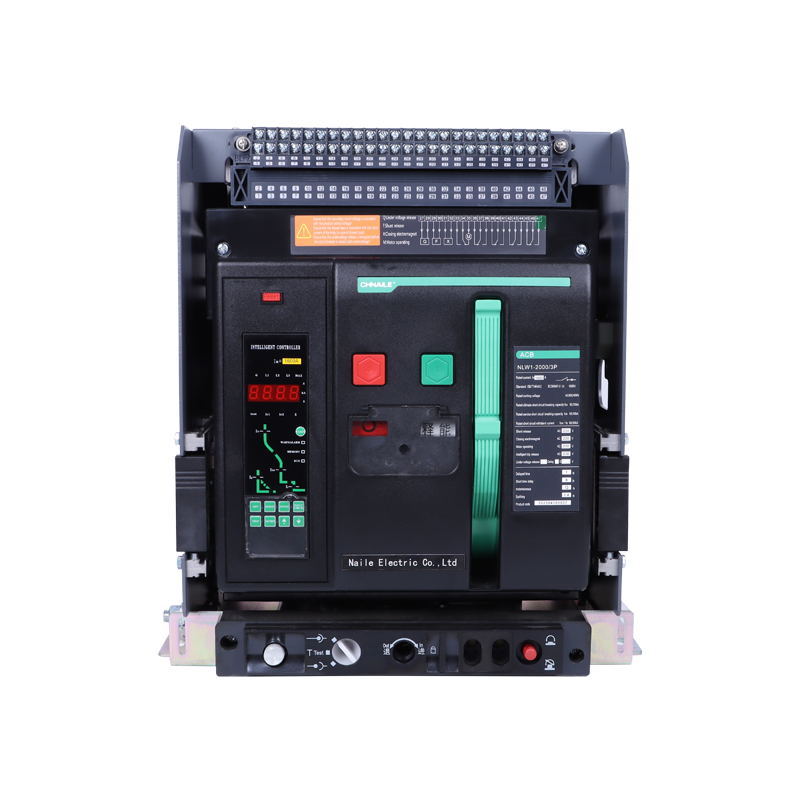
The DW45 Air Circuit Breaker serves as an industry-standard framework for these demanding environments. It safely handles massive short-circuit currents while maintaining continuous power flow. Engineers worldwide rely on it for both baseline protection and advanced energy management. Modern infrastructure simply demands more than basic trip mechanisms. Facilities require smart telemetry, robust mechanical designs, and adaptable configurations.
This guide provides an evidence-based framework for specifying and evaluating these essential units. You will learn how to select components across standard commercial setups and heavy industrial architectures. We also cover specialized implementations like smart grids and PV solar arrays. By following these guidelines, you can ensure absolute reliability in your next electrical distribution project.
Broad Rating Spectrum: Covers frame sizes from 1600A to 6300A, supporting system architectures from standard commercial to heavy industrial.
Structural Flexibility: Available in Fixed and Draw-out types, allowing engineers to balance initial CapEx against long-term maintenance accessibility.
Smart Grid Readiness: Modern DW45 units integrate intelligent controllers with Modbus communication for real-time energy monitoring and microgrid automation.
Application Specificity: Specialized variants exist for high-voltage renewable systems (e.g., AC800V for PV Solar) requiring rigorous compliance and custom design parameters.
Electrical engineers must carefully match breaker dimensions to the expected load. The industry typically standardizes these breakers into distinct frame sizes. Common classifications include 2000A, 3200A, 4000A, and 6300A. Each physical frame can accommodate various trip unit settings below its maximum threshold. For example, a 2000A frame might host a 1600A trip unit. You should match the frame size to your continuous load requirements carefully. Over-specifying a frame size wastes valuable panel space and inflates initial capital expenditures. Conversely, under-specifying leads to dangerous thermal overload. We recommend calculating your maximum continuous load and adding a standard 20% safety margin. This approach guarantees safe operation without unnecessary bloat.
Voltage ratings define where you can safely deploy these devices. Standard commercial facilities typically operate on AC400V distribution networks. Standard breakers handle these conventional voltages easily. However, heavy industrial plants and renewable energy sectors push these boundaries higher. These specialized environments frequently demand AC690V or even AC800V ratings. You must verify the breaker insulation and arc chute design match your system voltage.
Breaking capacity dictates how the unit handles fault conditions. You must evaluate two critical metrics defined by IEC 60947-2 standards. Ultimate Short-Circuit Breaking Capacity (Icu) represents the maximum fault current the breaker can interrupt once. Service Short-Circuit Breaking Capacity (Ics) represents the fault current it can interrupt repeatedly while remaining operational. High-tier devices often boast an Ics rating equal to 100% of their Icu rating. This parity guarantees maximum reliability after a severe fault event.
Choosing between 3-Pole and 4-Pole configurations requires analyzing your system grounding. A 3-Pole configuration interrupts the three active phase conductors. Engineers typically specify 3-Pole units for balanced industrial loads and standard TN-C grounding systems. A 4-Pole configuration adds isolation for the neutral conductor. You should specify a 4-Pole DW45 Air Circuit Breaker when dealing with TN-S systems. They are also mandatory when facing severe load imbalances. High harmonic distortion from non-linear loads often necessitates switching the neutral. This complete isolation prevents dangerous feedback currents during maintenance procedures.
Fixed units mount permanently to the switchgear backplate. They offer a highly compact footprint for constrained electrical panels. This structural choice represents the most economical upfront investment. We consider this configuration best for cost-sensitive installations experiencing infrequent maintenance cycles. Standby generator feeds and secondary distribution nodes often utilize fixed units. However, they carry a distinct operational limitation. Servicing a fixed unit requires a full system shutdown. Technicians must perform complex disassembly to reach internal components. This extended downtime renders them unsuitable for mission-critical production lines.
Draw-out units consist of a moving breaker body and a stationary cradle. The moving portion slides smoothly into the permanent cradle on sliding rails. This mechanical separation drastically reduces Mean Time To Repair (MTTR). Technicians can extract the active breaker safely without unbolting massive copper busbars. The facility experiences minimal system downtime during routine maintenance or urgent replacements. Implementation requires careful switchgear design. The panel must accommodate specific spatial requirements for the extraction cradle. You must also account for robust mechanical interlocks. These interlocks prevent operators from withdrawing the breaker while it remains closed under load.
Facility managers must justify the premium cost of draw-out units based on uptime criticality. Data centers and hospital networks cannot tolerate extended maintenance shutdowns. In these environments, the operational savings from reduced downtime rapidly offset the higher initial price.
Configuration Comparison Matrix
Feature | Fixed Configuration | Draw-out Configuration |
|---|---|---|
Initial Capital Cost | Lower | Higher |
Panel Space Required | Minimal | Moderate to High |
Mean Time To Repair (MTTR) | Extended (Hours) | Minimal (Minutes) |
Maintenance Downtime | Requires Full Shutdown | Isolated Replacement |
Ideal Application | Secondary Distribution | Mission-Critical Mains |
Legacy electrical systems relied on basic thermal-magnetic protection mechanisms. These older bimetallic strips reacted slowly to changing environmental temperatures. Today, modern infrastructure utilizes microprocessor-based intelligent controllers. These advanced digital trip units offer precise, programmable LSI (Long-time, Short-time, Instantaneous) protection curves. They sample current waveforms thousands of times per second. This digital accuracy prevents nuisance tripping while guaranteeing immediate response to genuine faults.
Modern trip units function as comprehensive power quality analyzers. They capture highly detailed operational data across all phases. This telemetry includes real-time current, precise voltage, harmonic distortion levels, and power factor measurements. We consider this data invaluable for modern predictive maintenance strategies. Facility operators can monitor these metrics to identify failing downstream motors before they short-circuit. Furthermore, system integrators use this data for automated load shedding. When grid supply drops, the controller can seamlessly disconnect non-essential loads to preserve critical operations.
Intelligent controllers integrate directly with broader facility management networks. They typically utilize standardized communication protocols like Modbus RTU over RS485 connections. This connectivity allows remote operators to monitor breaker status and adjust trip settings from a central control room. You can integrate these units seamlessly into existing SCADA (Supervisory Control and Data Acquisition) systems. However, this connectivity introduces integration realities you must manage. You must address software compatibility and perform rigorous firmware verification. Tying an intelligent breaker into an existing smart grid requires matching baud rates and parity settings precisely. Failure to standardize these digital parameters will cause communication timeouts.
The renewable energy sector imposes unique demands on low-voltage switchgear. Photovoltaic solar arrays routinely operate at higher AC voltages to minimize transmission losses. A standard commercial breaker cannot handle these specialized conditions safely. Solar applications demand units rated specifically for AC800V operations. Furthermore, solar microgrids experience bidirectional power flow. The breaker must interrupt faults effectively regardless of the current direction. Specialized internal arc chutes extinguish these high-voltage DC-like arcs rapidly. You must select units engineered explicitly for renewable power characteristics.
Heavy industrial plants rely on massive motors that draw immense starting currents. Standard breakers might interpret these starting spikes as short circuits. To prevent this, you must specify coordination parameters correctly. Category B utilization breakers feature a specific short-time withstand current (Icw) rating. This rating allows the breaker to endure a massive fault current for a brief period (typically 1 second) without immediately tripping. This delay ensures downstream branch breakers clear the localized fault first. Your main switchboard remains online, preserving power to unaffected production zones.
Large-scale infrastructure projects rarely fit perfectly into standardized catalogs. Systems ranging from 1600A to 5000A often require extensive OEM/ODM customization. You might need non-standard busbar connections to match legacy switchgear dimensions. Coastal facilities demand specialized environmental treatments like advanced anti-corrosion plating on all copper contacts. Complex backup generation networks require integrated mechanical interlocking designs. These custom cable interlocks ensure multiple breakers cannot close simultaneously. Partnering with an experienced DW45 Air Circuit Breaker manufacturer guarantees these exact mechanical and environmental specifications are met during production.
Procuring heavy-duty electrical components requires strict adherence to international safety standards. You must mandate comprehensive verification of IEC 60947-2 compliance. Do not accept internal manufacturer declarations alone. You should demand relevant local third-party testing certificates. Recognized authorities like KEMA, CE, and CB provide independent verification of breaking capacities. These certifications guarantee the unit will perform exactly as specified during a catastrophic fault. Missing certifications represent a massive liability risk for facility owners.
A reliable component requires a robust manufacturing ecosystem. You must evaluate the manufacturer's automated testing facilities closely. High-quality production lines utilize automated robotic calibration for every single intelligent trip unit. This process eliminates human error from the protection curve settings. Additionally, you should scrutinize the manufacturer's quality control for heavy-duty mechanical components. Look for transparent warranty terms covering the main chassis. You must also confirm long-term spare parts availability. Intelligent trip units and motor operating mechanisms require occasional replacement over a twenty-year lifecycle.
Engineers should follow a strict sequential logic when finalizing their procurement specifications. We recommend applying the following standardized evaluation process:
Define the absolute maximum continuous current and operational voltage for the specific network node.
Determine the structural need by comparing facility uptime criticality against upfront budget (Draw-out vs. Fixed).
Specify the required communication protocols and smart monitoring parameters needed for SCADA integration.
Audit the supplier for their ability to provide industry-specific custom designs and valid third-party certifications.
The specification of low-voltage distribution switchgear is an exacting engineering discipline. You cannot treat these devices as simple commodity purchases. They serve as highly configurable safety and management assets for your critical infrastructure. Selecting the right frame size, breaking capacity, and structural configuration determines the long-term viability of your facility network. By integrating intelligent controllers, you transform passive safety devices into active energy management tools.
Your next step requires careful documentation of your facility's electrical demands. We encourage buyers to compile comprehensive single-line diagrams detailing fault current calculations. You must precisely define your digital communication protocol needs upfront. Finally, consult directly with a qualified manufacturer's engineering team. Their technical expertise will help validate your exact specifications and ensure seamless integration into your final switchboard design.
A: No. It requires a specific variant engineered with upgraded arc chutes and insulation to safely interrupt higher voltages without arc flashover.
A: A standard unit triggers on overcurrent/short-circuit based on physical or basic electronic thresholds. An intelligent controller offers digital parameter setting, LCD monitoring, network communication, and harmonic analysis.
A: Generally no, as the fundamental chassis, cradle, and busbar alignments differ. The structural choice must be finalized during the initial switchgear design phase.