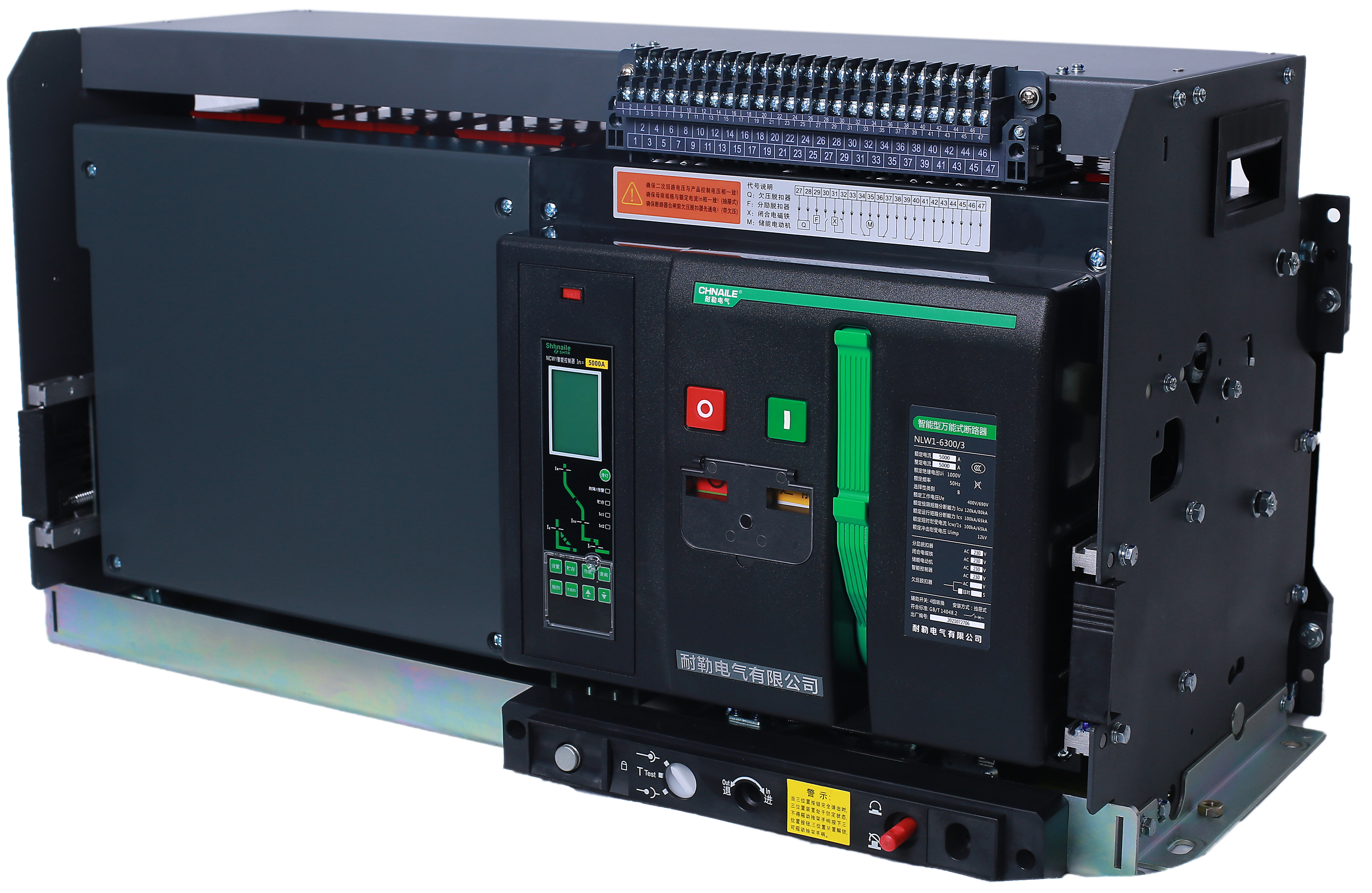
Nale Electric is willing to work together with domestic and foreign merchants to create brilliance!

Views: 0 Author: Site Editor Publish Time: 2026-10-15 Origin: Site
The ABB Emax 2 stands as an industry-standard titan in modern switchgear. However, panel builders and facility engineers frequently face complex procurement challenges demanding a pivot. You might encounter extended lead times, rigid integration requirements, or strict budget constraints during major facility upgrades.
Replacing a flagship Air Circuit Breaker requires much more than a simple physical swap. True substitution demands matching a precise physical footprint, rigorous thermal metrics, and highly advanced trip unit intelligence. You simply cannot compromise on mechanical performance when safeguarding critical power infrastructure.
We designed this vendor-neutral guide to provide a clear technical framework for engineers and buyers. You will learn how to evaluate reliable ABB Emax 2 Alternatives based on breaking capacity, retrofit viability, and digital compliance. Our goal is to help you secure robust system protection while expertly navigating modern supply chain realities.
Equivalency is more than amperage: True alternatives must match the Emax 2's short-time withstand current (Icw) and breaking capacity (Icu) across specific frame sizes.
Trip unit intelligence dictates the swap: If your architecture relies on ABB’s Ekip Touch/Hi-Touch ecosystems, alternatives must offer equivalent IEC 61850 or Modbus TCP communication capabilities.
Beware of "drop-in" claims: Direct physical replacements are rare; factor in adapter kits, busbar modifications, and switchgear door cutouts.
Compliance is non-negotiable: Any shortlisted alternative must hold equivalent UL 1066 or IEC 60947-2 certifications for your operating region.
Global supply chain dynamics heavily influence modern switchgear manufacturing. Component shortages frequently impact production schedules for high-tier electrical equipment. Regional availability issues force many panel builders to seek secondary, highly reliable suppliers. Establishing a robust backup vendor strategy keeps your project timelines completely intact. It prevents expensive delays during critical construction phases.
Legacy panel modifications also drive broad market evaluations. Upgrading older infrastructure presents unique challenges. When facility managers replace aging models like the ABB Novomax or Megamax, they rarely pursue an automatic Emax 2 upgrade. Physical dimensions differ significantly between legacy and modern frames. A broader market evaluation often reveals highly compatible options. These alternatives sometimes fit legacy enclosures better than the manufacturer's own newer models.
Budget optimization plays a crucial role in procurement decisions. Advanced power management features are incredible engineering achievements. However, engineers often over-spec these capabilities for standard distribution applications. Standard commercial panels rarely require native cloud connectivity or advanced harmonic analysis. Selecting strategically chosen alternatives optimizes your budget. You only pay for the precise electrical functionality your facility actually needs.
Benchmarking physical footprint against exact amperage ratings is absolutely critical. You must compare external dimensions meticulously. We benchmark these against the Emax 2 frames, which range from the compact E1.2 up to the massive E6.2 scaling to 6300A. A replacement Air Circuit Breaker must perfectly match your panel depth and width.
Pole configuration represents another non-negotiable metric. You must address the exact differences between 3-pole and 4-pole configurations. Four-pole breakers manage neutral protection inherently. Switching from a 4-pole legacy device to a 3-pole alternative creates severe compliance and safety issues. You must verify pole spacing matches your existing copper busbars exactly.
Fault clearing capabilities define breaker safety. You must match the Ultimate Short-Circuit Breaking Capacity (Icu). This rating dictates the maximum fault current the device can safely interrupt once. Additionally, you must verify the Service Breaking Capacity (Ics). The Ics rating proves the breaker can clear a specific fault and remain fully operational.
Engineers must heavily emphasize Short-Time Withstand Current (Icw). This specific metric guarantees proper selectivity and system coordination. Icw defines how much current the breaker can withstand for a short duration, typically one second. High Icw ratings allow upstream breakers to remain closed while downstream breakers clear localized faults. This prevents total facility blackouts during minor electrical events.
Modern protection relies entirely on the Electronic Trip Unit. You need to map standard LSI (Long, Short, Instantaneous) or LSIG (including Ground fault) protection profiles. Compare your alternative ETU directly against ABB's Ekip series. Both units must trigger at the exact same custom time-current curves.
Evaluate embedded power metering accurately. Premium alternatives must offer Class 1 accuracy for energy measurement. This eliminates the need for external metering devices. You should also check for internal harmonic analysis capabilities. Modern facilities utilize numerous nonlinear loads. Managing Total Harmonic Distortion (THD) locally inside the breaker prevents dangerous overheating.
Core Specification Comparison Framework
Specification Metric | Primary Evaluation Focus | Critical Engineering Requirement |
|---|---|---|
Physical Frame Size | Height, Width, Depth dimensions | Must fit existing switchgear cubicle limits. |
Rated Current (In) | Continuous load capacity | Match existing load demands (e.g., 800A to 6300A). |
Breaking Capacity (Icu/Ics) | Maximum fault interruption | Ensure equal or higher kA ratings than the original. |
Withstand Current (Icw) | System selectivity support | Maintain 1-second delay integrity for coordination. |
ETU Protection | LSI / LSIG curves | Replicate existing time-current trip settings exactly. |
Premium alternatives provide exact feature parity. Conceptually, devices like the Schneider Electric MasterPact MTZ or Siemens 3WA/3WL operate in this tier. Panel builders use these models for highly complex, data-heavy environments.
Evaluate these premium models through a strict digital integration lens. They offer exceptionally high integration capabilities. You will find native cloud connectivity and Bluetooth-enabled configuration features. They also utilize equivalent modular accessories. Engineers can swap digital protection modules or upgrade firmware without replacing the entire trip unit hardware. This modularity mirrors the flexibility found in the Ekip ecosystem.
Value-engineered models serve completely different operational goals. Conceptually, devices like the Eaton Series NRX or Mitsubishi Super AE fit this category perfectly. They prioritize rugged simplicity over complex digital networking.
Evaluate these models based on pure mechanical cost-efficiency. They frequently offer smaller physical footprints, saving valuable panel space. They deliver incredibly reliable mechanical performance. Facility managers specify these models for standalone installations. If your specific application lacks deep digital-grid integration requirements, these alternatives provide massive budget advantages. You gain excellent protection without purchasing unnecessary software licenses.
Mechanical installation poses the highest risk during any breaker changeover. You must navigate physical space constraints carefully.
Common mistake: Ignoring the minimum safety clearance required around the arc chutes.
Best practice: Always verify the phase-to-phase spacing matches your existing bus arrangement perfectly.
Busbar realignment is notoriously difficult. Small millimeter differences in copper busbar alignment cause major installation delays. Never underestimate the engineering hours required to adapt phase connections. You will likely need custom-machined copper adapter plates. Poorly fitted copper connections create severe hot spots. These hot spots eventually lead to catastrophic thermal failure under heavy loads.
Cradle and chassis compatibility presents another severe hurdle. Swapping draw-out models is highly complex. The cassette chassis holding the breaker is entirely proprietary to each manufacturer. A competitor's breaker will never slide into an ABB Emax 2 cradle. You usually need complete cradle replacement. Alternatively, you must procure specialized cradle-in-cradle retrofit kits. These kits adapt the new breaker safely into the existing legacy cassette.
Control wiring introduces significant electrical risks. Changing over secondary disconnects requires extreme care. Mismatched auxiliary contacts, shunt trips, and motor operator voltages lead to immediate failure. A 24V DC closing coil will instantly burn out if hit with a 110V AC control signal. You must meticulously verify all accessory voltage ratings before authorizing the final panel installation.
Modern electrical infrastructure relies heavily on data visibility. Evaluate alternatives based on their specific industrial protocol interoperability. Your new breaker must seamlessly connect to existing SCADA or Building Management Systems (BMS). Look for native support for Profibus, Profinet, DeviceNet, or Modbus TCP. A lack of native communication requires bulky external protocol converters, introducing unneeded failure points.
Cybersecurity standards require strict validation. Breakers now act as highly connected IoT edge devices. You must verify that alternatives meet minimum cybersecurity baselines. Connected energy management demands encrypted communication. Features like secure boot, digitally signed firmware, and role-based access control prevent malicious grid tampering. A vulnerable trip unit compromises your entire facility network.
Regulatory certifications dictate legal and insurance compliance. Compliance is absolutely critical and completely non-negotiable. Any shortlisted alternative must definitively meet globally recognized safety standards. For global and European markets, verify IEC 60947-2 compliance. North American sites require strict UL 1066 or ANSI C37 validation. Failing to match these exact certifications voids facility insurance policies and violates local electrical codes.
Moving from technical evaluation to active procurement requires a structured approach. Follow these precise steps to ensure a flawless transition.
Conducting a Site Audit: Always conduct a comprehensive physical audit first. Measure switchgear depth, width, and door cutout dimensions carefully. Assess the existing thermal conditions within the panel. High ambient temperatures might require derating the new alternative breaker.
Mapping the Wiring Schematic: Trace every single auxiliary wire. Identify the exact voltage for the under-voltage release and closing coils. Document the existing PLC communication protocols currently in use.
Vendor Support & Spares Availability: Evaluate the alternative manufacturer’s specific regional support. Check their Service Level Agreement (SLA) response times. Review the warranty terms thoroughly. Ensure local distributors stock critical mechanical spares like arc chutes and charging motors.
Pilot Testing: Never phase out an entire facility blindly. We highly recommend initiating a single-panel retrofit pilot first. Install one alternative unit. Monitor its thermal output and digital network performance for a month before authorizing a facility-wide rollout.
Choosing proper ABB Emax 2 Alternatives requires a careful, highly strategic balance. You must weigh upfront hardware availability against long-term engineering integration efforts. Securing hardware quickly matters, but adapting busbars and control wiring takes time. Careful planning ensures you do not trade a supply chain delay for an installation disaster.
Always maintain a skeptical technical eye. Paper specifications never guarantee immediate physical compatibility inside your specific switchgear. Frame dimensions, cradle designs, and accessory voltages vary wildly across manufacturers. You must validate every single metric against your exact panel schematics before issuing purchase orders.
Take actionable steps today to protect your facility infrastructure. Contact our technical sales engineering team for a custom retrofit compatibility assessment. We can help you analyze your current panel dimensions and protection requirements. We also encourage you to request a detailed spec-comparison matrix to thoroughly refine your vendor selection process.
A: No. Physical dimensions and busbar connections vary heavily by manufacturer. You cannot simply slide a competitor's unit into an existing chassis. Specialized retrofit kits, often called cradle-in-cradle solutions, are strictly required for a seamless and safe physical swap.
A: Tier-1 competitors offer equivalent digital touchscreens and embedded power quality metrics. They provide robust LSI protection and energy monitoring. However, legacy integration into ABB-specific software environments, like ABB Ability, will be permanently lost during the changeover.
A: Generally, no. Internal components like under-voltage releases, motor operators, and closing coils are strictly proprietary. They are engineered for a specific breaker's internal mechanical design. You must purchase new accessories native to your chosen alternative model.
A: Beyond matching continuous current (In), matching the Short-Time Withstand Current (Icw) for 1 second is critical. This specific metric ensures cascade protection and system selectivity remain completely intact during downstream fault events.