Nale Electric is willing to work together with domestic and foreign merchants to create brilliance!

Views: 0 Author: Site Editor Publish Time: 2026-09-12 Origin: Site
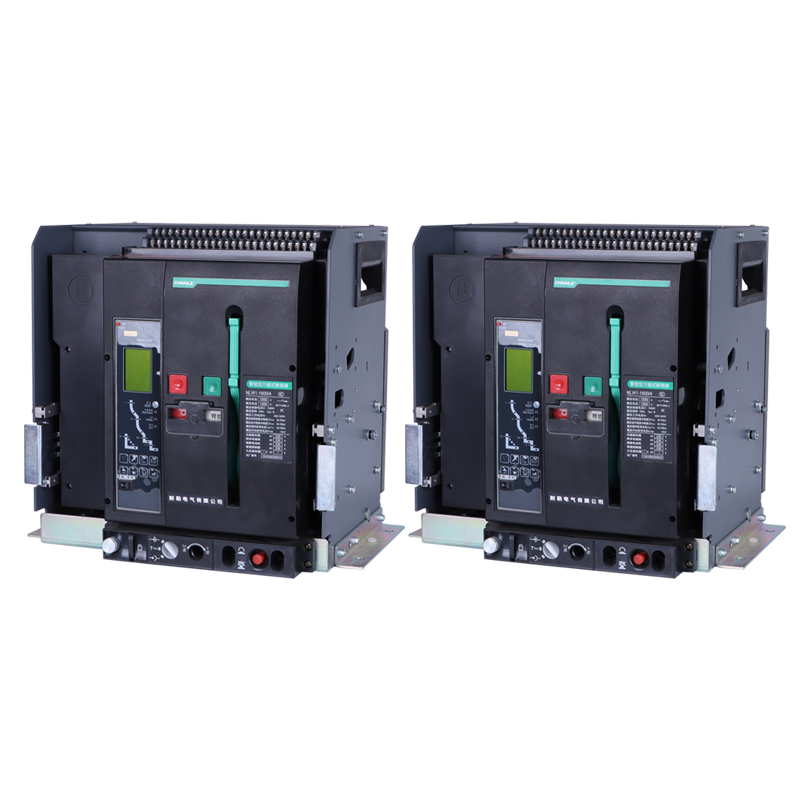
Manual air circuit breakers are entirely sufficient for basic isolation and protection in simple low-voltage networks. They serve as a reliable, cost-effective baseline for many standard electrical environments. Operators can easily interact with them during routine shutdowns. However, upgrading to a motorized air circuit breaker fundamentally shifts the component. It transforms from a passive protection device into an active, intelligent node within automated networks.
Specifying a motorized mechanism inherently increases upfront capital costs. It also adds layers of control wiring complexity. Therefore, engineers must rigorously justify this decision using strict operational requirements. You need specific demands regarding personnel safety, distant switching capabilities, and overall system redundancy to validate the upgrade. Facility managers cannot simply buy motorized units by default. In this article, we will evaluate the distinct operational limits of manual breakers. You will discover exactly when your facility should make the transition to motor-driven solutions.
Automation Reliance: Motorized ACBs are mandatory for Automatic Transfer Switch (ATS) systems and grid synchronization.
Safety Compliance: Remote operation capabilities remove personnel from the arc flash boundary during live switching.
System Integration: Integration with SCADA or building management systems requires motor-operated mechanisms combined with intelligent trip units.
Maintenance Trade-offs: The addition of a spring-charging motor introduces mechanical wear points that require specific preventative maintenance schedules.
We must first properly frame the problem surrounding manual operations. Manual ACBs explicitly require a physical operator presence. A technician must stand directly in front of the panel. They manually pump a heavy handle to charge the mechanical spring. Then, they push a physical button to close the breaker. This human dependency introduces unacceptable latency into the system. Mission-critical facilities cannot afford such delays during rapid power restorations.
A motorized ACB elegantly solves this operational bottleneck. It utilizes a compact, integrated electrical motor. This motor automatically charges the closing spring immediately after a trip event or an open command. Consequently, this continuous action enables immediate breaker readiness. The system stands fully prepared for the next rapid closure sequence. Facility operators never have to wait for manual spring charging during an emergency.
Engineers must carefully evaluate the core cost-to-value ratio. Compare the baseline capital expenditure of standard industrial switchgear against the long-term operational savings. Centralized control significantly reduces costly system downtime. You spend more money upfront on the motor mechanisms and control wiring. However, you recover these costs through faster response times and reduced labor hours during switching procedures.
Cost-to-Value Comparison Chart
Control Mechanism | Initial Capital Expenditure | Operational Latency | Human Intervention Required | Ideal Application |
|---|---|---|---|---|
Manual | Low | High (Minutes) | Yes (Physical presence) | Standalone loads, infrequent switching |
Motorized | Moderate to High | Very Low (Seconds) | No (Fully automated) | Mission-critical facilities, automated grids |
Certain facility setups absolutely demand motor-driven switching. Modern infrastructure often cannot function safely or efficiently using manual components alone.
Hospitals and data centers rely heavily on seamless power transitions. Moving between the main utility grid and backup generator power demands extreme speed. These transitions require robust automatic control. Motorized breakers execute complex make-before-break or break-before-make sequences perfectly. They complete these actions without any direct human intervention. Manual breakers simply cannot facilitate an ATS system.
Large manufacturing plants utilize centralized control rooms. Remote operation capabilities allow facility managers to act decisively. They can instantly open or close circuits from a secure location miles away. This capability is absolutely critical for large-scale power distribution networks. Modern switchgear infrastructure often spans multiple independent substations across a vast campus. Forcing a technician to physically drive to a distant substation wastes highly valuable time.
Paralleling backup generators to the main busbar requires exact timing. The voltage, frequency, and phase angle must perfectly match the grid. Automated closure enables precise, millisecond-level synchronization. Human operators physically cannot match this necessary speed. A motor-driven breaker receives the command from the sync-check relay and closes instantly. Additionally, automated systems can shed non-essential loads rapidly to prevent total generator collapse.
Safety remains a dominant factor in modern switchgear design. Regulatory bodies continuously push for safer operational environments.
Standard regulatory frameworks, such as NFPA 70E, heavily emphasize the hierarchy of physical controls. Distance serves as your absolute best defense against a catastrophic arc flash. Remote control capabilities inherently improve this vital safety protocol. It physically removes your electrical operators from the dangerous blast radius during live switching operations. Operators can safely toggle the breaker from an adjacent room using a remote panel.
Industrial facilities often face sudden safety events requiring rapid de-energization. Chemical plants or oil refineries need instant power isolation during emergencies. Motorized breaker configurations pair highly effectively with undervoltage coils or shunt trip mechanisms. These advanced setups allow for immediate, facility-wide power shutdowns. You can neutralize electrical hazards safely before the situation escalates out of control.
Some technicians incorrectly assume a motorized breaker is always live and dangerous. This assumption represents a significant misunderstanding of the technology. Modern switchgear incorporates incredibly robust mechanical interlocks. Manual override features ensure comprehensive LOTO safety for maintenance crews. You physically padlock the mechanism to prevent any unexpected motor charging. This guarantees the spring remains safely discharged while technicians work inside the cabinet.
Upgrading your facility is not purely advantageous. You must acknowledge and plan for specific implementation risks. Adding automation introduces new potential failure points.
Motor operators require a highly reliable auxiliary control voltage source. Typical industrial setups use 24V DC, 110V AC, or 220V AC. If your facility loses this specific control power, you instantly neutralize the entire automation advantage. The breaker simply will not charge. Therefore, engineers must run extensive secondary wiring. This wiring requires meticulous installation and diligent labeling.
You must acknowledge the physical realities of the equipment. The spring-charging motor is fundamentally a moving mechanical part. It remains constantly subject to physical wear, dust ingress, and internal thermal stress. The gears can strip over time. The motor windings can degrade due to frequent, rapid cycling.
The motor purely handles the physical mechanical switching action. However, the underlying circuit protection relies entirely on the separate electronic trip unit. The Long-time, Short-time, and Instantaneous (LSI) settings must correctly match the specific electrical load. You must calibrate the trip unit perfectly alongside the mechanical operation speed. A mismatched trip unit will trigger nuisance tripping.
Facility engineers often severely underestimate the spring-charging motor's peak inrush current. An undersized CPT will ultimately fail under load. This catastrophic failure typically happens when multiple breakers attempt simultaneous charging operations after a broader campus outage. The combined inrush current drastically exceeds the transformer's rated capacity.
Best Practices for Mitigating Implementation Risks:
Always install a dedicated Uninterruptible Power Supply (UPS) specifically for the auxiliary control voltage.
Implement a strict routine of thermal imaging on all auxiliary wiring terminals.
Calculate the total simultaneous inrush current for all motors before sizing your primary CPT.
Physically test the manual charging override handle at least once during annual maintenance.
Common Preventative Maintenance Tasks Table
Component | Potential Vulnerability | Recommended Action | Frequency |
|---|---|---|---|
Charging Motor | Thermal degradation, winding wear | Verify operating current against baseline | Annually |
Gear Mechanism | Friction, grease hardening | Clean and re-lubricate moving parts | Bi-annually |
Auxiliary Contacts | Oxidation causing false PLC signals | Perform micro-ohm resistance testing | Annually |
Trip Unit Integration | Firmware glitches, miscalibration | Conduct secondary injection testing | Every 3-5 Years |
Specifying the correct electrical equipment requires methodical planning. You cannot rely on guesswork when protecting critical infrastructure. Follow these structured steps to ensure precise component selection.
First, rigorously evaluate the expected frequency of operation. Motor mechanisms feature strict, mathematically rated lifecycle limits regarding total mechanical operations. A breaker used for daily load shedding experiences significantly more stress than a main incoming breaker. Check the manufacturer's mechanical operations baseline to ensure it meets your facility's projected usage frequency.
Always perfectly match the motor voltage to the facility's most reliable power source. Connect it to a robust Uninterruptible Power Supply (UPS) or a dedicated DC battery bank. This vital connection ensures full operability during total grid outages. Relying solely on the incoming AC line voltage for motor control guarantees failure during a blackout.
Ensure the main breaker chassis includes sufficient auxiliary status contacts. Your PLC or SCADA system strictly needs real-time feedback to function correctly. It monitors Open, Closed, Tripped, and Spring Charged statuses continuously. Without these communication contacts, the automated system operates completely blind.
Base your final vendor selection on practical field realities rather than just price. Look for rapid replacement part availability in your specific geographic region. Confirm physical retrofit compatibility for existing switchgear lineups. Assess the sheer physical robustness of the motor mechanism itself. Consult heavily with field technicians who actually maintain the equipment.
Specify motorized ACBs explicitly when personnel safety, ATS integration, or centralized automation directly justifies the financial premium. They deliver unparalleled speed, robust remote control, and vital system redundancy for complex networks. Conversely, you should stick to standard manual ACBs for standalone, infrequently operated loads where automation provides zero tangible benefits. As an immediate next step, prompt your facility engineers to carefully review existing single-line diagrams. Identify the critical distribution nodes requiring remote switching upgrades. Finally, consult directly with a specialized switchgear application engineer to finalize your technical specifications and ensure complete regulatory compliance.
A: Yes. Industry-standard motorized ACBs feature a manual charging handle and mechanical pushbuttons for emergency operation if auxiliary power is lost.
A: No. The motorized unit only charges the closing spring. The breaker's internal contacts, arc chutes, and overall fault interruption capacity remain independent of the charging mechanism.
A: Most industrial motors charge the spring mechanism in 3 to 5 seconds, though exact timing depends on the manufacturer and control voltage stability.
A: While both can switch loads remotely, ACBs are designed for high fault-current interruption and infrequent switching. Contactors are designed for millions of operational cycles but cannot safely clear short-circuit faults without upstream protection.