Nale Electric is willing to work together with domestic and foreign merchants to create brilliance!

Views: 0 Author: Site Editor Publish Time: 2026-05-11 Origin: Site
In industrial automation and commercial energy management, the role of electrical infrastructure is shifting fundamentally. The panel board is no longer just a safeguard against overcurrents. Today, it acts as the primary data gateway for facility-wide efficiency. Rising energy costs squeeze operational margins constantly. Utility demand response (DR) requirements add strict operational pressures. Meanwhile, the shift toward High-Mix, Low-Volume (HMLV) manufacturing demands unprecedented flexibility. You need infrastructure doing much more than merely tripping during a fault.
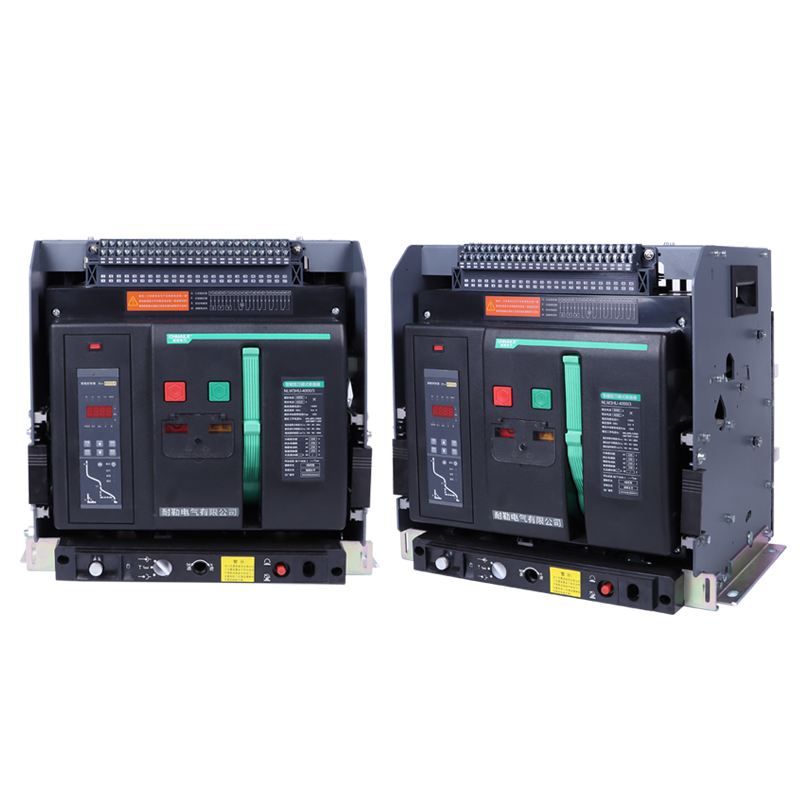
Facility managers constantly evaluate new electrical infrastructure. You face increasingly complex specification choices. For professionals evaluating the next generation of Circuit Breakers, the decision goes far beyond basic amperage ratings. This guide breaks down the imminent technological shifts ahead. You will explore innovations ranging from solid-state interruption to localized edge computing. We provide an evidence-based framework for specifying Smart Circuit Breakers in demanding, high-stakes environments.
Solid-State Innovation: Solid-State Circuit Breakers (SSCBs) are eliminating mechanical wear and electrical arcing, offering microsecond-level fault isolation.
Predictive Over Reactive: High-frequency data sampling (up to 4000Hz) allows smart breakers to predict equipment failure (e.g., motor bearing wear) days before it causes unplanned downtime.
Measurable ROI: While initial costs are 3–5x higher than traditional units, energy optimization and predictive maintenance typically yield a payback period of 4 to 8 years.
Engineering Selection Matters: Successful implementation requires rigorous specification—matching trip curves (Type C vs. Type D) to industrial loads and respecting communication gateway limits in high-interference environments.
Traditional electrical protection relies heavily on mechanical thermal-magnetic responses. These legacy devices operate in a strictly binary manner. They are either safely on or completely tripped. This basic design leaves facilities completely blind to daily energy waste. For example, phantom standby loads often account for up to 23% of baseline energy usage. Without intelligent monitoring, power quality anomalies remain hidden. You only discover problems after a catastrophic failure actually occurs.
Modern architectures solve this specific problem. They bridge conventional electrical protection seamlessly into industrial communication networks. This creates a highly responsive facility backbone.
Sensing-Protection-Coordination Loop: Modern devices integrate internal current transformers (CTs). They utilize sensitive voltage sensors alongside advanced microprocessors. This loop reacts to anomalies dynamically.
Grid-Level Interaction: Connectivity enables direct participation in Utility Demand Response (DR) programs. Facilities can dynamically throttle high-load equipment. You avoid complete line shutdowns during peak Time-of-Use (TOU) pricing windows.
Best Practices: Always map baseline energy usage before upgrading your hardware. This helps identify exact factory zones causing the highest phantom power draw.
Common Mistakes: Do not treat intelligent hardware merely as a remote on/off switch. This completely ignores their powerful, continuous data logging capabilities.
Solid-State Circuit Breakers (SSCBs) represent a massive leap forward. They replace traditional mechanical contacts using semiconductor components. Engineers primarily use IGBTs or MOSFETs for this purpose. This new architecture achieves microsecond-level reaction speeds. Current interruption becomes completely arc-free and totally contactless. Consequently, these components require effectively zero mechanical maintenance over their entire product lifespan.
Furthermore, edge computing transforms basic hardware into highly analytical nodes. Moving AI directly to the breaker level changes everything. It processes electrical waveforms locally. This completely eliminates cloud data transfer latency. Industrial connectivity also moves far beyond basic Wi-Fi or Zigbee protocols. Modern Smart Circuit Breakers integrate seamlessly into complex SCADA systems. They utilize robust protocols including PROFINET, Single-Pair Ethernet (SPE), and CAN bus.
Predictive maintenance stands out as a critical operational benefit. The hardware utilizes continuous monitoring of power variables. They track phase imbalances, harmonic distortion, and contact temperature rises constantly.
Sensors identify micro-faults inside the electrical sine wave instantly.
Algorithms predict imminent insulation breakdown precisely.
Systems warn operators about CNC machine wear up to 48 hours early.
Maintenance teams intervene proactively, directly reducing unplanned downtime.
Selecting the correct hardware demands careful engineering analysis. You must accurately evaluate load profiles alongside specific trip curves. For standard industrial motors, specify standard 3P configurations. Where precise neutral isolation is strictly required, mandate 4P configurations. High-impact loads behave differently. Industrial stamping presses generate exceptionally heavy inrush currents. They strictly require Type D trip curves. Conversely, precision automation setups perform best differently. Standard CNC machining and robotic work cells need Type C curves.
Precision regarding protection parameters matters immensely. Look for highly specifiable threshold settings. Good examples include delayed tripping exactly at 110% rated current. This allows safe operational overloads briefly. You should also demand customizable short-circuit thresholds. These usually range between 5 and 20 times the rated current. Highly sensitive leakage detection remains critical. Setting it around 30mA ensures human safety requirements.
Scalability always faces strict infrastructure limits. Industrial environments often face high electromagnetic interference (EMI). Specifiers must respect network topology constraints carefully. Restrict CAN bus gateway nodes to a maximum of 16 devices. This ensures consistent data fidelity across the factory floor.
Application Type | Hardware Configuration | Recommended Trip Curve | Primary Monitoring Focus |
|---|---|---|---|
Standard Motors | 3P / 4P (if isolated) | Type C or D | Phase imbalance detection |
Heavy Stamping Presses | 3P | Type D | High inrush current tolerance |
Precision CNC / Robotics | 3P | Type C | High-frequency harmonic data |
Best Practices: Always consult your SCADA integrator before finalizing communication protocols. CAN bus behaves very differently compared to PROFINET under heavy factory floor EMI.
Let us address the transparent cost framework directly. Upgrading to intelligent monitoring carries a defined premium. The advanced hardware typically costs three to five times more. This compares directly against standard protective units. You must also factor in professional integration labor. Skilled engineers must configure the network gateways properly.
However, the focus belongs strictly on calculating the payback period. Use this standard formula for accurate budgeting:
Start by combining total Hardware Cost plus Integration Cost.
Subtract your projected Annual Energy Savings.
Subtract the estimated Cost of Prevented Downtime.
When applied correctly, target energy consumption reductions sit between 5% and 10%. This comes primarily via aggressive peak shaving strategies. Standby power optimization also contributes heavily. Combined alongside strict operational continuity, these savings typically result in a 4 to 8 year ROI.
Avoid cutting corners regarding compliance and certification. We strongly warn against using consumer-grade equipment. Uncertified white-label IoT devices fail miserably in industrial settings. Specify only UL or CE-certified hardware. This strictly satisfies industrial insurance underwriting policies. It also meets absolute safety compliance standards across global markets.
Many facility managers ask a crucial question. "What happens if the internal network fails?" This is a perfectly valid concern. However, legitimate Circuit Breakers designed for industrial applications operate safely offline. They never rely on cloud connectivity for critical safety tripping. Local autonomous control ensures seamless protective operation. Thermal-magnetic sensors or localized electronic protection functions operate completely independently. Furthermore, local RS485 or Bluetooth connections act as reliable fallbacks. They maintain access for critical diagnostics during internet outages.
Another common objection involves severe network security vulnerabilities. Are network-connected panels a massive cyber risk? You mitigate this effectively through enterprise-grade solutions. Strong setups employ continuous firmware encryption securely. They utilize strictly isolated Operational Technology (OT) network architectures. You must separate OT from general IT networks. Strict access controls prevent any unauthorized remote tripping commands.
Risk mitigation extends firmly into environmental compliance. Eco-friendly hardware design matters deeply today. Manufacturers increasingly use fully recyclable thermoplastic materials. They implement halogen-free insulation actively. Modern engineering also optimizes the unit's own parasitic standby power consumption. This ensures the protection device runs efficiently itself.
The transition toward intelligent electrical infrastructure is no longer an experimental luxury. It represents a strict baseline requirement. Data-driven energy management demands precise control. Modern HMLV automation facilities require ultimate flexibility to remain profitable.
You can transition smoothly using these actionable next steps:
Audit intelligently: Avoid a chaotic "rip-and-replace" approach entirely. Start by auditing high-load automation cells or critical legacy motors.
Consult engineering: Work closely alongside an applications engineer. Map out a precise pilot deployment covering limited zones initially.
Match specifications: Ensure you perfectly match the correct trip curves. Use Type C or D according to specific machine inrush profiles.
Verify communications: Align your chosen hardware protocols directly. Make sure they integrate into your existing SCADA environment seamlessly.
A: Yes, they feature highly modular designs offering standard DIN-rail compatibility. However, you must carefully measure panel clearances beforehand. Physical space requirements often differ slightly. These modern units house internal current transformers and wireless communication modules internally.
A: SSCBs offer a massively extended operational lifespan. They use semiconductors instead of physical mechanical contacts. They experience zero mechanical degradation over time. They generate absolutely no electrical arcing during faults. This exponentially increases their cycle life under heavy loads.
A: Absolutely. All critical safety mechanisms remain hard-wired or processed locally. The edge microprocessor handles faults directly. Network connectivity strictly handles data logging, remote configuration, and sending predictive alerts. Core fault protection operates completely independently of external networks.