Nale Electric is willing to work together with domestic and foreign merchants to create brilliance!

Views: 0 Author: Site Editor Publish Time: 2026-10-04 Origin: Site
Air Circuit Breakers (ACBs) play a critical role in securing low-voltage distribution networks. Facility managers face a constant procurement dilemma today. Do they maintain legacy systems, or do they upgrade to modern, intelligent protection? We often see this challenge when evaluating traditional power systems against modern alternatives. The legacy equipment offers a rugged, time-tested heritage. Meanwhile, modern solutions provide microprocessor-controlled adaptability and superior electrical precision. Choosing between these generations directly impacts your facility's safety, downtime, and overall operational efficiency.
This article provides an objective, technical, and application-focused comparison of these two technological generations. You will learn the core differences in protection capabilities, physical footprints, and network integrations. Navigating the DW15 vs DW45 Air Circuit Breaker landscape requires a clear understanding of your specific electrical demands. We aim to help electrical engineers and procurement teams make a defensible, data-driven retrofit decision for their facilities.
Technology Generation: DW15 relies on conventional mechanical and basic electronic tripping; DW45 utilizes advanced intelligent microprocessor controllers.
Protection Precision: DW45 offers multi-stage, programmable protection (LSIG) and network communication, while DW15 is limited to standardized overload and short-circuit protection.
Physical Footprint: DW45 features a more compact, modular design with higher breaking capacities for its size compared to the bulkier DW15.
Application Suitability: DW15 is suitable for basic, budget-constrained replacements in legacy panels; DW45 is mandatory for modern smart grids, automated facilities, and SCADA-integrated systems.
The electrical industry constantly pushes toward smarter, safer, and more compact distribution equipment. Understanding the shift from legacy to modern systems requires examining their core architectures.
The DW15 Air Circuit Breaker holds a prominent place in electrical engineering history. Facilities widely adopted it as the standard low-voltage ACB for decades. Its core mechanism relies heavily on traditional electromagnetic and thermal-magnetic release components. Some later iterations introduced early-generation solid-state relays, but the foundation remained largely mechanical.
Engineers respect this breaker for its undeniable ruggedness. It withstands harsh physical environments and survives heavy mechanical vibrations. However, it lacks digital adaptability. You cannot easily integrate it into automated energy management systems. It functions purely as a blunt protective device rather than an intelligent network node.
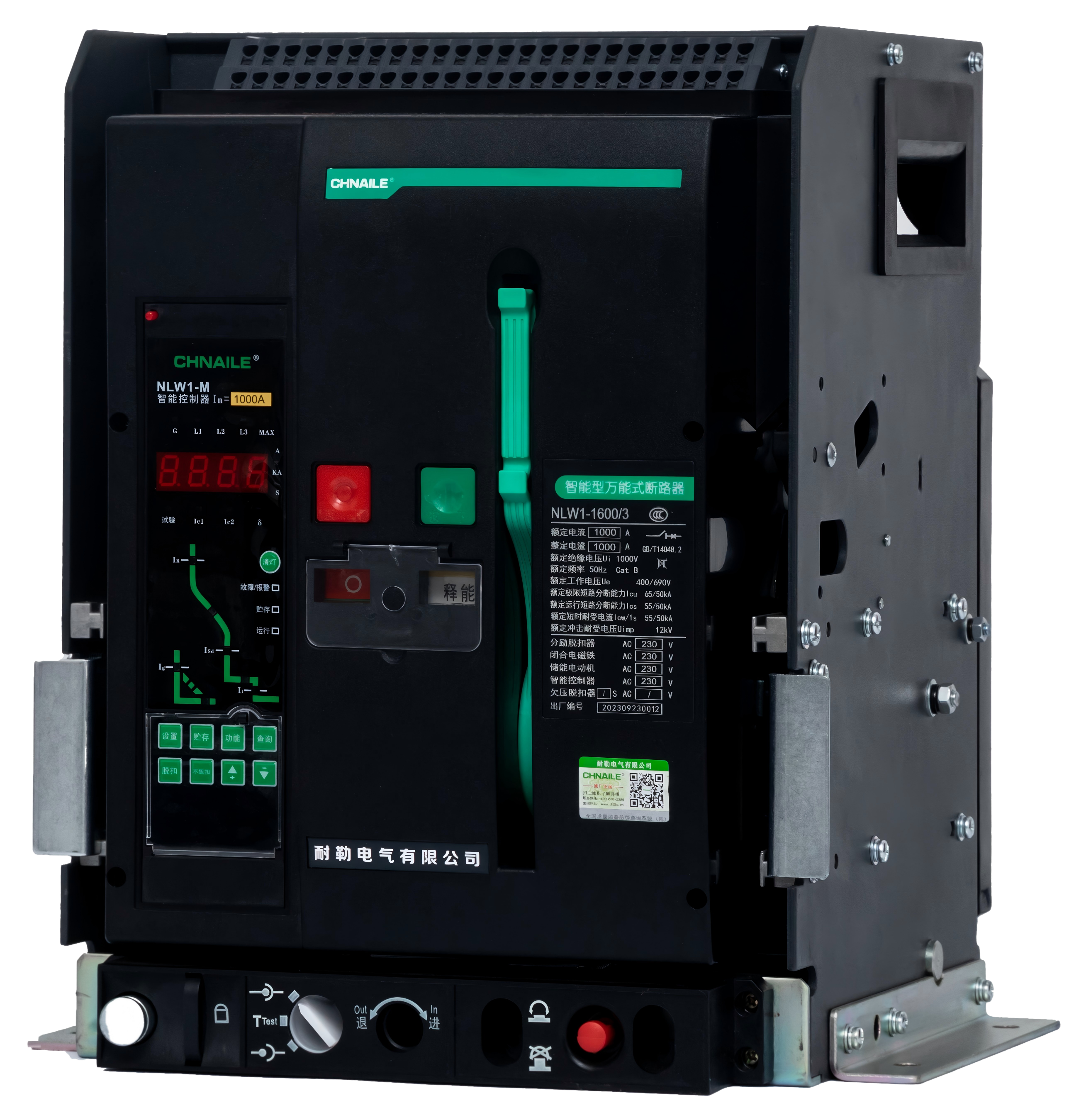
Today, the DW45 Air Circuit Breaker represents the current industry standard for intelligent protection. Manufacturers designed it specifically for modern power demands. It features a highly modular architecture. This means you can replace individual components like trip units or motor operators without swapping the entire breaker.
It also boasts a zero-arcing distance design. This critical safety feature allows panels to be smaller and safer. Furthermore, its microprocessor-based intelligent trip units process electrical data in real-time, reacting precisely to complex fault conditions.
We are witnessing a massive transition in electrical switchgear design. Historically, an ACB only provided basic circuit interruption. If a short circuit occurred, the breaker tripped to prevent fires. Today, the focus has shifted to energy management and network protection. Modern breakers analyze power quality, log fault history, and communicate with facility management systems. Upgrading your systems means adopting this proactive approach to electrical safety.
Evaluating these breakers requires a deep dive into their technical metrics. Upgrading switchgear often hinges on breaking capacities and current ratings.
Breaking capacity dictates the maximum fault current a breaker can safely interrupt. The ultimate short-circuit breaking capacity (Icu) and service short-circuit breaking capacity (Ics) are critical safety benchmarks. Older legacy models often struggle to clear massive fault currents without sustaining internal damage.
Conversely, modern units achieve significantly higher kA ratings. They do this within a comparable, or often smaller, physical frame size. Advanced arc chute designs and faster mechanical actuation allow modern breakers to extinguish arcs rapidly. This minimizes thermal stress on the breaker components and the connected busbars.
Frame sizes determine how much continuous current a breaker can handle. Legacy platforms typically cover standard industrial ranges but max out earlier than modern equivalents. Modern platforms typically scale up to much higher amperages, frequently reaching up to 6300A in a single frame.
They achieve this through superior thermal management. Advanced copper alloys, better airflow routing, and reduced contact resistance prevent overheating at extreme loads. This allows massive industrial plants to run heavy machinery without nuisance tripping.
Every time a breaker opens or closes under load, its contacts degrade. Standard operations-cycle estimates reveal a stark contrast between the two generations. Modern breakers feature highly optimized, low-friction operating mechanisms.
This optimization results in far less mechanical wear per cycle. Consequently, maintenance teams spend less time lubricating linkages or replacing worn springs. You gain a higher electrical lifespan, lower maintenance frequency, and better overall reliability.
Technical Specifications Comparison
Specification Dimension | DW15 Generation | DW45 Generation |
|---|---|---|
Controller Type | Thermal-magnetic / Basic Solid-State | Intelligent Microprocessor (DSP) |
Max Rated Current (In) | Typically up to 4000A | Up to 6300A |
Breaking Capacity (Icu) | Moderate (Standard kA) | High to Ultra-High (up to 120kA+) |
Arcing Distance | Requires clear overhead space | Zero or near-zero |
Pole Configurations | 3-Pole standard | 3-Pole and 4-Pole available |
The gap between mechanical interruption and digital management defines modern electrical engineering. Facility protection now requires complex data analysis alongside physical switching.
Legacy breakers exhibit distinct limitations regarding tripping curves. They rely on physical bimetallic strips or basic analog circuits. Manual calibration is often required, which introduces human error. The protection curves are rigid. You cannot easily adjust them to accommodate specialized motor starting currents.
Modern breakers utilize highly advanced Intelligent Controllers. These microprocessors offer adjustable LSIG protection. This stands for Long-time delay (Overload), Short-time delay (Short circuit), Instantaneous (Heavy short circuit), and Ground fault protection. You can program each parameter precisely. This ensures coordination with downstream breakers, preventing a localized fault from shutting down the entire facility.
Smart grids demand constant data flow. Modern breakers offer native support for industrial communication protocols. These include Modbus, Profibus, and Ethernet variants.
This connectivity provides immense business value. Facility managers gain remote monitoring of voltage, current, and frequency. The breakers even perform harmonic analysis. You can use this preventative maintenance data to spot failing equipment before it causes an outage. Legacy systems cannot natively provide this telemetry. They remain isolated components within the electrical network.
Arc flashes pose a lethal threat to electrical operators. Legacy breakers typically require significant clearance above the unit to safely vent ionized gases during a fault. This mandates larger, bulkier switchgear cabinets.
Modern architectures implement zero or near-zero arcing distance designs. They use specialized arc chutes and filtration screens to cool and contain the plasma instantly. This enables far more compact switchgear design. More importantly, it dramatically enhances operator safety during routine maintenance or catastrophic faults.
Replacing a main breaker is never a simple plug-and-play operation. Understanding the physical realities of the switchgear panel is crucial for project planning.
Space on a factory floor or in an electrical room is expensive. Modern breakers offer immense space-saving benefits. They deliver higher power densities, packing massive breaking capacities into smaller frames.
They also utilize a standardized cassette design for draw-out types. A draw-out breaker rests inside a cradle. If the breaker fails, you simply crank it out and slide a new one into the existing cassette. This modularity makes future replacements exponentially faster, minimizing facility downtime.
Replacing a failing legacy breaker presents unique challenges. You rarely find a perfect 1-to-1 dimensional match. Upgrading a legacy slot to a modern unit requires careful engineering.
You must address busbar alignment. The copper connections on the rear of the new breaker will likely sit at different heights or widths. Panel modification costs can escalate quickly. You typically need custom copper transition busbars and specialized mounting brackets. Always budget for this custom fabrication when planning a retrofit.
Industrial environments punish electrical equipment. Both breaker generations handle harsh conditions, but they react differently. Legacy mechanical breakers often tolerate heavy dust simply because they lack sensitive electronics.
However, modern microprocessor breakers feature conformal-coated circuit boards. This protects them from humidity and corrosive gases. You must carefully evaluate derating requirements. High ambient temperatures force you to lower the maximum continuous current rating. Modern units generally offer better thermal dissipation, requiring less aggressive derating in hot environments.
Selecting the right equipment depends entirely on your facility's operational goals, budget limitations, and future scalability needs.
While the industry favors modernization, legacy replacements still make sense in specific scenarios. You might choose to source a legacy unit for a direct 1-to-1 replacement in an older switchboard. If custom busbar modification proves physically impossible or financially unviable, matching the original equipment is the safest bet.
This path also suits strictly localized applications. If a remote pumping station requires zero remote monitoring or data logging, a complex digital breaker is unnecessary over-engineering. Extreme capital expenditure (CAPEX) constraints also drive this choice. A basic mechanical breaker requires less upfront investment, making it a functional stopgap for tight budgets.
Modernization is non-negotiable for future-proof facilities. You should always specify modern digital breakers for new switchgear installations and greenfield facility builds. Designing a new panel around legacy equipment limits future growth instantly.
Upgrades are also mandatory in environments requiring high power-quality monitoring. Data centers, hospitals, and automated manufacturing plants rely on precise power. Automated load shedding and SCADA integration require the telemetry only a digital controller can provide. Furthermore, if your facility faces stringent arc-flash safety audits and compliance upgrades, the zero-arcing design of modern breakers resolves those safety mandates.
The choice between these two breaker technologies is essentially a choice between legacy mechanical reliability and modern digital precision. Both effectively interrupt fault currents, but their operational impacts differ drastically.
While legacy equipment serves as a functional stopgap for aging infrastructure, modern microprocessor-based breakers represent the most technically sound investment. They deliver unmatched safety, ensure regulatory compliance, and future-proof your electrical distribution network against evolving smart grid demands.
Your next steps should involve a thorough site audit. Audit your current switchgear dimensions and environmental conditions. Consult a qualified electrical engineer to perform updated load calculations and arc-flash studies. Finally, request technical datasheets or a professional retrofit consultation to map out the safest, most efficient upgrade path for your facility.
A: No. Physical dimensions, mounting points, and rear busbar connections typically differ between the two generations. Retrofit kits or custom copperwork are usually required to bridge the mechanical and electrical gaps safely.
A: Standard protection operations are typically self-powered via internal current transformers driven by the load current. However, advanced features like continuous LCD displays, network communications, and remote closing modules require an external auxiliary power supply.
A: Supply chain realities are shifting rapidly. While you can find parts in secondary markets or specific regional networks, major OEM support is steadily shifting entirely to modern digital lines. Sourcing reliable legacy parts will become increasingly difficult.
A: The modern DW45 requires a higher initial capital expenditure due to its microprocessor components and advanced materials. However, it often offsets these upfront costs by providing integrated metering functionality, preventing costly nuisance trips, and significantly reducing facility downtime.