Nale Electric is willing to work together with domestic and foreign merchants to create brilliance!

Views: 0 Author: Site Editor Publish Time: 2026-05-18 Origin: Site
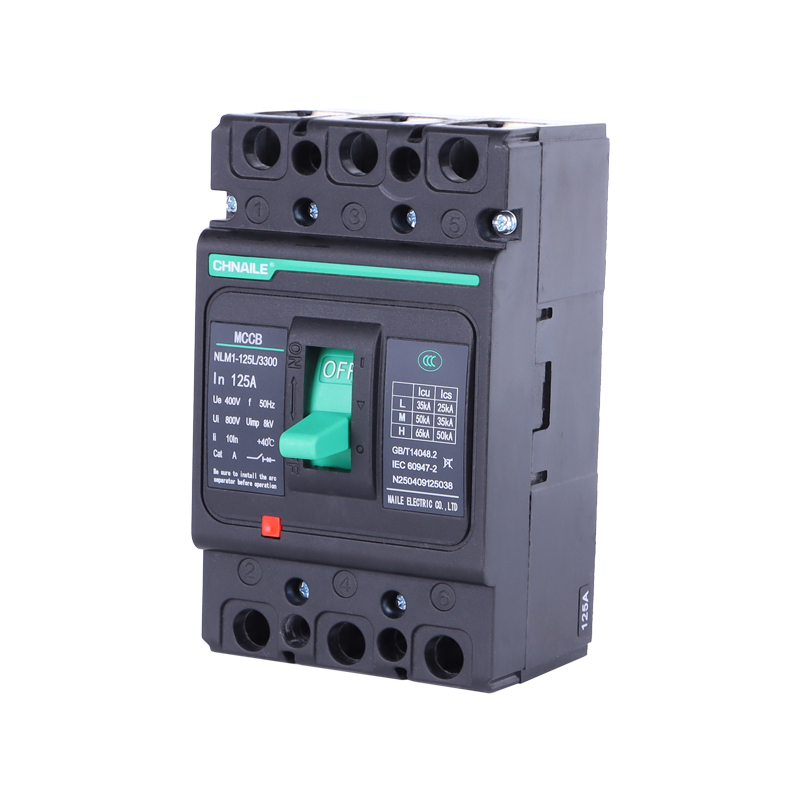
Unreliable circuit protection quickly leads to catastrophic equipment damage. Extended facility downtime and severe electrical fire hazards often follow these failures. You need robust, immediate defenses to prevent these massive operational stakes from destroying your productivity. Enter Molded Case Circuit Breakers (MCCBs). They serve as the critical bridge between low-capacity miniature breakers and massive air circuit breakers. These devices offer scalable, heavy-duty protection tailored for demanding industrial power networks.
This guide exists to help facility managers, electrical engineers, and procurement teams navigate complex specifications. You will deeply understand different trip unit technologies and evaluate their real-world performance. Ultimately, you will learn exactly how to select the right circuit breaker for your specific industrial applications without compromising safety or reliability.
Capacity Scaling: MCCBs manage current ratings from 15A up to 2,500A or more, providing vital short-circuit and overload protection for high-power industrial loads.
Trip Unit Selection: Choosing between thermal-magnetic and electronic trip units dictates system flexibility, coordination capabilities, and IoT diagnostic integration.
Specification Metrics: Proper evaluation requires aligning Ultimate Breaking Capacity (Icu) and Service Breaking Capacity (Ics) with the facility’s specific fault-current calculations.
Compliance & Safety: Shortlisting requires strict adherence to regional regulatory standards (e.g., UL 489, IEC 60947-2) to ensure operational legality and personnel safety.
Industrial power systems face a constant dual threat. Sustained thermal overloads generate excess heat over time. This slow heating degrades cable insulation and eventually causes electrical fires. On the other end of the spectrum, instantaneous short circuits deliver massive energy spikes. These violent faults create immediate arc flashes and destructive explosions. Your electrical protection must successfully mitigate both hazards.
MCCBs isolate these power faults through precise operating mechanisms. When a fault occurs, the internal trip unit activates the operating mechanism. Spring-loaded contacts fly apart instantly to break the electrical circuit. However, separating live contacts creates a dangerous plasma arc. Arc extinguishers, commonly called arc chutes, manage this hazard. They divide, stretch, and cool the plasma arc until it extinguishes completely. This rapid interruption prevents the fault current from destroying downstream machinery.
The "molded case" itself provides a massive structural advantage. Manufacturers typically forge this insulated housing from glass-polyester or thermoset composite materials. This rugged exterior guarantees the internal structural integrity required to withstand explosive arc forces. It safely contains the violent energy of a short circuit. Most importantly, it creates an impenetrable barrier. It protects facility personnel from accidental contact against live internal components.
You should routinely inspect the molded case for hairline cracks or discoloration. Heat damage on the exterior often indicates severe internal thermal stress. Never operate a unit showing visible housing degradation.
You must select the correct technology to detect electrical faults. The two primary solution categories cater to vastly different industrial use cases. Understanding their mechanical differences will save you from nuisance tripping and poor coordination.
Thermal-magnetic units rely on traditional physical properties to detect faults. They utilize a bimetallic strip to monitor thermal overloads. As sustained overcurrent heats the strip, it bends and mechanically trips the breaker. For short circuits, they use an electromagnetic coil. Massive fault currents instantly magnetize the coil, pulling the trip latch immediately.
This design proves highly reliable and incredibly cost-effective. However, it offers very limited adjustability. You generally cannot fine-tune the tripping curves. Therefore, thermal-magnetic models best suit general-purpose applications. They excel when protecting predictable, resistive loads where fine calibration remains unnecessary.
Electronic trip units replace physical bimetallic strips. They use internal current transformers and advanced microprocessors. These components continuously monitor the true RMS current flowing through the circuit. They digitize the power data and compare it against highly customizable parameters.
You will pay a premium cost for microprocessor models. In return, they provide precise adjustability across LSI or LSIG parameters (Long-time, Short-time, Instantaneous, and Ground fault). They also offer advanced system diagnostics and digital communication capabilities. You absolutely need electronic trip units for complex selective coordination. They integrate seamlessly into smart facility monitoring systems.
Chart 1: Thermal-Magnetic vs. Electronic Trip Units | ||
Feature Dimension | Thermal-Magnetic | Electronic / Microprocessor |
|---|---|---|
Detection Method | Physical (Bimetal & Electromagnet) | Digital (Current Transformers & Microprocessor) |
Adjustability | Low (Fixed or limited dials) | High (Precise LSI/LSIG settings) |
Ideal Application | Basic resistive loads, isolated circuits | Smart grids, motor control centers, complex coordination |
Data Connectivity | None | High (Modbus, Ethernet, IoT integration) |
Mapping technical specifications directly to your reliability outcomes prevents costly procurement errors. You must evaluate these units based on strict engineering realities rather than just frame size.
The rated current represents the maximum continuous continuous load the breaker can carry. You must size this carefully to avoid nuisance tripping during normal peak operations. The frame size dictates the physical footprint and the maximum possible rating for that specific casing. Selecting a larger frame size allows you to upgrade trip units later without redesigning your entire switchboard.
Breaking capacity defines the absolute limit of protection. You must understand two distinct metrics when evaluating breaking limits:
Icu (Ultimate Breaking Capacity): This represents the absolute maximum fault current the breaker can safely interrupt. It will clear the fault and prevent a fire. However, the extreme stress might permanently damage the internal contacts. You may need to replace the unit entirely after an ultimate fault.
Ics (Service Breaking Capacity): This represents the maximum fault current the breaker can clear while remaining fully operational. The unit can be reset and returned to service immediately.
Higher Ics ratios indicate a much more robust mechanism. A breaker rated where Ics equals 100% of Icu provides exceptional longevity and operational peace of mind.
You cannot compromise on regulatory compliance. Verifying certification protects your facility against severe legal liability. North American installations mandate strict adherence to UL 489 standards. International projects rely heavily on IEC 60947-2 guidelines. Using non-compliant protection devices instantly voids facility insurance coverage. Always request official testing certificates during your procurement process.
You will find these robust breakers deployed throughout various levels of a facility's power distribution hierarchy. They scale efficiently across diverse industrial applications.
Heavy industrial motors demand specialized protection profiles. When a massive motor starts, it draws an immense inrush current. This starting current can briefly exceed six times the normal operating load. Standard breakers would instantly misinterpret this as a short circuit. Specialized motor protection MCCBs feature tailored magnetic trip thresholds. They withstand these massive inrush spikes without false tripping while still offering immediate short-circuit defenses.
Facilities rely on these breakers to segment different operational zones. They isolate power distribution between manufacturing floors, server rooms, and office areas. This strategic isolation ensures localized faults do not trigger facility-wide blackouts. By deploying them in sub-distribution boards, maintenance teams can safely isolate specific zones for repairs. Meanwhile, the rest of the facility maintains normal production.
Modern power networks increasingly utilize direct current (DC). Standard alternating current (AC) breakers fail spectacularly in DC environments. AC circuits naturally cross zero voltage several times per second, which helps extinguish arcs. DC current never drops to zero. Therefore, commercial solar arrays, battery energy storage systems (BESS), and EV charging infrastructures require specialized DC-rated MCCBs. These units feature advanced arc chutes specifically engineered to break continuous DC arcs safely.
We must take a transparent look at where these devices excel. You also need to understand where alternative technologies might better serve your facility.
They deliver significantly higher capacity and operational durability than miniature circuit breakers. They manage massive industrial loads in a remarkably compact form factor. Compared to massive air circuit breakers, they offer a significantly smaller footprint. They also require a much lower initial capital expense.
However, you must accept certain limitations. The internal contacts remain permanently sealed inside the casing. You generally cannot maintain or replace them. Air circuit breakers allow routine contact replacement. If a molded case unit fails or clears an ultimate fault, you must discard and replace the entire device.
Poor selective coordination presents a massive facility risk. Coordination ensures the breaker closest to the fault trips first. If you configure the system poorly, an upstream main breaker might trip before the downstream branch breaker. A minor fault on a single assembly line could unnecessarily kill power to your entire manufacturing plant. Electronic trip units help eliminate this risk through highly adjustable timing delays.
Industrial environments often feature extreme ambient temperatures. Hot switchboards directly impact thermal-magnetic trip mechanisms. The internal bimetallic strip reacts to the surrounding ambient heat, not just the electrical current. In exceptionally hot environments, traditional units require careful derating. They might trip at a lower current threshold than advertised. You must calculate these environmental variables during the design phase.
You need a disciplined decision framework to finalize your purchase. Follow this step-by-step logic to ensure absolute safety and performance.
Define the Load Profile: Identify the maximum continuous current flowing through the circuit. Determine if the system utilizes AC or DC voltage. Note any potential inrush anomalies from large inductive loads like industrial motors.
Calculate Fault Current Limits: Never guess your required interrupting rating. Base this critical metric on a professional short-circuit study of your specific facility. The breaker must safely clear the highest possible fault current your grid can deliver.
Determine Adjustability Needs: Decide if your facility requires tight selective coordination. Evaluate if your maintenance team needs remote IoT monitoring. If so, justify the premium price for an electronic microprocessor trip unit.
Assess Physical Footprint: Ensure the chosen frame sizes fit inside your existing enclosures. Verify the required mounting configurations. Decide whether fixed-mount or plug-in bases best serve your future maintenance needs.
Do not attempt to guess these specifications alone. Advise your team to consult a licensed electrical engineer to perform updated coordination studies. Contact your technical sales representatives to discuss custom configurations. You should also explore valuable optional accessories. Shunt trips allow remote emergency shutdowns. Auxiliary contacts provide vital status feedback to your centralized control systems.
These heavy-duty devices act as the foundational pillars of industrial uptime and personnel safety. They perfectly bridge the massive gap between basic commercial protection and massive grid-level infrastructure. Understanding their core mechanics prevents catastrophic failures and ensures your facility runs continuously.
Specifying the right protection must remain an engineering-driven process. You must base your final choices on rigorous fault calculations, environmental realities, and strict compliance standards. Never let the lowest price point dictate your electrical safety strategy.
Take action today. Pull your facility’s electrical single-line diagrams. Review the age and specifications of your current protective devices. If you notice outdated or improperly coordinated equipment, reach out for a professional technical consultation and secure a reliable quote immediately.
A: A Miniature Circuit Breaker (MCB) handles low-current residential or light commercial loads, typically maxing out at 100 amps. They offer fixed trip settings. A Molded Case Circuit Breaker handles massive industrial loads up to 2,500 amps. They feature highly adjustable trip settings, larger frame sizes, and significantly higher fault-interrupting capacities tailored for heavy machinery.
A: The lifespan depends heavily on mechanical and electrical operations. A unit might endure 10,000 mechanical toggles under no-load conditions. However, breaking severe short circuits degrades internal contacts rapidly. Harsh environmental conditions, like extreme heat or corrosive humidity, also shorten lifespan. Most industrial units reliably serve between 10 to 15 years under normal conditions.
A: You can only use breakers specifically rated for DC applications. Alternating current naturally drops to zero voltage, making arc interruption easier. Direct current provides a constant voltage, creating a sustained, aggressive arc. DC-rated models utilize specialized arc chutes and magnetic blowouts designed specifically to extinguish these relentless DC arcs safely.
A: Under NEC and UL guidelines, standard breakers hold an 80% rating. This means they can only carry 80% of their maximum rated current for continuous loads lasting over three hours. A 100%-rated breaker features enhanced heat dissipation engineering. It can safely carry its full nameplate current continuously without overheating or nuisance tripping.