Nale Electric is willing to work together with domestic and foreign merchants to create brilliance!

Views: 0 Author: Site Editor Publish Time: 2026-05-15 Origin: Site
Industrial low-voltage power distribution systems demand absolute protection. You cannot risk catastrophic equipment failures or dangerous electrical fires. An air circuit breaker acts as your primary line of defense. High-load operations like data centers and manufacturing plants face unique electrical challenges. They regularly manage extreme baseline loads between 630A and 8000A. A standard safety device simply fails under this immense pressure. Therefore, viewing these robust breakers as mere safety tools falls short. They represent a crucial uptime insurance policy for your entire facility.
This guide moves beyond the basic physics of electrical faults. You will learn practical procurement criteria and essential maintenance realities. We also compare different circuit breaker options thoroughly. By understanding these components, facility engineers and procurement teams gain actionable insights. You will learn how to make optimal infrastructure decisions. Ultimately, mastering these details empowers you to build a resilient, fail-safe electrical grid.
Core Function: ACBs use atmospheric air to quench lethal electrical arcs during short circuits or overloads, operating primarily in low-voltage (LV) networks.
Strategic Advantage: Unlike simple fuses or standard breakers, ACBs offer granular trip adjustments, SCADA integration, and automatic reclosing.
Selection Drivers: Procurement decisions hinge on form factor (fixed vs. draw-out) and intelligence (microprocessor-based vs. thermal-magnetic).
To appreciate this equipment, you must understand its internal sequence. The breaker performs a complex mechanical and electrical ballet during a fault. It acts as both a vigilant watchdog and a rapid-response unit.
The protective sequence happens in milliseconds. It involves three distinct operational phases to ensure complete safety.
Silent Monitoring: The trip unit functions as the device's brain. It continuously measures the current flow passing through the main contacts. It compares this real-time telemetry against your predefined safety thresholds. During normal operations, the unit remains completely passive.
Instantaneous Response: A critical fault disrupts this peaceful state. The trip unit detects a severe overload or short circuit immediately. High-tension energy springs release their stored kinetic energy. This massive physical force drives the main and auxiliary contacts apart in mere milliseconds.
Arc Quenching: Separating the contacts creates a lethal electrical arc. The breaker magnetically blows or physically forces this glowing plasma into specialized "arc chutes." These chutes stretch, cool, and split the arc. Insulated splitters divide the energy until the ambient air fully extinguishes the plasma.
Some cost-conscious managers ask why they cannot use simple fuses. Fuses certainly break electrical circuits, but they lack industrial sophistication.
Calibration: Fuses burn out at one rigid, fixed point. You cannot change their physical melting threshold. Air circuit breakers allow engineers to dial in exact trip parameters. You can adjust the response curve to match specific motor starting currents. This prevents nuisance tripping during normal operational surges.
Downtime Reduction: A blown fuse requires a hard physical lockout. Maintenance staff must find the fuse, remove it, and replace it manually. This causes extended facility downtime. ACBs support motorized remote automatic reclosing. This auto-reclose feature restores power instantly after transient, temporary faults. You keep your production lines moving seamlessly.
When you approach procurement, forget outdated textbook classifications. Categories like "magnetic blowout" rarely dictate modern purchasing decisions. Today, your selection hinges on actual commercial form factors and digital capabilities.
The physical installation method dictates your future maintenance flexibility. You must choose between permanent mounting and modular designs.
Fixed Type: Engineers bolt these units permanently into the main switchgear. You cannot remove them without disconnecting heavy main power cables. They offer a compact footprint for tight panel spaces. Use Case: Best for cost-sensitive commercial installations. They work well in buildings where occasional maintenance shutdowns remain acceptable.
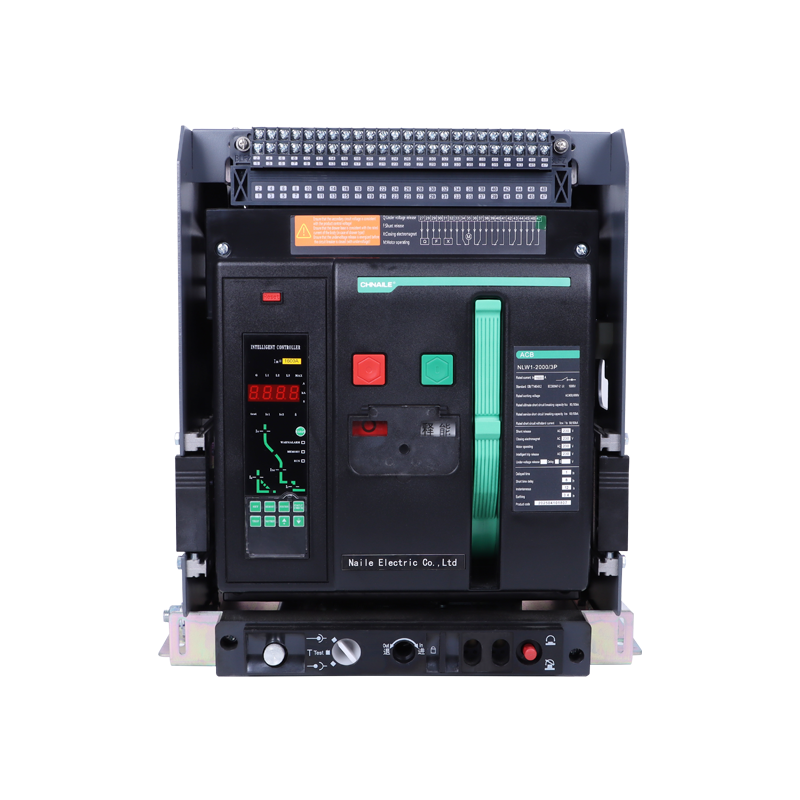
Draw-Out (Withdrawable) Type: Manufacturers mount these on a sliding chassis mechanism. You can physically rack the breaker in and out safely. You never need to unbolt the main power cables. Use Case: Essential for mission-critical infrastructure. Hospitals and server farms rely on these for hot-swappable replacements. They guarantee zero-downtime maintenance operations.
The "brain" of your breaker determines its integration into modern facility management.
Manual/Standard ACBs: These rely on basic thermal-magnetic physical trip mechanisms. They offer a lower initial acquisition cost. However, they require higher manual intervention. You cannot easily pull operational data from them remotely.
Intelligent/Electronic ACBs: These feature advanced microprocessor-based trip units. They bring the breaker into the digital age. Value-Add: They provide real-time telemetry, including current, voltage, and harmonics. They integrate directly with SCADA systems via Modbus or Profibus protocols. This connectivity enables highly accurate predictive maintenance strategies.
Breaker Feature | Fixed & Manual | Draw-Out & Smart |
|---|---|---|
Replacement Speed | Slow (Requires shutdown & unbolting) | Fast (Racks out in minutes) |
Data Integration | None (Physical inspection required) | High (SCADA, Modbus, real-time alerts) |
Ideal Environment | Standard commercial buildings | Data centers, intensive manufacturing |
Navigating the circuit protection market requires understanding your alternatives. You must match the device technology to your specific voltage and environmental requirements.
Engineers often debate between an ACB and an MCCB for low-voltage panels. The difference lies in sheer capacity and long-term repairability.
Capacity: ACBs handle massive main-line currents, frequently scaling up to 6300A. We deploy them at the main power intake. MCCBs act as downstream branch devices. Their capacity typically caps around the 2500A mark.
Lifespan & Repairability: ACBs feature an open, accessible architecture. They remain fully repairable over decades. You can easily replace worn contacts or damaged arc chutes. Conversely, MCCBs generally utilize sealed plastic cases. Once they break or wear out, they become replacement-only units.
The choice between air and vacuum technology depends entirely on your system voltage.
Application: ACBs completely dominate low-voltage (LV) systems below 1000V. However, VCBs serve as the undisputed standard for medium-to-high voltage (MV) indoor applications. In a 12kV system, relying on air for insulation requires massive physical spacing. A vacuum provides superior insulation in a much smaller physical footprint for high voltages.
Environmental concerns increasingly drive purchasing decisions away from specific gas insulators.
Environmental Footprint: ACBs use natural, atmospheric air to extinguish arcs. They possess an inherently clean operational footprint. Sulfur hexafluoride (SF6) gas breakers offer excellent arc-quenching capabilities. However, SF6 acts as an incredibly potent greenhouse gas. Using SF6 breakers triggers stringent regulatory handling requirements. It also forces facilities into complex greenhouse gas reporting protocols.
Breaker Type | Typical Max Current | Voltage Domain | Primary Insulation Medium |
|---|---|---|---|
ACB | 6300A | Low Voltage (LV) | Ambient Air |
MCCB | 2500A | Low Voltage (LV) | Air / Sealed Molded Case |
VCB | 4000A+ | Medium/High Voltage (MV) | Vacuum |
SF6 | 4000A+ | High Voltage (HV) | Sulfur Hexafluoride Gas |
You cannot guess when sizing heavy industrial protection. A mismatched breaker either trips constantly or fails catastrophically during an emergency.
First, you must match the breaker's continuous current rating to your facility's baseline load. If your plant draws 3000A normally, select a breaker rated comfortably above this.
More importantly, examine the Breaking Capacity (Icu/Ics). This rating must strictly exceed the maximum calculated short-circuit fault current of your local grid. If your utility grid can deliver a 65kA fault, your breaker must clear a 65kA fault safely.
Modern microprocessors allow you to shape the breaker's exact reaction timing. You evaluate whether the facility needs specific adjustable protections.
Long-time (L): Protects against gradual, sustained cable overloads.
Short-time (S): Allows brief surges (like motor startups) without tripping the main power.
Instantaneous (I): Reacts immediately to massive, destructive short circuits.
Ground-fault (G): Detects dangerous current leaking into the equipment chassis.
Properly setting the LSIG curve ensures coordination. It prevents a minor downstream fault (like a single shorted motor) from tripping the main switchgear and blacking out the whole building.
Never purchase uncertified high-power electrical equipment. You must ensure the unit meets your specific geographic standards. European and global markets require strict adherence to IEC 60947-2. North American installations mandate compliance with ANSI C37.13 or UL 1066. These standards verify the device physically survives its stated fault ratings during independent laboratory tests.
Installing the equipment marks only the beginning of your journey. Keeping these massive devices reliable requires a disciplined approach to facility management.
You must acknowledge the physical realities of an air circuit breaker. They are incredibly heavy and require large structural panel footprints. They also generate significant mechanical noise. A tripping operation sounds like a minor gunshot.
Furthermore, your panel layout must carefully account for arc exhaust clearance. When the device quenches an arc, it expels superheated ionized gases outward. You cannot install sensitive electronics directly above the exhaust vents.
Routine maintenance prevents unexpected friction and failure. We recommend separating your checks into three distinct technical levels.
Visual & Mechanical Inspections: Start with the basics. Inspect the main contact wear and alignment regularly. Check for structural integrity. Clean out the accumulated black soot from the arc chutes. Soot increases electrical resistance and reduces quenching efficiency.
Advanced Diagnostics: Move beyond visual checks yearly. Utilize Secondary Injection Testers. These specialized devices plug into the breaker's brain. They simulate massive electrical faults digitally. This verifies the microprocessor trip times without requiring dangerous live primary currents.
Thermal Monitoring: Run diagnostics while the facility operates under heavy load. Use infrared (IR) thermography on the panel. This detects micro-welding or high-resistance hot spots on the terminal connections before they ignite.
We must reiterate an essential truth about facility power design. An air circuit breaker never functions as a simple commodity purchase. It stands as the foundational safety investment for high-capacity low-voltage networks. A properly specified breaker saves lives, prevents fires, and ensures uninterrupted production.
Your next steps require precise engineering data. We advise all technical buyers to initiate a comprehensive fault-current study. Work closely with your electrical engineering team to map your exact grid parameters. Only release your formal Request for Quotation (RFQ) to manufacturers after securing these precise calculations.
A: They are typically designed for Low Voltage (LV) applications. Generally, they handle up to 1000V or 1140V AC safely. Above this threshold, air insulation requires too much physical space. Engineers prefer Vacuum or SF6 breakers for medium and high voltage networks.
A: They use ambient atmospheric air to extinguish powerful electrical arcs. This natural process requires large physical spacing. They need sizable "arc chutes" to safely stretch, cool, and dissipate the hot plasma. Breakers using compressed vacuums or insulating gases achieve this in much tighter spaces.
A: Yes, but you must select a specific DC-rated breaker. DC arcs lack the natural "zero-crossing" point found in AC alternating current. This makes DC arcs much harder to extinguish. They require highly specialized arc chute designs and powerful magnetic blowouts to break the continuous current.
A: Icu (Ultimate Short-Circuit Breaking Capacity) represents the maximum fault the breaker can clear once before failing. Ics (Service Short-Circuit Breaking Capacity) is the fault level it can clear and still resume normal, safe operation. Always aim for an Ics rating equal to 100% of the Icu rating for critical infrastructure.