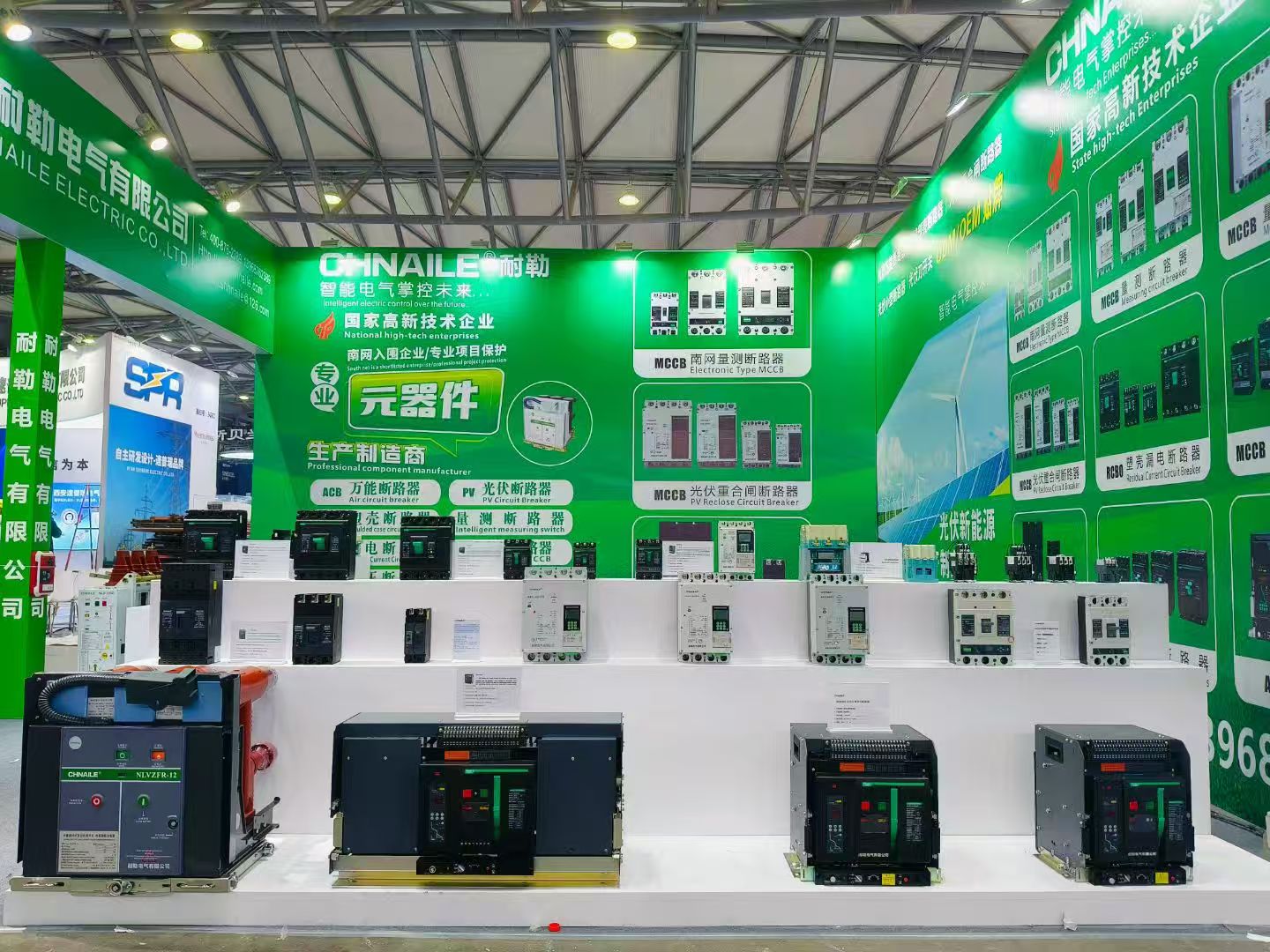
Nale Electric is willing to work together with domestic and foreign merchants to create brilliance!


| Quantity: | |
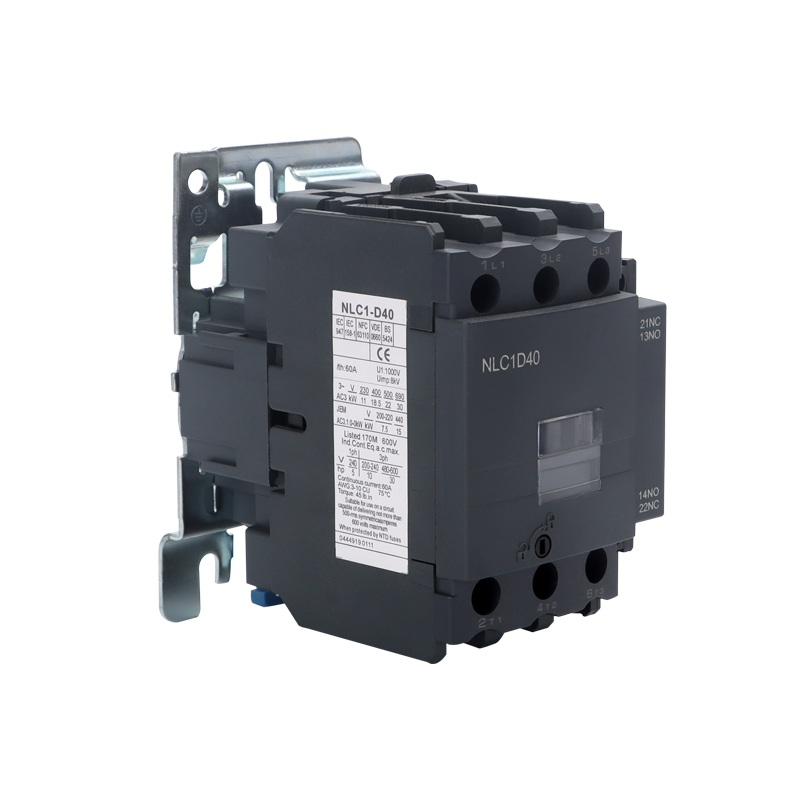
The specification label visible on the right face of the NLC1-D40 in the product image presents a certification declaration that is architecturally distinct from the single-standard IEC or CE markings that appear on the household and modular device categories: it names, in a structured table format, IEC 947, IEC 158-1, NFC 63110, VDE 0660, BS 5424, and CE as co-applicable standards, and separately carries a UL Listing mark (170M, 600 V) in the body of the label — a simultaneous multi-authority approval whose commercial consequence for the panel builder or switchgear integrator sourcing this device is that a single product qualification covers the component approval requirements of electrical installation projects operating under French, German, British, pan-European IEC, and North American regulatory frameworks without requiring re-specification or re-testing for each destination market. This is not an incidental feature of the device's design; it is the deliberate output of a type-testing investment in multiple accredited laboratories whose cumulative cost — borne by the manufacturer — is amortised across the production volume and transferred to the end customer in the form of a device that crosses regulatory borders without generating the re-approval administrative overhead that single-standard products impose. For the switchgear integrator managing projects across multiple export markets simultaneously — assembling motor control centres for a Gulf-based developer whose projects span Saudi Arabia (adopting IEC/BS standards), France (NFC 63110), Germany (VDE 0660), and with a North American investor requiring UL-listed equipment — the NLC1-D40's seven-standard compliance matrix converts what would otherwise be a four-SKU sourcing problem into a single-SKU solution, compressing the vendor qualification schedule, the documentation management overhead, and the inventory duplication cost that market-specific single-standard devices impose. The UL Listing designation 170M is particularly significant for switchgear integrators whose export pipeline includes North American-standard projects: UL 508A (the standard governing industrial control panel assembly in the United States and Canada) requires that contactors installed in listed industrial control panels carry independent UL component recognition or listing, and the NLC1-D40's UL Listing satisfies this requirement without the additional step of submitting a non-listed device for supplementary UL component recognition — a process that typically requires four to eight weeks and a laboratory fee that a sourced-and-listed component eliminates entirely. The 600 V / 500 A symmetrical fault current limitation noted in the UL section of the label — stating suitability for circuits "capable of delivering not more than 500-rms symmetrical amperes, 600 volts maximum, when protected by NTD fuses" — is the UL coordination requirement that the panel builder's UL 508A panel design must satisfy at the contactor's installation point, a requirement that the label makes explicit so that the panel designer can directly verify the coordination condition without consulting a supplementary component data sheet.
Parameter | Specification |
|---|---|
Model | NLC1D40 |
Brand | CHNAILE |
Rated operational current (Ie) | 40 A |
Number of poles | 3 |
Standard compliance | IEC 60947-4-1 |
Main contact type | Normally Open (NO) × 3 |
Auxiliary contacts | Integrated NO + NC |
Contact material | Silver alloy |
Mechanical indicator | Front-mounted position indicator |
Mounting method | DIN rail |
Series current range | 9 A - 95 A |
 |  |
The three-phase power ratings inscribed on the label in the AC3 utilisation category — the IEC 60947-4-1 duty classification for squirrel-cage induction motor starting and running, the dominant load type in commercial building HVAC systems, municipal infrastructure motor control, and industrial process control — provide the panel builder with the direct motor selection tool required to match the contactor to the protected motor without intermediate conversion calculations. At 400 V three-phase (the network standard across the EU, Gulf, East Africa, and South Asia), the AC3 rating of 18.5 kW covers induction motors in the 15 kW to 18.5 kW bracket that constitute the dominant single-speed compressor, pump, and fan motor size range in commercial HVAC air-handling units, chiller plant condenser fans, cooling tower pump sets, and municipal water distribution booster station pumps. At 690 V three-phase — the elevated distribution voltage used in large commercial building MCC feeds and municipal substation MV/LV transformer secondary bus feeds to reduce busbar current and conductor cross-section in high-power MCC assemblies — the AC3 rating rises to 30 kW, covering the larger pump and fan motor sizes that appear at the central plant level of large commercial developments and municipal infrastructure. The Ith = 60 A thermal continuous current — higher than the 40 A AC3 rated operational current, as is structurally required by IEC 60947-4-1 to ensure that the contact system can sustain the thermal steady state of motor running current (which, for a 18.5 kW motor at 400 V, runs at approximately 37 A at full load and unity power factor, well within the 40 A AC3 and 60 A Ith envelope) without accumulating contact resistance drift that would elevate terminal temperatures toward the IEC 60947-1 temperature-rise limit — is the parameter that governs the device's suitability for the sustained-duty motor running scenarios that dominate HVAC and pump control applications, where the contactor may carry motor current continuously for eight to twenty hours per day across the building's occupied period.
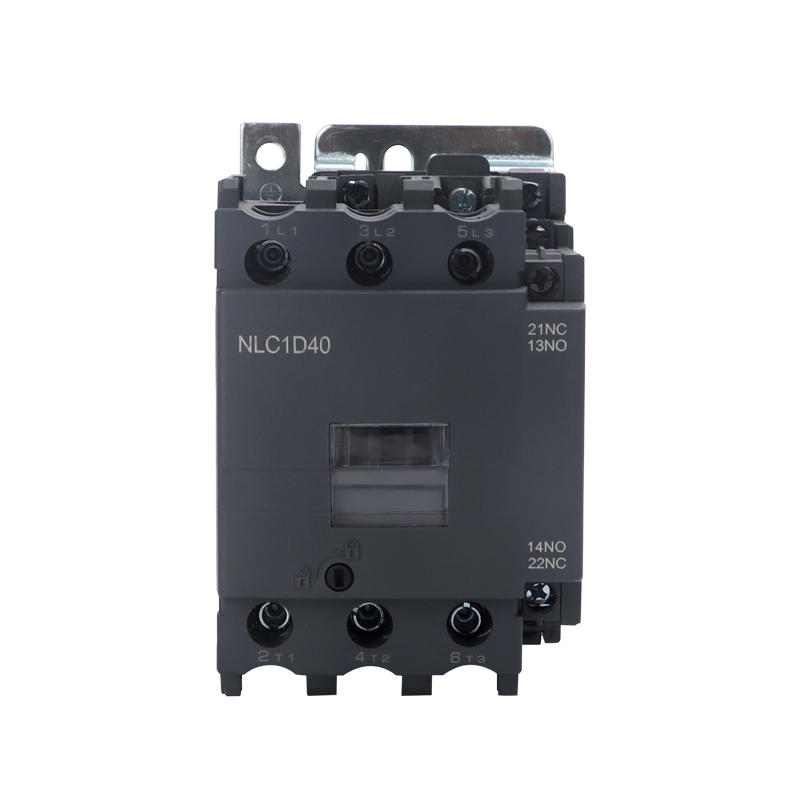
The AC3 utilisation category imposes a contact system duty that is fundamentally more severe than the AC1 (resistive load) or AC7 (household appliance) categories that govern lighter-duty contactors: at each CLOSE operation onto a running-start motor circuit, the contacts must make against the motor's starting inrush current — typically 5 to 7 times the full-load current, representing 185 to 259 A for a 37 A full-load motor — and at each OPEN operation, the contacts must interrupt the motor's full-load current against the back-EMF of the rotating motor, which sustains an arc across the opening contact gap for a duration determined by the arc's ability to elongate into the magnetic blowout field generated by the arc chute's permanent magnet or ferrous splitter plates. The dark charcoal glass-fibre-reinforced moulded housing visible in the product image — whose dimensional rigidity and dielectric stability at elevated arc temperatures are prerequisites for the arc chute geometry to perform consistently across the device's rated electrical endurance life — encloses a contact system whose silver-alloy main contacts are sized for the AC3 make-break energy at 40 A, not merely for the Ith continuous thermal current. The contact material selection — silver-cadmium oxide or silver-tin oxide, depending on the production specification — is calibrated to the arc erosion rate that 40 A AC3 switching generates over the device's rated electrical operations life, ensuring that the contact resistance remains within the IEC 60947-4-1 temperature-rise limit throughout the rated endurance without requiring maintenance contact replacement. The blue auxiliary contact blocks snap-fitted to the left face of the housing — visible in the product image as a distinct module with blue polymer housing that contrasts with the dark grey main body — are the mechanical interface through which the contactor's main contact status is communicated to the control circuit: each auxiliary block carries NO (normally open) and NC (normally closed) contact pairs that change state in synchrony with the main contacts, providing the status feedback signals that feed the motor starter's control circuit logic (star-delta timer, overload relay feedback, remote run indicator) without requiring supplementary control relays wired to the main terminal voltage. The snap-fit mounting geometry of the auxiliary block — accommodating both front-mounting and side-mounting block formats in the same housing boss pattern — allows the panel wiring technician to add or reconfigure auxiliary contact capacity without disassembling the contactor or modifying the main circuit wiring, a capability that directly reduces the panel rework labour associated with on-site control circuit changes during commissioning.
The switchgear integrator whose motor control centre (MCC) and motor control panel product range covers the full commercial and light-industrial motor size spectrum — from fractional-kW HVAC fan-coil unit motors through the 30 kW pump and compressor motors that constitute the central plant tier of large commercial buildings and municipal infrastructure — faces a procurement architecture decision that has a direct impact on their assembly workshop's efficiency, their quality management system's audit burden, and their project delivery lead time: whether to source contactors of different frame sizes from multiple specialist suppliers, or to consolidate the full kW range onto a single manufacturer's product family whose frame sequence covers the entire motor size spectrum under a single qualification relationship. The NLC1 contactor family — of which the D40 reviewed here represents the mid-range frame (Ith = 60 A, AC3 = 40 A) — extends across a current range that covers the complete motor control requirements of our target market: from the smallest auxiliary fan and control circuit switching positions through the central plant pump and compressor contactor positions, under the same multi-standard certification umbrella (IEC, UL, VDE, NFC, BS), the same housing family's DIN rail and screw-panel mounting compatibility, and the same auxiliary block family's snap-fit interface. The assembly workflow consequence of this platform consistency is measurable in labour hours: when every contactor in an MCC assembly shares the same auxiliary block mounting geometry, the same coil terminal location, and the same main terminal torque specification, the assembly technician develops a single assembly motion sequence that applies to every contactor position in the panel, reducing the cognitive switching cost and the tool-change overhead that arise when multiple contactor families with different terminal layouts are interleaved in the same assembly sequence. The coil voltage — supplied at AC 220–230 V (50/60 Hz) as standard, covering the control circuit voltage standard of the global majority of IEC-format MCC control circuits — is configurable on OEM order to AC 110 V (for legacy control systems in certain Gulf and African utility infrastructure projects), AC 24 V (for low-voltage safety control circuits in MCC assemblies where the control bus is separately protected), or DC coil variants for BESS management relay functions and PV tracker control circuits operating from battery-backed DC control buses. The housing colour — presented in the dark charcoal/anthracite finish visible in the image, a colour convention shared with the global industrial contactor market's standard aesthetic (derived from the glass-fibre-reinforced polyamide moulding compound's natural dark coloration and adopted as the visual convention of motor control components worldwide) — is reconfigurable for OEM customers whose brand identity specifies a lighter grey, a black finish, or a custom RAL colour reference, with the moulding compound colour matched at the injection moulding stage rather than applied as a surface coating, ensuring colour consistency across the device's service life without the surface degradation that painted finishes exhibit under the thermal cycling of motor switching duty. Panel builders, MCC assemblers, switchgear integrators, commercial HVAC electrical contractors, and BESS system electrical engineers evaluating the NLC1-D40 for qualification against a motor control or switching application in their current or forthcoming project pipeline are encouraged to initiate a direct technical dialogue with our manufacturing team via WhatsApp at +86 15985210820, where frame current, coil voltage, auxiliary contact configuration, multi-standard certification requirements, and project volume parameters will be addressed by a dedicated export applications engineer returning a complete technical and commercial proposal within one working day.