Nale Electric is willing to work together with domestic and foreign merchants to create brilliance!


| Quantity: | |
Transforming Enclosure Fabrication Workflows in Renewable Energy Markets
The rapid proliferation of commercial photovoltaic systems and localized Battery Energy Storage Systems (BESS) has placed unprecedented demands on electrical panel builders worldwide. When constructing a Solar Combiner Box or a DC distribution node, the internal components must not only safely manage continuous, high-voltage direct current but also align with the rigorous efficiency metrics of modern assembly lines. Traditional, hard-wired circuit breakers inherently slow down the manufacturing process. Technicians are forced to painstakingly strip cables, align heavy copper wiring within cramped DIN-rail enclosures, and manually torque each terminal while simultaneously handling the delicate breaker body. This conventional methodology increases the risk of component damage from metallic debris during cabinet construction and complicates final quality assurance testing. Recognizing these acute factory-floor bottlenecks, our engineering division spearheaded the development of the CHNAILE Plug-in DC 500V Circuit Breaker architecture, a solution explicitly designed to decouple the wiring process from the active component installation.
Core Technical Specifications
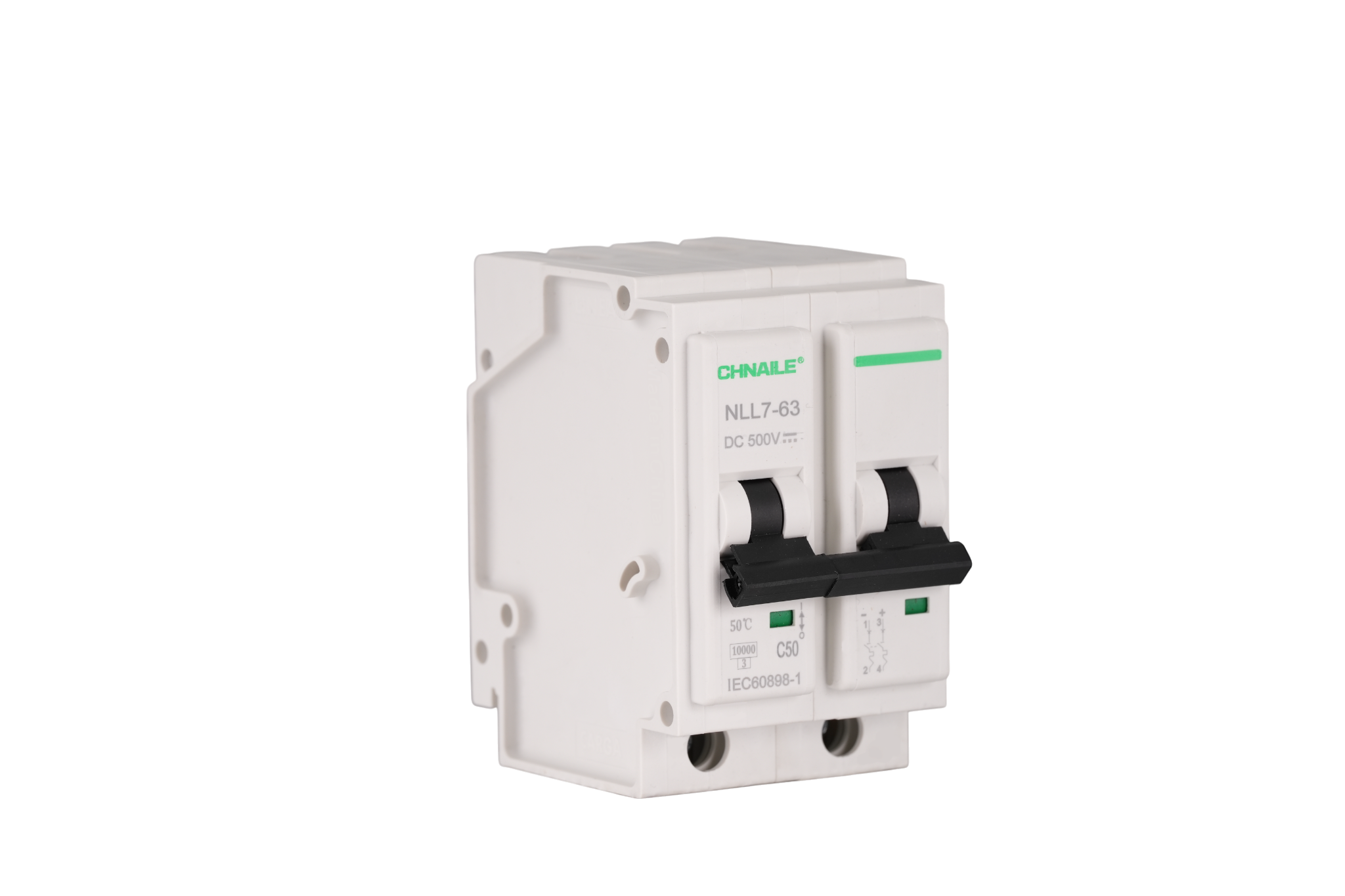
| Brand: | CHNAILE |
| Model: | NLL7-63 |
| Number of Poles: | 2P (Two Pole) |
| Current Type: | DC (Direct Current) |
| Rated Operating Voltage (Ue): | DC 500V |
| Rated Current (In): | 63A |
| Tripping Characteristic: | Curve C |
| Rated Short-circuit Breaking Capacity (Icu): | 10000A (10kA) |
| Standard Compliance: | IEC60898-1 |
| Mounting Configuration: | Quick-swap Plug-in Base (Sold separately) |

The mechanical genius of this specific 2-Pole, 50-Ampere device lies in its sophisticated base-receptacle interface. By utilizing this platform, a switchgear manufacturer can profoundly alter their production sequence. Your structural assembly teams can permanently mount the specialized connection bases onto the panel's backplate and complete all the heavy-gauge DC busbar routing and terminal torquing long before the actual circuit breakers are introduced to the cabinet. Once the steel enclosure is fully fabricated, cleaned, and painted, the active DC breaker modules are simply pushed into their respective receptacles. This "hot-swappable" design dramatically slashes the labor hours required per panel, accelerating factory throughput and significantly lowering your aggregate Bill of Materials (BOM) and labor overhead. Furthermore, this provides your end-clients—such as national grid maintenance crews or solar farm operators—with a tremendous operational advantage. In the event of a field fault, technicians can replace a damaged module in seconds by simply unplugging it, without exposing themselves to live, bare DC wires or requiring specialized isolation tools, thereby minimizing critical facility downtime.

Ensuring Uncompromising Quality Through Smart Manufacturing Automation
In the realm of direct current protection, particularly at the 500V threshold where electrical arcs lack a natural zero-crossing point and are fiercely difficult to extinguish, component reliability is a matter of catastrophic risk prevention. We understand that when an Original Equipment Manufacturer (OEM) specifies our components within their proprietary distribution boards, they are staking their corporate reputation on our manufacturing fidelity. To guarantee that every single plug-in module performs exactly to its 10,000-Ampere (10kA) short-circuit breaking specification, we have entirely revolutionized our production infrastructure. We do not rely on outdated, manual assembly techniques prone to human error.
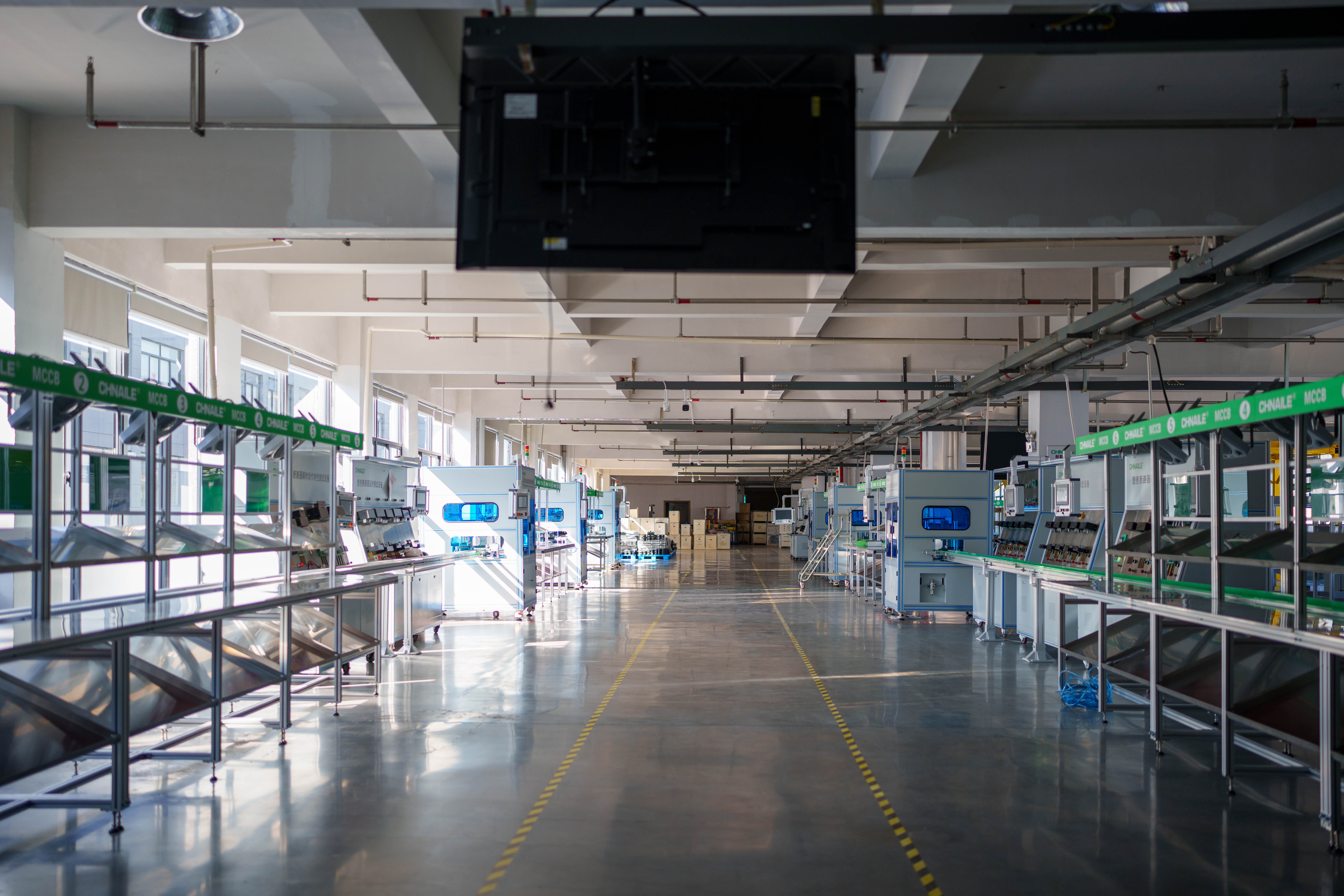
The CHNAILE facility operates highly sophisticated, automated production lines where critical internal components, such as the bi-metallic thermal releases and the heavy-duty magnetic blow-out coils, are positioned and calibrated by precision robotics. This ensures absolute physical consistency across massive production batches. Beyond the assembly phase, our commitment to quality is reinforced by state-of-the-art smart inspection equipment. Before any DC breaker is approved for global export, it must traverse a fully computerized testing gauntlet. These intelligent testing rigs subject each unit to simulated high-voltage DC short-circuits and prolonged thermal stress tests, capturing data in real-time to verify that the tripping curves align perfectly with stringent IEC60898-1 parameters. This level of uncompromising, data-driven quality control provides panel builders with the absolute certainty that their assembled cabinets will pass demanding government utility inspections and site acceptance tests without failure.
Supply Chain Sovereignty and Comprehensive Structural Customization
For a procurement director managing the logistics of an international switchboard manufacturing enterprise, consolidating vendors is the key to maintaining a resilient and profitable supply chain. Sourcing a dedicated 2-Pole 500V breaker for a solar string from one supplier, while attempting to find a matching 4-Pole variant for a main battery disconnect from another, leads to chaotic inventory management and visually disjointed electrical panels. Our manufacturing ecosystem is designed to eliminate this fragmentation entirely. The plug-in architecture showcased is not a static offering; it is a highly fluid, customizable platform.
We possess the industrial agility to design and manufacture this exact plug-in profile across an exhaustive spectrum of configurations. Whether your specific engineering schematics require a compact 1-Pole unit for delicate DC control circuits, or a massive 4-Pole configuration for complete bipolar isolation in a BESS container, our automated lines can deliver. Furthermore, the amperage ratings can be custom-calibrated anywhere from a highly sensitive 6A up to a robust 63A to perfectly match the load profiles of your specific equipment. This profound parametric scalability allows your CAD designers to utilize a unified mounting footprint and a consistent visual aesthetic across your entire product catalog. By bypassing intermediary trading networks and establishing a direct procurement dialogue with our manufacturing hub, your firm secures aggressive wholesale pricing and stabilized lead times. For specialized schematic requirements, unique accessory integrations, or to discuss formalizing an OEM partnership tailored to your upcoming power projects, our senior engineering and export logistics team is immediately accessible. We encourage you to initiate a direct technical consultation via WhatsApp at +86 15985210820 to translate your complex panel blueprints into delivered, high-performance reality.


