Nale Electric is willing to work together with domestic and foreign merchants to create brilliance!


| Quantity: | |
Rethinking Spatial Dynamics in Direct Current Panel Fabrication
The contemporary shift toward decentralized renewable energy generation and high-capacity telecommunication nodes has fundamentally altered the physical requirements of low-voltage distribution enclosures. Structural engineers at switchgear fabrication plants are routinely pressured by government utility mandates and private commercial developers to compress greater electrical capabilities into increasingly confined physical footprints. Historically, routing a substantial 160-Ampere direct current payload mandated the deployment of large, heavy Molded Case Circuit Breakers (MCCBs). The utilization of such bulky components intrinsically inflated the volume of the steel or polycarbonate enclosures, subsequently driving up raw sheet metal expenditures and complicating the internal routing of heavy-gauge copper cables. Observing this persistent manufacturing friction, the industrial design vanguard at CHNAILE deliberately engineered the NLB1-160 PV architectural platform to shatter these spatial limitations.
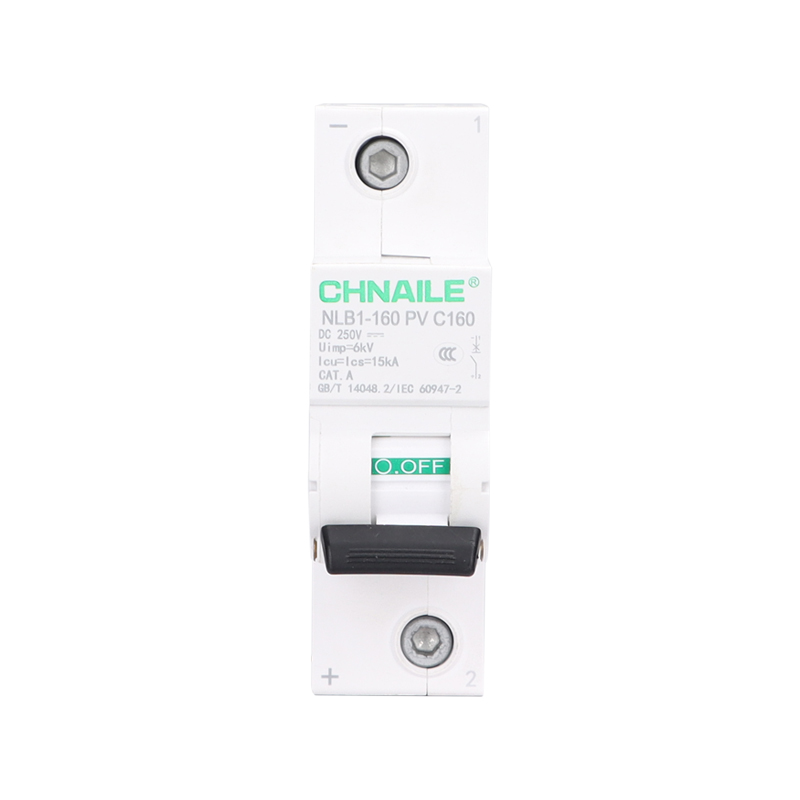
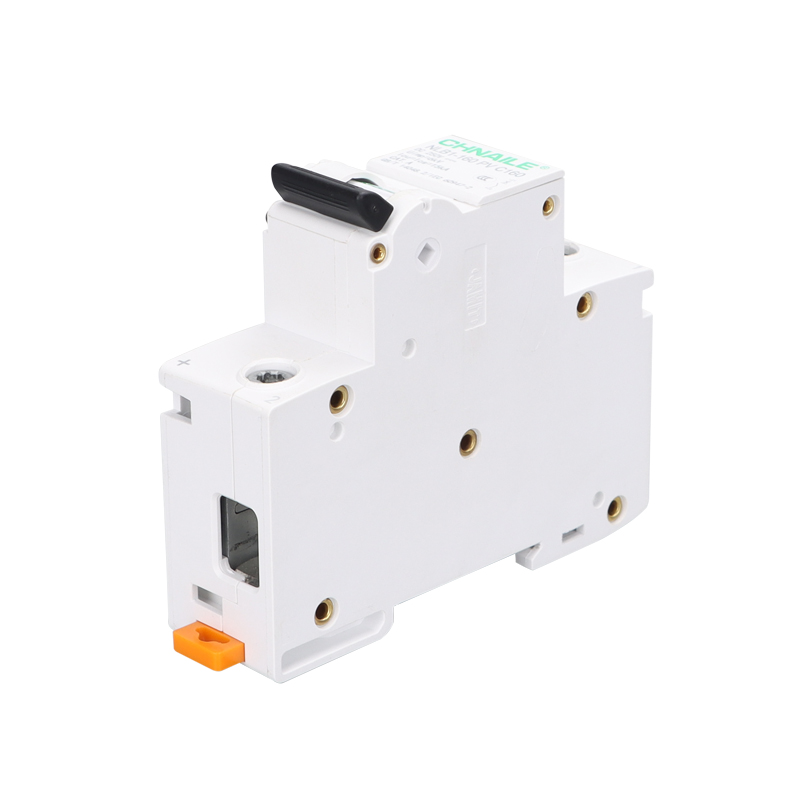
By meticulously rethinking the internal metallurgy and thermal dissipation pathways, our engineering teams achieved a remarkable feat: condensing a genuine 160A continuous DC capacity into a standard DIN-rail mountable Miniature Circuit Breaker (MCB) chassis. For the production floor technician, this translates to a revolutionary streamlining of the assembly workflow. Instead of laboriously drilling bespoke mounting plates and torquing structural bolts required by traditional MCCBs, panel builders can now rapidly snap these high-density modules directly onto standard 35mm rails. This "High-Density DIN-Rail Allocation" strategy allows CAD designers to significantly compress the internal geometry of solar string combiner boxes and 48V/250V telecom battery disconnect panels. The resulting reduction in enclosure size not only curtails direct material costs but also yields a leaner, more aesthetically refined product that is substantially easier to transport and mount on crowded municipal utility poles or commercial rooftops.
Eradicating Assembly Inconsistencies Through Smart Manufacturing Integration
Cramming 160 Amps of direct current into a miniaturized housing introduces profound thermal and electro-dynamic stresses. Direct current, lacking a natural zero-crossing point, sustains terrifying plasma arcs during a fault. A critical review of the specification plate on the highlighted 1-Pole DC 250V unit uncovers an Ics=Icu rating of 15kA. This equivalency is paramount; it guarantees that the breaker can absorb a massive 15,000-Ampere dead short, extinguish the resulting plasma through its dense internal arc chutes, and remain completely operational without requiring immediate replacement. However, asserting such extreme performance metrics is futile if the manufacturing process lacks absolute consistency. Relying on manual, human assembly for components subjected to such violent electrical forces inevitably introduces microscopic variations in contact alignment and bimetallic tension, which frequently lead to catastrophic thermal runaway in the field.
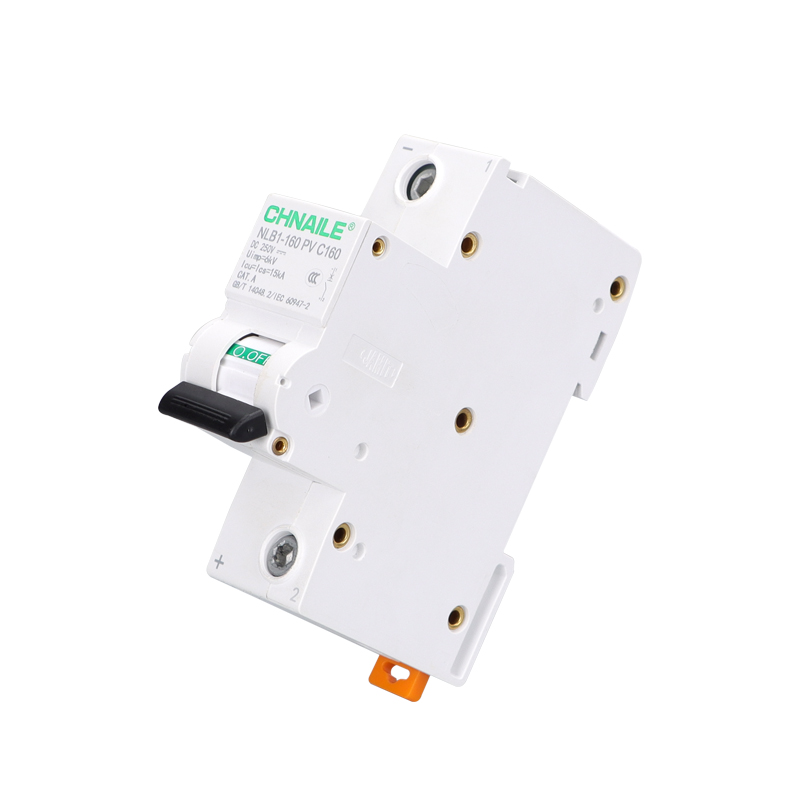
To systematically eradicate this vulnerability and protect the brand equity of our B2B panel-building partners, the CHNAILE production facility operates on a foundation of unyielding smart automation. The delicate internal assemblies of these high-capacity DC MCBs are positioned, calibrated, and sealed utilizing highly sophisticated, robotic assembly lines. This ensures that the physical tolerances of every single unit produced are absolutely identical. Furthermore, assembly is merely the precursor to validation. Prior to receiving export authorization, every batch must navigate a gauntlet of computerized smart inspection equipment. These automated diagnostic rigs subject the breakers to simulated high-voltage DC short circuits and exhaustive continuous-load thermal mapping. By replacing manual spot-checks with relentless, data-driven automated testing, we furnish global enclosure fabricators with the absolute certainty that their completed switchboards will effortlessly pass rigorous governmental site acceptance tests and long-term operational audits.
Securing Bill of Materials Optimization via Supply Chain Sovereignty
The ultimate profitability of a switchgear manufacturing enterprise relies heavily on the elasticity and reliability of its component procurement channels. Fragmenting your supply chain by sourcing a 10A DC breaker for a logic control circuit from a regional trader, whilst attempting to import a 160A main DC disconnect from a separate international entity, engenders logistical chaos. This fragmented approach forces assembly lines to contend with mismatched component dimensions, varied visual aesthetics, and unpredictable lead times. CHNAILE is strategically positioned to function as your comprehensive, unified manufacturing conduit. The high-density 160A architecture demonstrated is merely the upper echelon of an infinitely scalable production matrix.
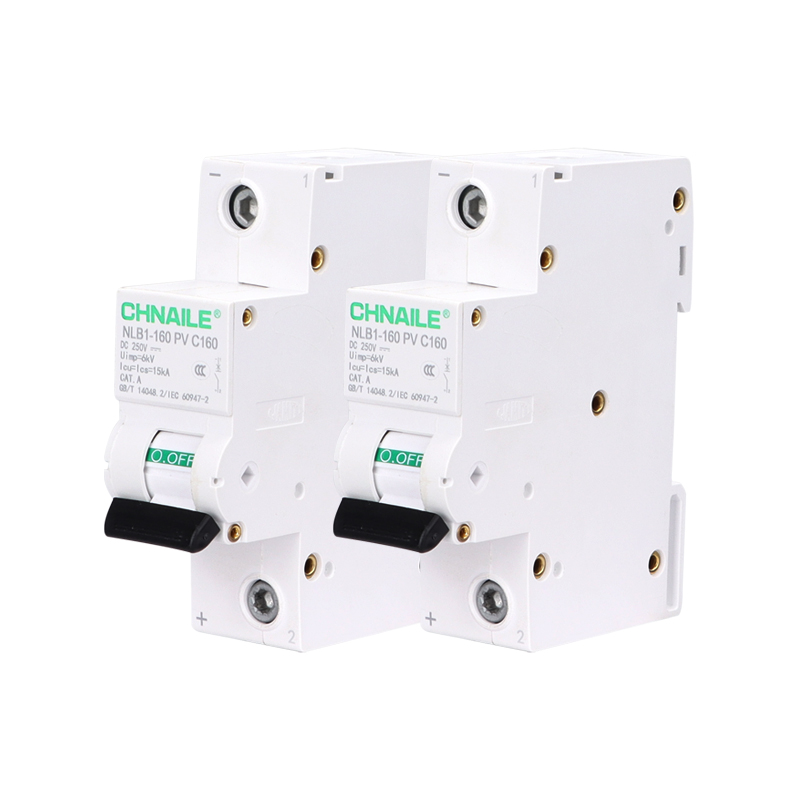
Our automated facilities are entirely equipped to custom-manufacture this precise, DIN-rail mountable DC platform across a complete operational spectrum. Whether a specific government utility tender dictates a highly targeted 1-Pole DC 250V setup, or a complex energy storage blueprint requires a fully synchronized 4-Pole configuration, our production lines adapt seamlessly. Most crucially, we possess the engineering agility to provide custom amperage calibrations spanning from a delicate 6A up to the formidable 160A limit. By standardizing your entire direct current enclosure portfolio around the CHNAILE manufacturing ecosystem, your procurement officers achieve ultimate Bill of Materials (BOM) consolidation. To explore bespoke architectural configurations, discuss extensive OEM white-labeling initiatives tailored to your brand, or to establish a stabilized, factory-direct procurement pipeline that bypasses inflated trading margins, procurement executives and structural panel designers are highly encouraged to initiate a direct technical dialogue with our manufacturing liaisons via WhatsApp at +86 15985210820. Partner directly with the source to engineer resilience and profitability into your global switchboard deployments.


