Nale Electric is willing to work together with domestic and foreign merchants to create brilliance!


| Quantity: | |
Re-evaluating Spatial Dynamics in Commercial Photovoltaic Switchgear
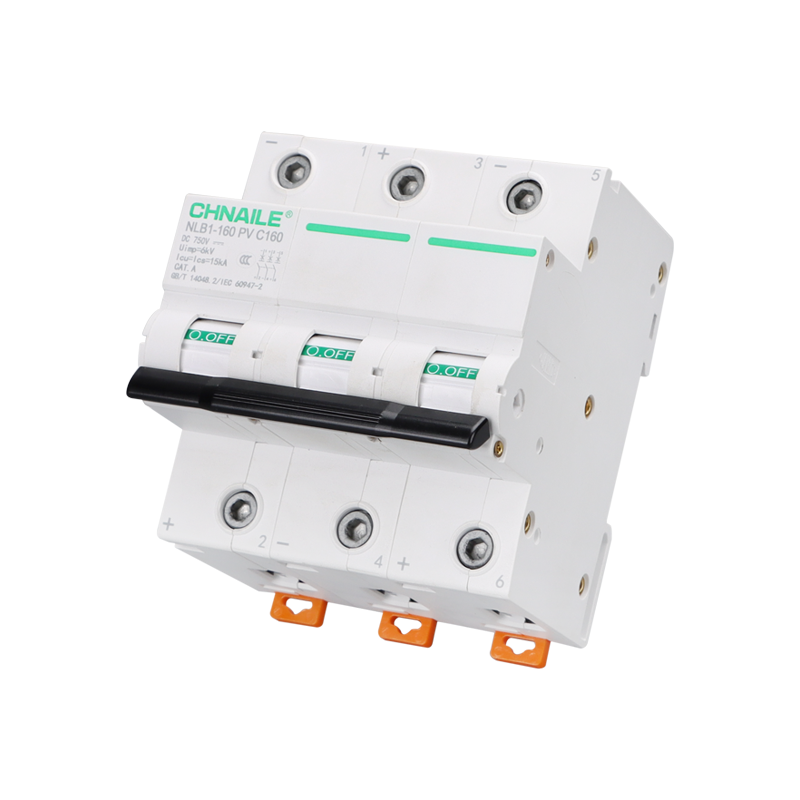
Fabricating robust electrical distribution panels for commercial rooftop solar arrays and decentralized energy storage microgrids introduces a rigid spatial dilemma for structural engineers. As the power output of modern solar string inverters continually increases, the internal components required to safeguard these circuits must manage higher continuous currents. Historically, routing 160 Amperes of direct current mandated the integration of large, heavy Molded Case Circuit Breakers (MCCBs) within the Solar Combiner Box. This requirement inherently bloated the physical dimensions of the steel enclosure, increasing sheet metal fabrication costs and making the final switchboard cumbersome to install on constrained commercial rooftops. The engineering division at CHNAILE directly confronted this structural inefficiency by developing the NLB1-160 PV architecture. This specific platform radically redefines power density. By utilizing advanced heat-dissipating polymers and highly optimized internal copper geometries, our design team successfully compressed a formidable 160A continuous DC payload into a modular, DIN-rail mountable Miniature Circuit Breaker (MCB) format. For the professional panel builder, this extreme miniaturization frees up vital lateral space upon the mounting rail, permitting the construction of significantly shallower, cost-optimized electrical cabinets without compromising the multi-kilowatt power routing capabilities demanded by national grid solar contractors.

The Physics of DC Arc Extinction and Automated Manufacturing Fidelity
Unlike alternating current, routing 160 Amperes of direct current at 750 Volts presents an unforgiving physical reality. In the event of a dead short on a commercial solar string, the resulting DC plasma arc lacks a natural zero-crossing point, causing it to burn continuously and violently. Containing this explosive energy requires absolute structural and metallurgical integrity. A meticulous observation of the specification plate on the featured 3-Pole unit reveals a critical performance metric: Icu = Ics = 15kA. This equivalency signifies that the breaker does not merely survive a 15,000-Ampere short-circuit blast; it absorbs the fault, expertly forces the plasma through dense internal de-ion chambers, and remains structurally intact to continue providing 160A service without requiring immediate replacement.
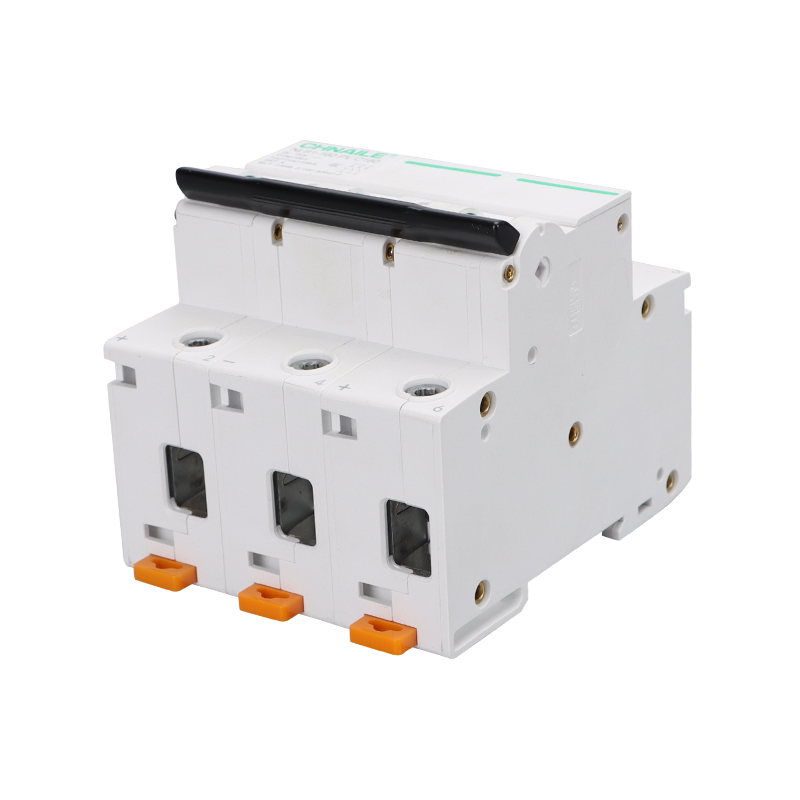
Achieving this level of elite electro-dynamic resilience on a mass-production scale cannot rely on outdated, manual assembly techniques. Discrepancies in human labor lead to inconsistent tripping curves, which is unacceptable when outfitting critical national power projects. To guarantee absolute uniformity, the CHNAILE manufacturing facility has deeply integrated Industry 4.0 methodologies. The internal bimetallic thermal strips and precise magnetic blow-out coils are positioned and secured utilizing state-of-the-art smart automated assembly lines. Furthermore, before any component is cleared for global export, it must traverse our rigorous computerized smart inspection equipment. These automated testing rigs simulate actual high-voltage DC short circuits and prolonged thermal stress, capturing real-time telemetry to verify that every single breaker performs exactly to its mandated IEC 60947-2 parameters. This relentless reliance on automated quality assurance provides panel builders with the supreme confidence that their finished switchboards will seamlessly pass rigorous third-party and government utility inspections.
Securing Procurement Sovereignty Through Parametric Scalability
For the procurement director managing a high-volume switchgear assembly plant, the ability to consolidate the Bill of Materials (BOM) is a fundamental commercial strategy. Purchasing a 16A breaker for a small auxiliary solar circuit from one regional distributor, while attempting to source a 160A main DC disconnect from another, fragments your supply chain, inflates costs, and results in a chaotic, inconsistent visual layout within your finished electrical cabinets. The true strategic leverage that CHNAILE provides to global B2B partners is our boundless manufacturing elasticity. We do not operate as an intermediary vendor; we are a primary fabrication source.
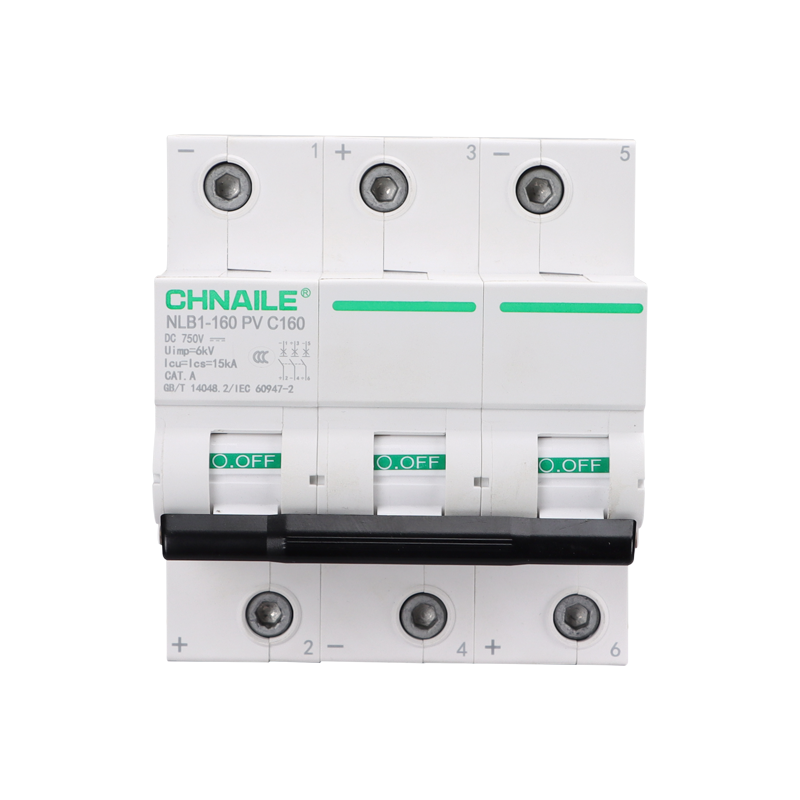
The heavy-duty 160A architecture demonstrated is merely the ceiling of a highly scalable production matrix. Our automated facilities possess the capability to custom-manufacture this exact modular profile across an exhaustive operational spectrum. Whether your specific enclosure blueprints necessitate a single-pole (1P) or two-pole (2P) configuration for decentralized arrays, or a comprehensive 4-Pole (4P) setup for complex grounding architectures, our production lines adapt instantly. More importantly, the amperage ratings can be custom-calibrated anywhere from a highly sensitive 6A up to the robust 160A limit to perfectly match the load profiles of your client's inverters. This profound parametric scalability empowers your assembly technicians to utilize unified DIN-rail spacing and standardized wiring harnesses across your entire product catalog, drastically accelerating factory throughput. We actively encourage procurement executives, panel builders, and chief electrical designers seeking to stabilize their component sourcing or requiring specialized schematic customizations to initiate a direct, high-level technical dialogue with our manufacturing team via WhatsApp at +86 15985210820. Partner directly with the source manufacturer to redefine your switchgear assembly capabilities and secure your dominance in the global renewable energy infrastructure market.


