Nale Electric is willing to work together with domestic and foreign merchants to create brilliance!


| Quantity: | |
Industry Insight: Rethinking Sub-Distribution for Municipal Grids
An Engineering Dialogue on Reducing MTTR in Public Infrastructure Panels
Securing contracts for national utility infrastructure—such as sprawling street lighting networks or decentralized telecommunication nodes—requires switchgear manufacturers to look beyond basic component cost. Today’s municipal tenders increasingly penalize prolonged power outages, making "Mean Time To Repair" (MTTR) a critical scoring metric for panel builders. We sat down with the industrial design team at CHNAILE to discuss how transitioning to a plug-in architecture for 1-Pole sub-distribution is fundamentally changing how global OEMs construct and service municipal electrical enclosures.
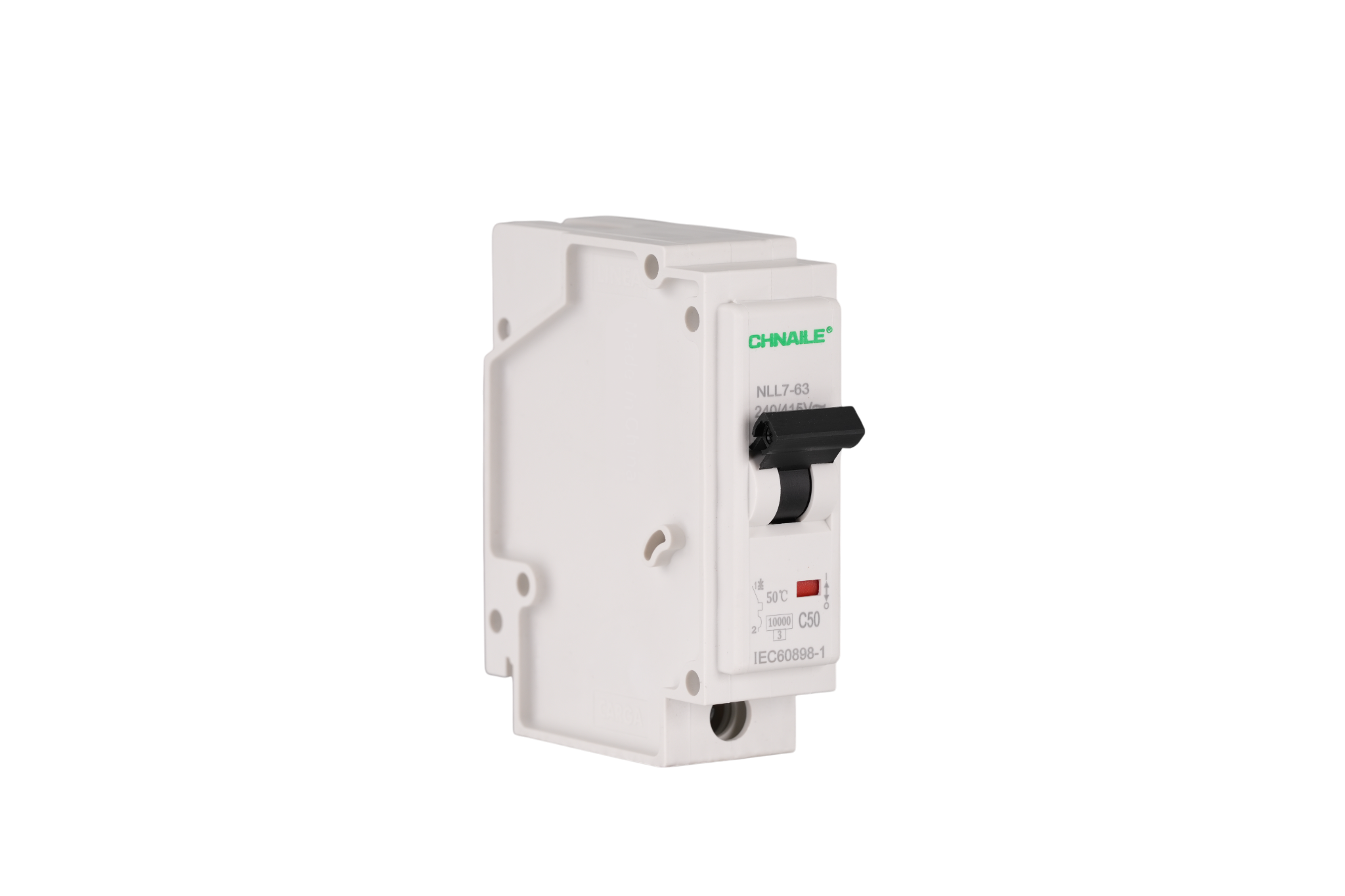
Core Technical Specifications
| Brand: | CHNAILE |
| Model: | NLL7-63 |
| Number of Poles: | 1P (Single Pole / Single Phase) |
| Current Type: | AC (Alternating Current) |
| Rated Operating Voltage (Ue): | AC 240/415V~ |
| Rated Current (In): | 63A |
| Tripping Characteristic: | Curve C (Perfect for standard residential appliances, lighting, and general-purpose loads) |
| Rated Short-circuit Breaking Capacity (Icu): | 10000A (10kA) |
| Standard Compliance: | IEC60898-1 |
| Mounting Configuration: | Quick-swap Plug-in Base (Sold separately) |

Q: Why are national grid operators shifting away from traditional hard-wired MCBs in their localized sub-panels?
CHNAILE Engineering: The primary driver is the agonizingly slow maintenance process associated with fixed breakers. Imagine a localized fault trips a breaker inside a street lighting control cabinet located on a busy highway. With a standard hard-wired DIN-rail setup, the responding technician must completely de-energize the entire distribution board, meticulously unscrew the live and neutral terminal lugs, extract the damaged unit, and rewire the replacement. This process is time-consuming, prone to re-wiring errors in poor lighting, and forces surrounding non-faulty circuits to remain dark.
Our 1-Pole Plug-in MCB architecture completely bypasses this hazardous workflow. By separating the permanent wiring base (the receptacle) from the active protective module, we enable true hot-swappable maintenance. The enclosure fabricator wires the base receptacles permanently into the panel during factory assembly. When a fault occurs in the field, the municipal technician simply pulls the tripped breaker module out of its socket and pushes a new one in. The entire operation takes seconds, not hours. This drastically reduces the MTTR, ensuring that public infrastructure remains highly resilient and operational.

Q: Panel builders often struggle with inventory fragmentation when dealing with varied municipal projects. How does a scalable 6A to 63A platform alleviate this?
CHNAILE Engineering: Fragmented supply chains destroy manufacturing profitability. If your panel building facility wins a contract for a telecom node requiring sensitive 6 Ampere protection, and simultaneously secures a bid for a commercial HVAC sub-panel needing 63 Amperes, sourcing different breaker form factors from disparate vendors creates chaos on the assembly floor. Your CAD designers have to draft different sheet-metal cutouts, and your assembly workers have to manage chaotic busbar routing.
We designed this plug-in platform to be infinitely scalable within a unified physical footprint. Because we operate as the primary manufacturing source, we don't just sell off-the-shelf ratings. We possess the automated industrial capacity to custom-calibrate the internal thermal-magnetic core to exact specifications—from a delicate 6A up to a robust 63A—while maintaining the exact same external housing dimensions. For the switchgear manufacturer, this means absolute Bill of Materials (BOM) consolidation. You can design one standardized steel enclosure and one universal copper busbar layout, and simply populate the receptacles with the specific amperage modules your client’s blueprint demands. This level of standardization accelerates factory throughput and drastically reduces sheet metal scrap.
Q: How does a direct partnership with a manufacturer benefit a switchgear assembler compared to using regional distributors?
CHNAILE Engineering: Relying on intermediary distribution channels for highly specific components like plug-in MCBs exposes a panel-building enterprise to unpredictable lead times and erratic commodity pricing. The final output of your assembly line—the heavy-duty switchboard—is a physical testament to your brand’s engineering prowess. Therefore, the internal components you select must inherently elevate that pedigree while remaining financially viable.
By bypassing traditional trading networks and establishing a direct procurement dialogue with our production floors, panel builders insulate their businesses from volatile market forces. We deliver aggressive, factory-direct wholesale pricing that significantly optimizes project margins, granting you the financial leverage necessary to aggressively pursue capital-intensive government utility contracts.
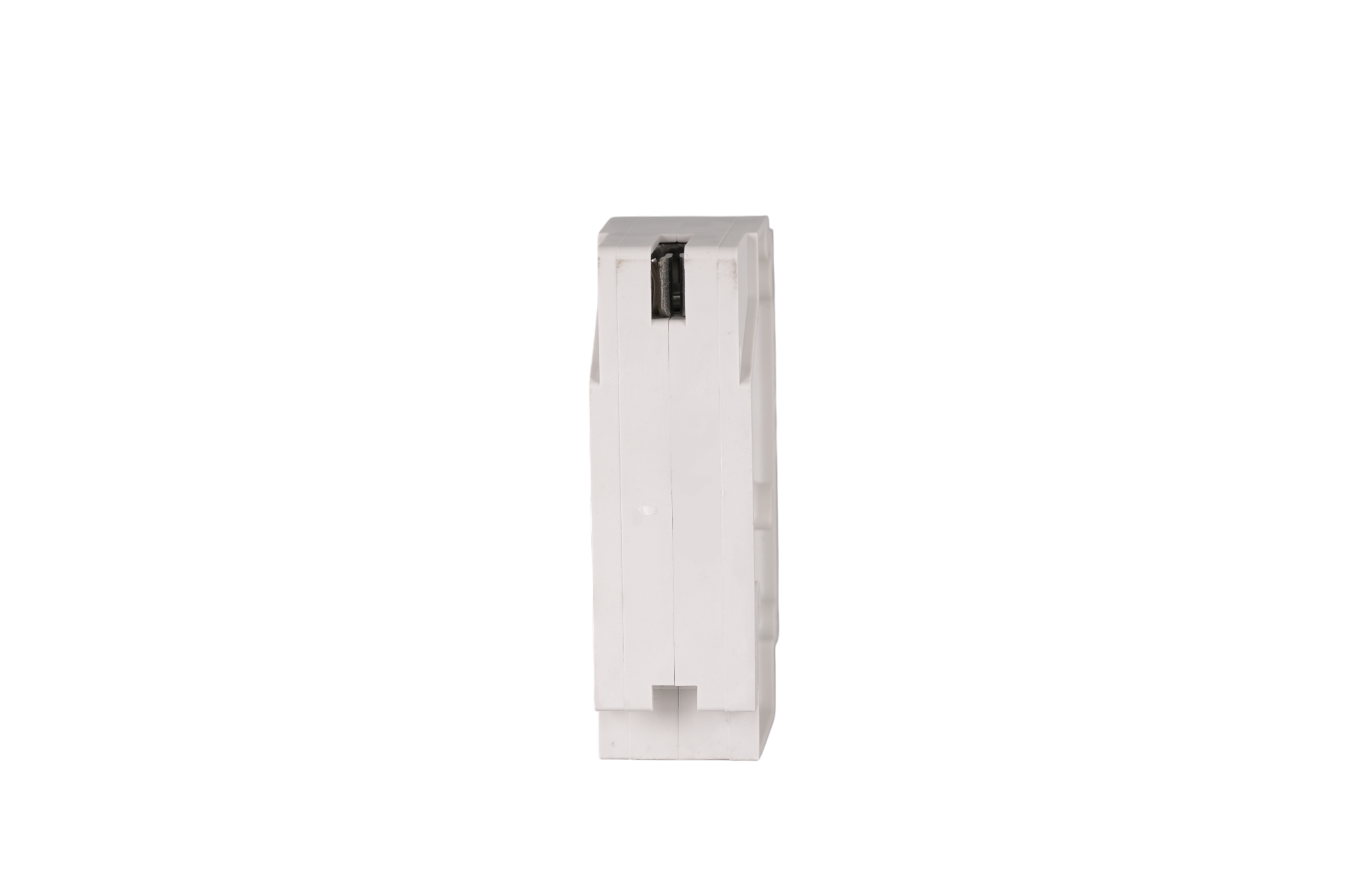
Furthermore, we amplify your corporate footprint through exhaustive Original Equipment Manufacturer (OEM) integration programs. Our facilities possess the capability to laser-engrave your proprietary corporate insignia directly onto the breaker escutcheons, customize the safety demarcations, and tailor the bulk packaging to integrate flawlessly into your localized assembly logistics. Supported by rigorous internal laboratory testing that guarantees compliance with exacting IEC safety standards, we provide the certified, scalable core components your factory requires to dominate the global electrical enclosure market. Should your upcoming municipal tenders require unorthodox amperage ratings or specialized accessory integrations beyond our standard catalog, our senior engineering task force is prepared to collaborate. We encourage procurement executives and chief engineers to initiate a direct dialogue with our customized production team via WhatsApp at +86 15985210820 to translate complex panel blueprints into delivered reality.


