Nale Electric is willing to work together with domestic and foreign merchants to create brilliance!


| Quantity: | |
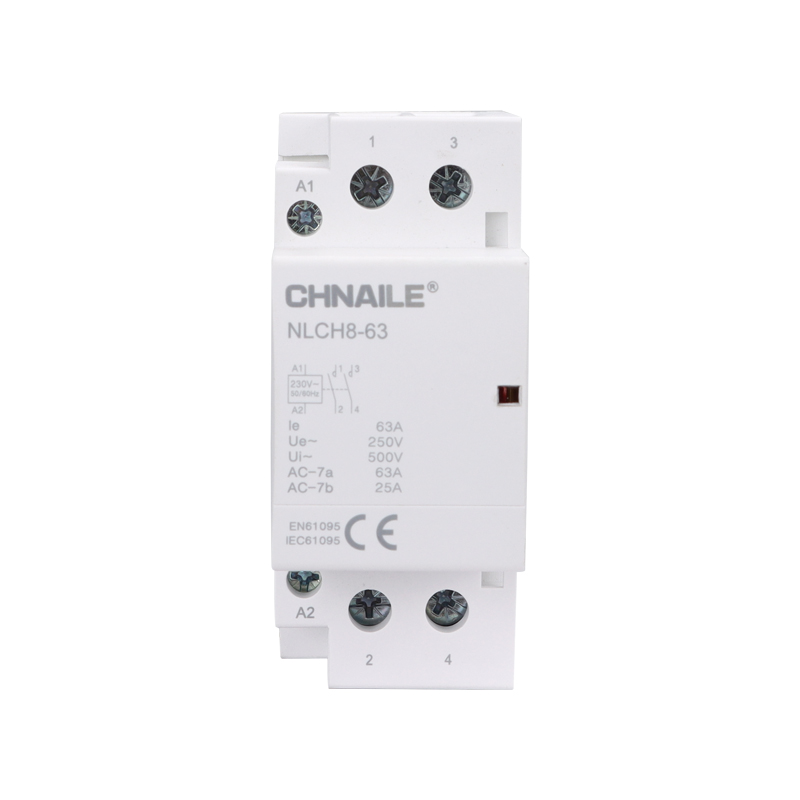
The distinction between a contactor rated under IEC 60947-4-1 (the general industrial contactor standard) and one rated under IEC61095 (the household and similar application contactor standard, mirrored as EN61095 in the European normative framework) is not merely a catalogue classification exercise — it is a substantive engineering and regulatory demarcation that determines whether a switching device is correctly specified for installation inside a residential distribution board, a commercial building tenant panel, or a building management system's load-control cabinet. IEC61095 establishes a distinct set of making and breaking duty requirements, mechanical and electrical endurance categories, and temperature-rise limits that are calibrated to the load profiles and installation environments of building electrical systems, as opposed to the motor-dominated, high-switching-frequency industrial environments addressed by IEC 60947-4-1. For panel builders assembling residential distribution boards or commercial building sub-distribution panels destined for inspection under national electrical installation codes derived from the IEC framework — as is standard practice across the Gulf Cooperation Council, sub-Saharan Africa, South and Southeast Asia, and the majority of Latin American markets — the presence of IEC61095 and EN61095 type-test certification on the contactor label is a compliance precondition, not an optional premium, because the local inspection authority's approved component list or acceptance criteria will reference this specific standard for household-category switching devices. The NLCH8-63's label displays both EN61095 and IEC61095 alongside CE marking — a triple compliance declaration that, when backed by the type-test report obtainable from our factory documentation package, satisfies the regulatory evidence requirement for building permit applications and third-party inspection sign-off across the widest possible range of destination markets simultaneously.
Reading the parameter block from the product image with the granularity that an experienced procurement engineer applies to component qualification reveals a precisely calibrated specification architecture. The Ie = 63 A rated operational current designates the maximum continuous current the main contacts are designed to carry under the thermal conditions defined by IEC61095's temperature-rise test methodology — a value that, at the 250 V operational voltage marked as Ue, corresponds to a continuous load power of approximately 15.75 kW per two-pole circuit, covering single-phase loads from large air-conditioning units and electric water heaters to EV charging wallboxes in the 7 kW range and lighting control circuits for floor-level commercial tenant spaces. The Ui = 500 V rated insulation voltage provides a dielectric safety factor of 2:1 over the operational voltage — a margin that accommodates transient overvoltages from switching events and lightning coupling without compromising the creepage and clearance geometry of the contact chamber insulation. The AC-7a = 63 A / AC-7b = 25 A utilisation category pair is the parameter that panel builders most frequently overlook when selecting contactors for building automation applications, yet it carries the most direct consequence for contact service life: AC-7a governs the making and breaking of resistive or slightly inductive loads (lighting circuits, resistive heating, capacitive power factor correction banks), while AC-7b governs the making and breaking of motor loads with the higher inrush and breaking duty that motors impose. A panel builder who specifies a contactor rated solely at AC-1 or AC-3 for a residential load control application involving mixed resistive and small motor loads — fan-coil units, refrigeration compressors, circulating pumps — is applying a device outside its tested duty envelope, with consequences for contact erosion rate and mechanical endurance that may not manifest during commissioning but will produce premature contact failure within the first operational year. The NLCH8-63's explicit AC-7a and AC-7b ratings, visible on the device face and traceable to the EN61095 type-test record, eliminate this specification ambiguity.
The physical construction observable in the image reinforces the specification's building-automation orientation at every structural detail. The white moulded housing — a clean, high-gloss polymer that reads as visually consistent with the MCB and RCCB devices that populate the same residential and commercial distribution board interior — is not the dark grey or black housing that characterises industrial contactors optimised for switchgear cabinet installation; it is specifically calibrated to the visual convention of DIN rail devices designed to be visible and legible to the homeowner's electrician, the building manager's maintenance contractor, and the local authority's inspection officer opening a residential consumer unit or commercial tenant board. The red status LED positioned on the right face of the housing — visible in the product image as a small circular indicator below the main label block — provides an energisation status signal that is readable at panel-door distance without requiring the observer to touch any terminal or conduct any voltage measurement, satisfying the safe-working practice requirement that coil energisation be confirmable by observation alone before a maintenance technician proceeds with any intervention on the downstream circuit. The terminal numbering convention — 1 and 3 on the line side (top), 2 and 4 on the load side (bottom) — follows the IEC 60947-1 terminal designation standard for two-pole switching devices, meaning that the wiring diagram on the device face (a circuit schematic showing coil terminals A1/A2 and main contact pairs 1-2 and 3-4) can be read by any electrician trained to IEC wiring conventions without consulting external documentation. The A1 coil terminal is positioned at the top-left of the housing, with the A2 terminal at the bottom-left, placing the coil control circuit connection points on the same face as the main circuit terminals but physically separated from them by the housing's terminal partition — a layout that reduces the risk of accidental coil-to-main-circuit cross-connection during board wiring and that aligns with the wiring sequence logic that experienced panel assembly technicians apply: main circuit wiring first (top and bottom), control circuit wiring second (left side), a sequence that minimises the number of tool reachability conflicts during dense DIN rail population.
Parameter | Value |
|---|---|
Model | NLCH8-63-2P |
Brand | CHNAILE |
Poles | 2P |
Rated Operational Voltage (Ue) | 250V AC |
Rated Insulation Voltage (Ui) | 500V |
Rated Operational Current (AC-7a) | 63A |
Rated Operational Current (AC-7b) | 25A |
Utilization Categories | AC-7a, AC-7b |
Mounting Type | DIN Rail (35mm) |
Standard | EN 61095 |
Contact Material | Silver Alloy |
Coil Voltage Options | 12V AC, 24V AC, 110V AC, 230V AC, 240V AC |
Mechanical Life | ≥ 1,000,000 operations |
Electrical Life (AC-7a) | ≥ 100,000 operations |
Operating Temperature Range | -5°C to +40°C |
Storage Temperature Range | -25°C to +55°C |
Protection Degree | IP20 |
 |  |
The coil specification of 230 V~ / 50-60 Hz — marked on the device label's circuit schematic block and confirmed by the A1/A2 terminal designation — encodes a deliberate market deployment decision: the 230 V AC coil voltage, operable across both 50 Hz and 60 Hz supply frequencies, is the single coil specification that covers the widest possible geographic market without requiring a coil re-specification or a separate auxiliary transformer. In TN-S three-phase four-wire distribution systems operating at 400/230 V (the standard across the EU, Gulf, East Africa, South Asia, and a significant portion of Southeast Asia), the 230 V coil can be energised directly from any line-to-neutral voltage in the distribution board, making the contactor controllable by standard 230 V thermostat outputs, BMS relay contacts, timer switch outputs, and smart home gateway relay modules without any intermediate voltage transformation. In 220 V / 60 Hz systems (prevalent in parts of Latin America and some legacy infrastructure in Southeast Asia), the same coil operates within its rated voltage tolerance band, enabling deployment without coil substitution. For panel builders assembling boards destined for export or for multi-country project portfolios — a common scenario for Gulf-based panel builders supplying projects across MENA, or for South African panel builders supplying sub-Saharan infrastructure contracts — the single-coil-voltage architecture reduces the inventory complexity and the risk of mis-specification that arises when different coil voltage variants must be maintained for different destination markets. The OEM customisation pathway available from our factory extends the coil voltage configurability further: customers whose specific application requires a 110 V AC coil (for compatibility with legacy control circuit standards in certain Middle Eastern utility contracts), a 24 V AC coil (for integration with low-voltage BMS control systems in data centre power management applications), or a DC coil variant (for BESS charge management relay functions operating from battery-backed DC control circuits) can specify the coil voltage at the OEM order stage, with the factory's coil winding and coil assembly process producing the specified variant under the same quality control discipline as the standard 230 V configuration.
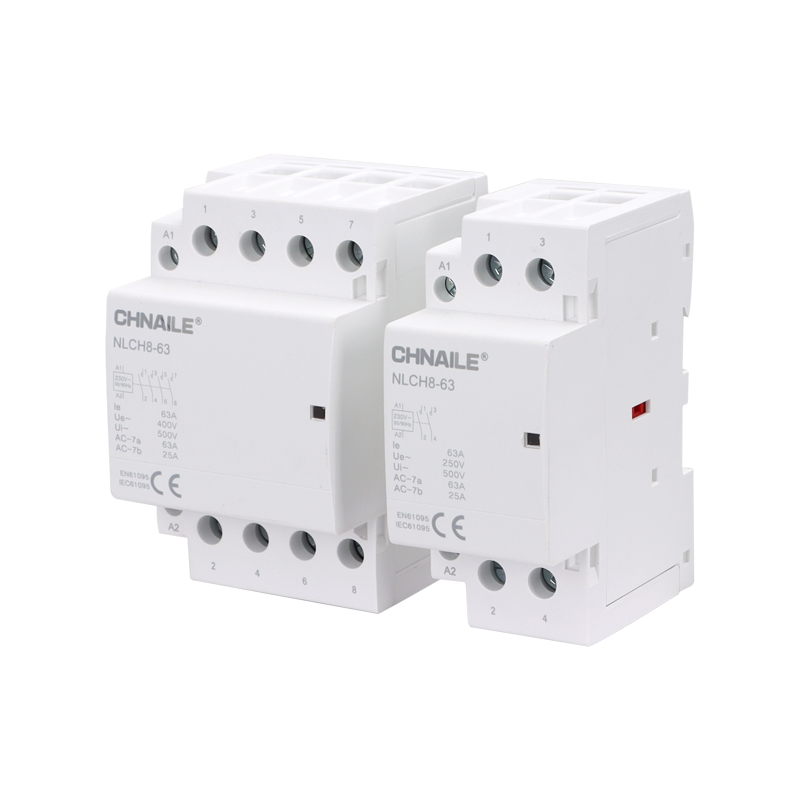
The margin structure of a panel builder's commercial building distribution board business is, in most competitive markets, determined less by the labour efficiency of the assembly workshop and more by the component sourcing cost relative to the finished board's selling price — and of all the component categories that populate a typical commercial building distribution board, the contactor population represents one of the highest-margin opportunities for optimisation, because the price difference between a branded European contactor and a factory-direct IEC61095-certified equivalent is proportionally larger than the price differential in MCBs or RCCBs, while the compliance and performance requirements are equally well-served by the certified alternative. A commercial building distribution board assembly containing twelve contactors for HVAC zone control, lighting circuit switching, and water heater load management represents a contactor procurement decision whose unit-price differential — between a branded distributor-sourced device and a factory-direct private-label certified equivalent — compounds to a board-level cost saving that materially improves the panel builder's margin without any reduction in the specification standard presented to the client's electrical consultant or the building inspector. The private-label customisation architecture available from our manufacturing facility operationalises this margin recovery in a commercially deployable form: the panel builder's own brand designation replaces the CHNAILE name on the device face label, the model series number is re-designated to align with the panel builder's own product catalogue structure, the housing colour is configurable to match the panel builder's visual identity standard or the distribution board's interior colour convention, and the retail or project-quantity packaging carries the panel builder's brand artwork — producing a supply chain output that is, from the perspective of the end customer and the building inspector, the panel builder's own branded product rather than a re-sold third-party component. This brand sovereignty construction — where the factory's type-test credentials underpin the panel builder's own brand's compliance claim — is the commercial architecture that allows a mid-sized panel builder in the Gulf, East Africa, or Latin America to compete on product specification rather than price alone, because the branded component in their board commands the same perceived compliance authority as a European brand while carrying a cost structure that generates the margin to invest in technical sales capability, project engineering support, and warranty service infrastructure. Beyond brand architecture, the pole count configurability of the platform — 2P as shown, but also 1P for single-pole load switching in single-circuit control applications, and 4P for three-phase load switching in HVAC plant contactors or three-phase EV charging equipment — means that a single OEM relationship with our factory covers the full contactor BOM of a commercial building board design, eliminating the need to maintain separate vendor qualifications for each pole configuration and reducing the procurement administrative overhead that qualification management imposes on the panel builder's engineering team. Procurement managers, panel assembly workshop managers, and project electrical engineers evaluating the NLCH8-63 platform for qualification against a current or forthcoming contactor sourcing requirement — whether for new board production, spares rationalisation, or private-label product development — are encouraged to initiate a direct technical dialogue with our manufacturing team via WhatsApp at +86 15985210820, where our export engineering team engages directly with rated current, pole count, coil voltage, volume, and branding parameters to return a complete technical and commercial proposal within one working day.