Nale Electric is willing to work together with domestic and foreign merchants to create brilliance!

Views: 0 Author: Site Editor Publish Time: 2026-01-29 Origin: Site


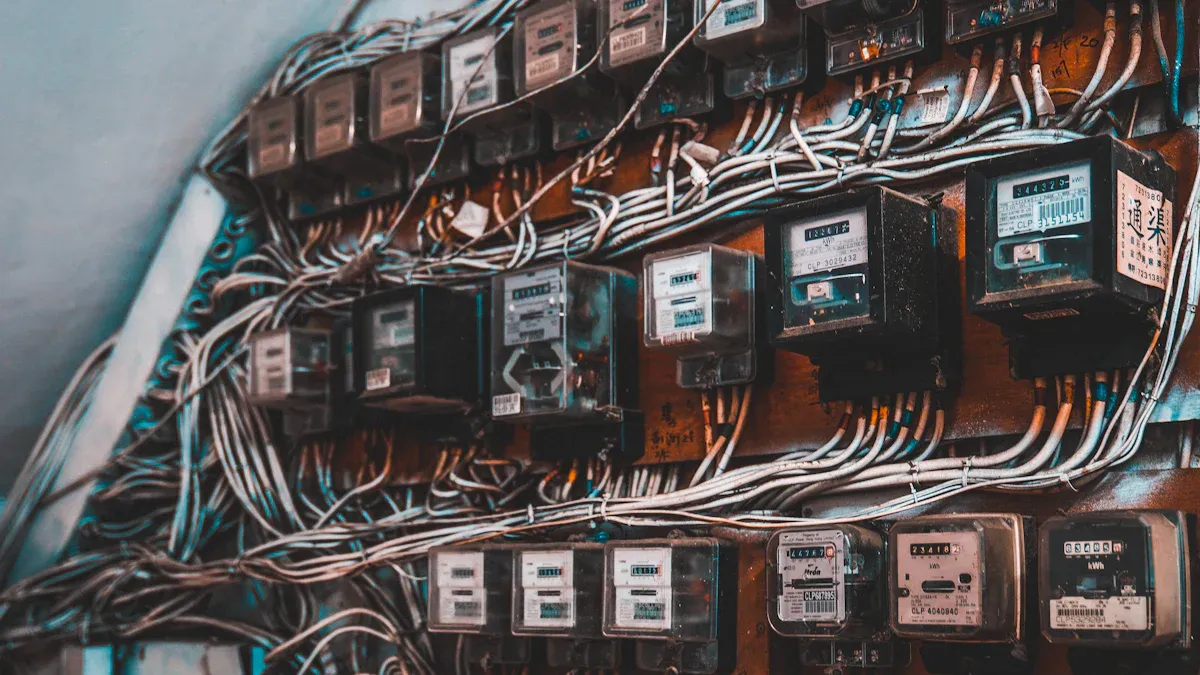
Imagine waking up to the smell of smoke in your home. Every year, electrical faults spark about 51,000 house fires across the country. These fires cause hundreds of deaths and thousands of injuries. You rely on your circuit breaker to stop dangerous currents before they turn wires hot and start a fire. The circuit breaker panel stands guard, giving your home protection by cutting power when something goes wrong. You might not see it working, but it keeps your family safe every day.
Circuit breakers keep your home safe. They stop electricity when there is a problem. This helps prevent electrical fires.
Too many devices can overload circuits. Overloaded circuits make wires hot. Hot wires can start fires. Do not plug in too many things at once.
Check your circuit breaker panel often. Look for burning smells or if it trips a lot. These signs mean there could be trouble. This helps keep you safe.
New circuit breakers with GFCI and AFCI are better. They find faults and stop shocks. This makes your home safer.
If your circuit breaker trips a lot, unplug some devices. Ask a professional electrician for help. They can find and fix the problem.
You use electricity all the time at home. You may not know how it gets to your devices. Most homes use 120-volt circuits for lights and TVs. Ovens and dryers need 240 volts. Wires inside your walls carry power from the breaker panel. They send electricity to every outlet and switch. When you plug in something, you close the circuit. Electricity flows and makes your device work.
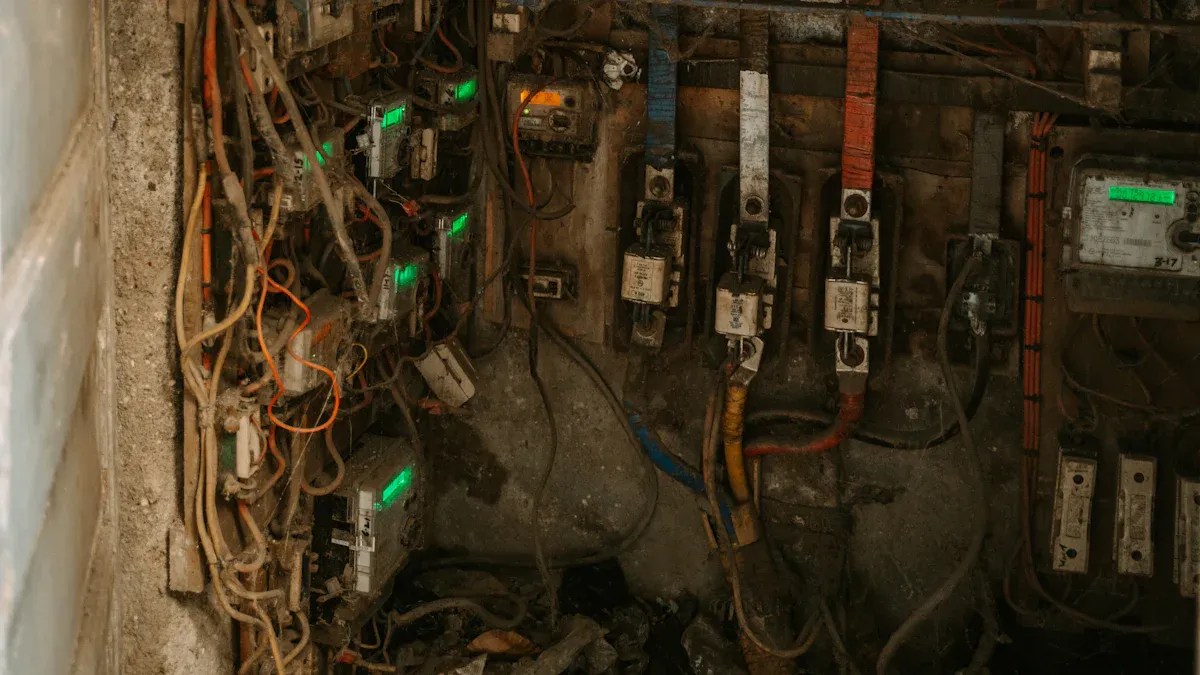
If your home has old wiring or aluminum wires, fire risk is higher. Homes with aluminum wiring have more electrical dangers than homes with copper wiring.
Plugging in too many things can overload your circuits. Using the wrong extension cords can also cause problems. Wires can get very hot when overloaded. This is a main reason for electrical fires in homes. Fires often start because of:
Old electrical systems that cannot handle new devices
Broken outlets and appliances, like frayed cords
Using bulbs that are too strong for light fixtures
Using extension cords and power strips the wrong way
Worn out or bad electrical parts
Ignoring these problems can damage your devices. It can also cause fires that hurt people or worse.
Too much current makes wires heat up. If wires get too hot, their insulation can melt or burn. For example, cable insulation breaks down at about 90°C (194°F). It can smoke and melt above 200°C (392°F). This heat can set wood or dust on fire nearby. Fire can spread fast.
Temperature (°C) | Effect on Cable Insulation |
|---|---|
170-200 | Insulation loses its protection |
200 | Insulation starts to change color |
280-300 | Insulation smokes, melts, fire risk |
Even a little resistance in a wire with high current can make enough heat to start a fire. That is why you should not overload your circuits. Keep your electrical system safe and working well.
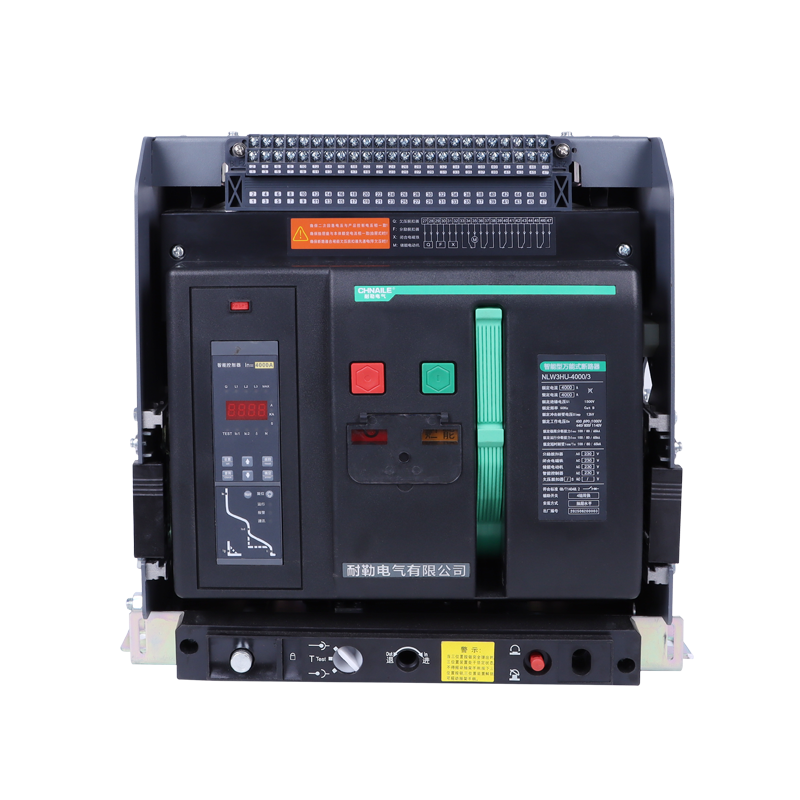
You trust your circuit breaker to watch over your home’s electricity. This device acts like a guard, always checking for trouble. When you turn on a light or plug in your phone, the circuit breaker measures the amount of current flowing through the wires. If something goes wrong, it reacts fast.
A circuit breaker uses two main sensors to spot problems:
Thermal sensors feel heat from too much current.
Magnetic sensors sense sudden spikes, like during a short circuit.
These sensors work together inside the circuit breaker. They can spot three main types of electrical faults:
Overload: When you use too many devices at once, wires get hot.
Short circuit: When wires touch by mistake, current jumps very high.
Ground fault: When electricity leaks out of the normal path.
The circuit breaker uses a trip unit, which can be thermal-magnetic or electronic. This trip unit checks the current all the time. If it finds a problem, it triggers a mechanical release. This release opens the contacts inside the circuit breaker and stops the flow of electricity. You do not have to do anything—the circuit breaker does it all by itself.
Tip: Arc-fault circuit interrupters (AFCIs) are extra sensitive. They can trip if they sense sparking or even small faults. This helps protect you from hidden dangers.
When the circuit breaker detects too much current, it acts right away. It trips, which means it opens the circuit and stops electricity from flowing. This quick action keeps wires from overheating and lowers the risk of fire.
Think of the circuit breaker as an automatic switch. If you plug in too many things or if a wire gets damaged, the circuit breaker will trip. It does not wait for you to notice a problem. It interrupts the flow before anything gets too hot or dangerous.
Here’s what happens inside:
The trip unit senses the fault.
The mechanical release pops open the contacts.
An electric arc forms, but the circuit breaker uses special parts to put out the arc fast.
Fault Type | What Happens? | How Circuit Breaker Responds |
|---|---|---|
Overload | Wires heat up slowly | Trips after a short delay |
Short Circuit | Sudden, huge current spike | Trips instantly |
Ground Fault | Current leaks off the circuit | Trips quickly |
You do not have to worry about flipping a switch. The circuit breaker does the job for you, keeping your home safe.
After a circuit breaker trips, you need to reset it to restore power. This process is simple, but you should always check for problems first.
Follow these steps to reset a circuit breaker:
Make sure the breaker is all the way off.
Wait a moment.
Flip the breaker back on.
Note: If the circuit breaker trips again right away, do not keep resetting it. This means there is still a problem. Call a professional electrician to check for hidden faults. Resetting without fixing the cause can lead to more damage or even fire.
Before you reset, look for signs of trouble. Unplug devices or check for damaged cords. If you find nothing wrong and the breaker stays on, you can use your devices again. If it trips again, let an expert handle it.
A circuit breaker is more than just a switch. It is an electrical safety device that protects your home every day. By detecting faults, interrupting dangerous currents, and letting you reset safely, the circuit breaker stands between you and electrical fires.
You may see the circuit breaker panel as a metal box. It does much more than just hold switches. The panel is the center of your home's electrical system. It sends power to every room and watches each circuit. If something goes wrong, the panel stops dangerous currents fast.
Here’s how the circuit breaker panel helps you:
It stops electrical fires by cutting off power quickly.
It protects your appliances from getting ruined.
It keeps your home's electrical system safe.
Each circuit in your home has its own breaker. If you use too many devices, the breaker trips and stops electricity. This quick action keeps your home safe and prevents damage.
You can make your home safer by using advanced circuit protection devices. New breakers do more than just trip when there’s too much current. Smart breakers check current, voltage, and temperature all the time. They give you live updates and help you find problems early.
Here are some features and benefits of advanced circuit protection:
Feature | Benefit |
|---|---|
Intelligent fault detection | Finds problems before they cause fires. |
Remote monitoring | Lets you watch your system from anywhere. |
Adaptive control features | Changes to keep your home safe. |
Arc fault circuit interrupter breakers save lives and homes by stopping fires early. They sense dangerous arcing in wires that old breakers might miss. You get better protection and feel safer.
You may know about ground fault circuit interrupter and arc fault circuit interrupter breakers. These devices use smart technology to keep you safe.
Ground fault circuit interrupter breakers protect you from electric shock. They shut off power fast if electricity leaks out of its normal path.
Arc fault circuit interrupter breakers trip when they sense sparking or arcing in wires. This stops fires from hidden faults.
Homes with these breakers have fewer electrical fires and less risk of shock. GFCI breakers have cut household electrocutions in half since the 1970s. AFCI breakers catch arcing faults, which cause thousands of fires every year. Adding these technologies to your panel gives you stronger protection and keeps your family safer.
You may think circuit breakers and fuses do the same thing. Both protect your home from electrical faults, but they work differently. Fuses have a thin metal wire that melts if too much current flows. This stops electricity right away. Circuit breakers use electromechanical parts to open the circuit when there is trouble. You can reset a breaker after it trips. You must replace a fuse every time it blows.
Here’s a simple comparison:
Feature | Fuses | Circuit Breakers |
|---|---|---|
Mechanism of Action | Melts a metal wire to interrupt the circuit | Uses electromechanical mechanisms to open the circuit |
Response Time | Reacts quickly to faults | Marginally slower than fuses |
Reusability | Single-use, needs replacement | Can be reset and reused |
Tip: Circuit breakers have extra safety features, like ground-fault protection. Fuses do not have these features. Circuit breakers help prevent fires and protect you from electric shock.
Circuit breakers give you more safety. They protect against overloads, short circuits, and ground faults. You can test them to make sure they work. Fuses only protect against overloads. You cannot test fuses. When a fuse blows, you need a new one.
Here are the pros and cons:
Circuit Breakers
You can reset them after a fault.
They have advanced options like GFCI and AFCI.
Maintenance is easy. You just switch them off and on.
They cost more at first but last longer.
You should test them every year.
Fuses
They react fast to faults.
They cost less at first.
You must replace them after every fault.
You need to check ratings and contacts often.
They do not have advanced safety features.
Feature | Circuit Breakers | Fuses |
|---|---|---|
Reusability | Can be reset without replacement | Must be replaced after use |
Maintenance | Easier to operate and manage | More complex to manage |
Advanced Safety Features | Includes GFCI and AFCI options | Limited safety features |
Upfront Cost | Higher initial investment | Lower initial cost |
Response Time | Slightly slower than fuses | Faster response time |
Maintenance Requirement | Requires periodic testing and calibration | No maintenance required |
If you want the best protection from electrical fires, circuit breakers are safer. You get better protection, fewer worries, and extra features to keep your family safe.
You count on your circuit breaker to keep your home safe. The circuit breaker stops dangerous currents before a fire can start. Each one in your panel looks for problems and acts quickly. Newer panels use AFCI and GFCI technology for extra safety. These features also help stop shocks. If you upgrade your panel, you get more circuits and better protection. You will also have fewer power problems. Check your circuit breaker panel once a year. If it trips a lot, feels hot, or smells strange, you might need a new one.
Benefits of a new circuit breaker panel:
Circuit breaker finds problems and turns off power by itself.
Circuit breaker lowers fire risk and can cut insurance costs.
Circuit breaker lets you use more devices and keeps power steady.
Circuit breaker follows new safety rules for your house.
You can test your circuit breaker with a multimeter or by looking at it. If you see burn marks or hear weird noises, call an expert. Get your circuit breaker checked every three to five years for safety. Your circuit breaker is the best way to stop electrical fires. Make safety checks a habit to protect your family.
If your breaker trips often, unplug devices and check for damaged cords. You should not keep resetting it. Call a licensed electrician to find the cause. This keeps your home safe and prevents electrical fires.
Look for signs like a burning smell, hot breaker, or visible damage. If the breaker won’t reset or trips with no load, it may be faulty. You should ask an electrician to inspect it.
You should not replace a breaker unless you have electrical training. Working inside the panel is dangerous. Call a professional for repairs or upgrades. This protects you from shock and fire risks.
GFCI breakers protect you from electric shock. AFCI breakers stop fires from hidden sparks. You get better safety for your family when you use both types in your home.