Nale Electric is willing to work together with domestic and foreign merchants to create brilliance!

Views: 0 Author: Site Editor Publish Time: 2026-02-02 Origin: Site


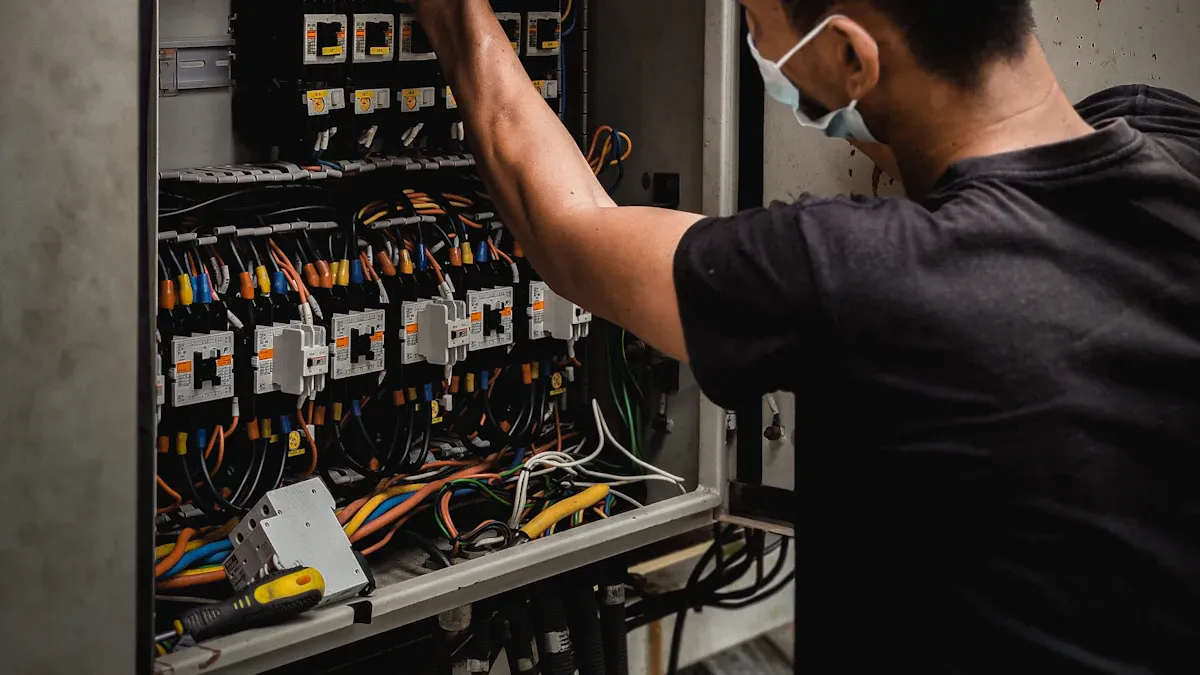
Are you thinking your circuit breaker could be bad? Look for these signs:
Cracks or broken spots on the breaker
Parts that look melted or too hot
It trips a lot
You hear buzzing or crackling noises
Checking these things helps keep your home safe. Do not try to fix electrical problems by yourself. Always call a professional to stay safe.
Watch for signs of a bad circuit breaker, like tripping often, burn marks, or weird smells. These things can mean there are big problems.
Safety comes first. If you see any warning signs, turn off the power and call a licensed electrician to help you.
Check your circuit breaker panel often to stop dangers before they happen. This helps keep your home safe and lowers the chance of fire.
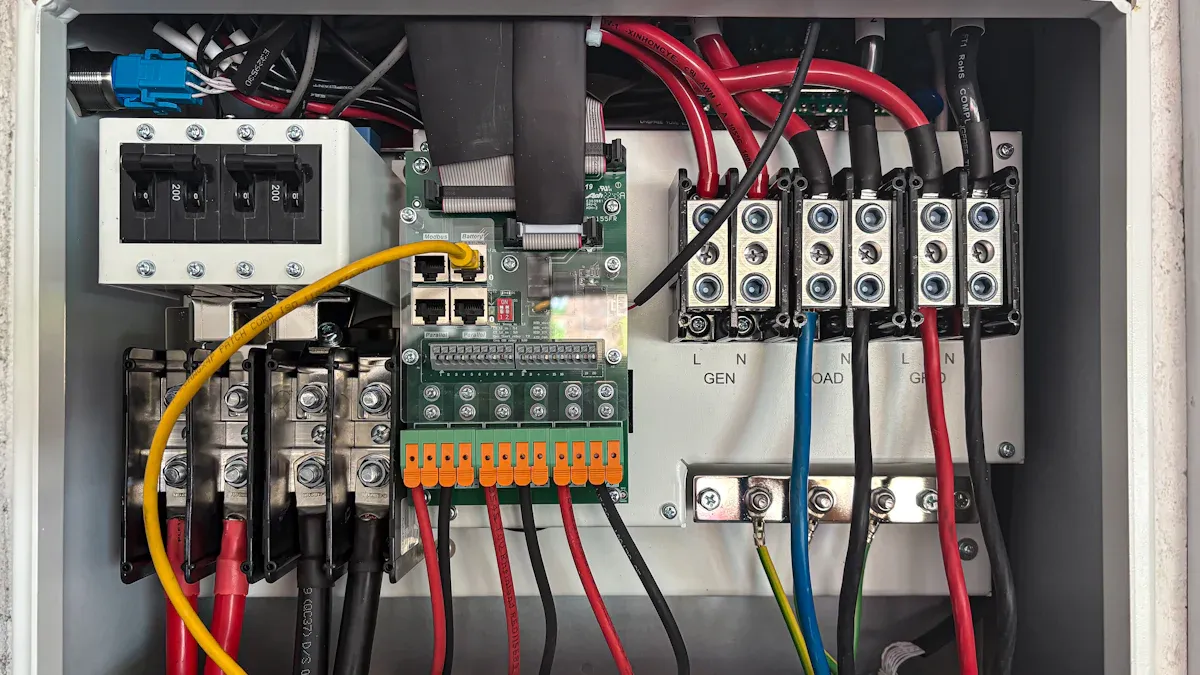
You might wonder how you can spot a bad circuit breaker before it causes bigger problems. Here are the most common symptoms you should watch for:
Frequent trips of the circuit breaker
Burning smells from the circuit breaker panel
Overheating of the circuit breaker
Visible damage such as cracks or burn marks
These signs often point to a failure in the circuit breaker. If you notice any of them, you should take action right away.
Note: There are different types of circuit breakers. In homes, you usually find standard thermal-magnetic breakers, GFCI, and AFCI breakers. Industrial settings use larger types like MCCB, ACB, and vacuum circuit breakers. This guide focuses on what you see in your house.
If your circuit breaker trips a lot, it could mean trouble. Most of the time, this happens because the circuit is overloaded. Too many devices pull power from the same line, and the circuit breaker shuts off to prevent overheating. Sometimes, a short circuit or ground fault causes the trip. These problems can lead to circuit breaker failure if not fixed.
Here are some reasons your circuit breaker might trip often:
Overloaded circuits (too many devices)
Short circuits (wires touching that shouldn't)
Ground faults (electricity taking the wrong path)
Faulty appliances
Old or aging circuit breaker panels
About 80% of trips come from overloads. The other 20% can signal a more serious failure. If your circuit breaker trips right after you reset it, leave it off and call an electrician. Resetting over and over can make the failure worse and even cause a fire.
Take a close look at your circuit breaker. Do you see cracks, chips, or melted spots? Maybe the handle feels loose or you spot burn marks. These are all signs of physical failure. When a circuit breaker has this kind of damage, it may not work right. It might not trip when it should, which puts your home at risk.
Physical damage can come from impacts, heat, or even just old age. If you see any of these problems, you should not touch the circuit breaker. Damaged breakers can fail to protect you from electric shocks or fires.
A burning smell from your circuit breaker panel is a big warning sign. This can mean wires are overheating or insulation is melting. Sometimes, loose wiring or a faulty circuit breaker causes this smell. Overloaded circuits can also make wires hot enough to burn.
A burning smell means you could have a fire risk. If you notice this, turn off the power and call a professional. Do not ignore it. Acting fast can keep your home and family safe.
Sometimes, a circuit breaker just will not reset. This can happen for a few reasons:
Electrical overloads
Short circuits
Grounding faults
Internal failure of the circuit breaker
If you try to reset the breaker and it trips right away, you may have a short circuit or ground fault. If it stays on after you unplug some devices, the problem was likely an overload. But if you see damage or the breaker trips for no clear reason, you might have a failure inside the circuit breaker itself.
Here’s a quick way to tell what’s wrong:
If the breaker trips right after you reset it, you may have a fault like a short or ground fault.
If it stays on after you unplug some things, it was probably just overloaded.
If you see damage or frequent trips with no clear cause, the circuit breaker may have a failure.
Tip: Never force a circuit breaker to reset. If it keeps tripping, leave it off and call a licensed electrician.
You might wonder how often circuit breakers fail compared to other parts of your electrical system. Here’s a quick look:
Brand | Failure Rate (%) | Notes |
|---|---|---|
Best Brands | 0 | Essentially failure free |
Worst-case Brands | 50 | Fail to open circuit at specified current |
Used Breakers | 50 | Similar failure rates as new breakers |
Most good brands rarely fail, but some can have a high failure rate. Used circuit breakers can fail just as often as new ones if they are low quality.
You will find different types of circuit breakers in homes and businesses. Here’s a simple breakdown:
Feature | Residential Circuit Breakers | Industrial Circuit Breakers |
|---|---|---|
Amperage Range | 15-200 amps | 100-6,000+ amps |
Voltage Rating | 120V-240V | 480V-15,000V+ |
Interrupting Capacity | 10,000-22,000 AIC | 25,000-200,000+ AIC |
Physical Size | 1-4 inches wide | 6-48+ inches wide |
Cost Range | $5-$150 | $500-$50,000+ |
Installation Method | Plug-in or bolt-on | Bolt-on with complex wiring |
Maintenance Requirements | Minimal (visual inspection) | Regular testing and calibration |
Arc Flash Hazard | Low (residential level) | High (requires PPE) |
In your home, you will most likely deal with standard thermal-magnetic circuit breakers, GFCI, or AFCI types. These protect you from overloads, ground faults, and arc faults. Industrial circuit breakers like MCCB, ACB, and vacuum types handle much higher power and need more maintenance.
Knowing the signs of circuit breaker failure helps you keep your home safe. If you spot any of these problems, do not try to fix them yourself. Always put safety first and call a professional.
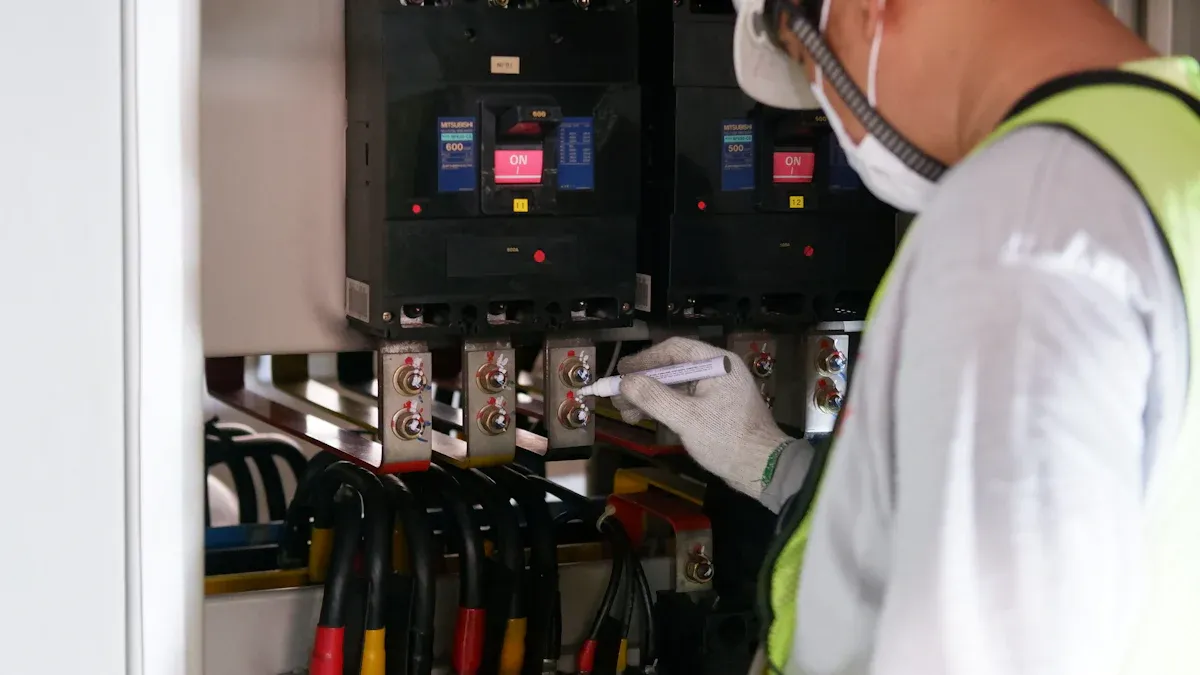
Checking your circuit breaker panel is a smart way to keep your home safe. You want to spot problems before they turn into bigger issues. This section will walk you through a safe inspection, simple troubleshooting, and the most important safety tips. Remember, you are dealing with household electricity, so always put your safety first.
Start with a careful look at your panel. You do not need to touch anything yet. Just use your eyes and nose. Here’s what you should check:
Scorch marks or discoloration around the panel, outlets, or switches
Rust, melted parts, or any visible damage on the panel or breakers
Signs of overheating, like a burning smell or flickering lights
Damaged wires or outlets near the panel
Cracks, broken seals, or corrosion on the panel or breakers
If you see discoloration around the handle or label, that usually means heat exposure. Melted plastic or burn marks can point to arcing or a severe overload event. Corrosion on the panel can weaken it and lead to electrical issues or even fires. Any of these signs can mean a failure inside the circuit breaker or the panel itself.
Tip: If you notice a burning smell, smoke, or sparks, step away from the panel and call a licensed electrician right away. These are signs of a serious fault that can lead to fire or shock.
If your visual check shows no obvious danger, you can try some basic troubleshooting. Always use caution. Household electricity is powerful, and a circuit breaker is an electrical safety device designed for your protection.
Here’s a simple step-by-step guide:
Wear insulated gloves and safety glasses. This protects you from accidental shocks.
Turn off the main breaker before you touch anything inside the panel. This cuts power to the whole house and lowers the risk of shock.
Check for loose wires or burnt marks inside the panel. Do not touch exposed wires.
Test the circuit breaker with a multimeter:
Set the multimeter to measure resistance.
Switch the breaker to the ON position.
Place the red probe on the phase connection and the black probe on the neutral.
A reading of 0 resistance means the breaker works. A reading of 0.003 ohms or higher means there may be a failure.
For voltage, set the multimeter to AC voltage (120V or 240V, depending on your breaker).
Test the input and output terminals. If you see no voltage or inconsistent readings, the breaker may have failed.
Test ground fault circuit interrupter and arc fault circuit interrupter breakers by pressing their test buttons. If they do not trip, you need a replacement.
If you find a breaker that trips often, will not reset, feels hot, or smells burnt, you are likely dealing with a failure. These problems can come from transient faults, like a short circuit or ground fault, or from long-term wear.
Note: If you are not sure how to use a multimeter or do not feel comfortable, stop and call a professional. Circuit protection is important, and mistakes can be dangerous.
Your safety comes first every time you check your panel. Here are some key tips to keep you safe:
Always wear safety glasses and insulated gloves. Some contractors use arc flash suits, but for most homeowners, basic protection is enough.
Make sure the area around the panel is dry and clear of clutter or flammable materials.
Never stand in water or touch the panel with wet hands.
Keep an escape path in mind in case something goes wrong.
Do not look directly at the panel when flipping a breaker. Shield your body to protect against arcs.
Never touch exposed conductors or wires.
Unplug or turn off all connected equipment before you work on the panel.
Label each breaker clearly so you know what it controls.
Regularly inspect your panel for signs of failure, like rust, corrosion, or overheating.
If you see burning smells, smoke, sparks, exposed wires, or frequent tripping, call a licensed electrician. These are signs of a serious fault or failure.
Remember: This guide is for electrical circuit breakers in your home, not the circuit breaker pattern used in software. Household electricity is powerful, and your panel is there for circuit protection and to stop transient faults before they cause damage.
If you ever feel unsure, do not try to fix the problem yourself. Circuit protection and electrical safety are too important to risk. Call a professional for help. Your safety and the safety of your home come first.
If you think your circuit breaker has failed, call an electrician right away. Waiting can make a small problem much worse. A bad circuit breaker can cause power surges and damage things in your house. It can even start a fire. Many house fires happen because of circuit breaker failure. If you smell burning, hear buzzing, or the breaker trips again after you reset it, do not try to fix it yourself. Electricians know how to find and fix the problem safely.
Requirement Type | Details |
|---|---|
Statewide Licensing Requirement | Pennsylvania does not require a license for the whole state. |
Local Jurisdiction Requirements | Some cities have their own special rules. |
Qualified Electrician | Must follow OSHA and NFPA safety rules. |
You can do a few things to stay safe until help comes. First, turn off all appliances that use the bad circuit breaker. Unplug anything that could make things worse. Keep water away from the panel and do not touch any wires. If you need to check the panel, wear insulated gloves and safety glasses. Make sure everyone at home knows where the main breaker is and how to turn it off if there is a problem.
Unplug things you are not using
Look at cords to see if they are damaged
Keep the area around the panel dry
Use the right bulbs for your lights
⚠️ If you see sparks, smoke, or smell burning, leave the area and call for help.
Trying to fix a circuit breaker by yourself is dangerous. You could get shocked, start a fire, or make the problem worse. Most people do not know how to fix a circuit breaker or spot hidden problems. Using the wrong tools or wires can cause even more trouble. The Electrical Safety Foundation International says electrical failures cause over 50,000 house fires every year. If you see a warning or signs of trouble, always call a professional. Your safety is the most important thing.
You can spot a bad breaker by looking for frequent trips, burn marks, or strange smells. Always put safety first and call a licensed electrician if you feel unsure.
Regular panel checks help prevent fires, lower energy costs, and keep your family safe.
Flickering lights or frayed wires mean you should act fast.
You might hear about the circuit breaker pattern when talking about safety. In your home, this pattern means using breakers to stop dangerous electrical problems before they cause damage.
The circuit breaker pattern works by cutting off power if something goes wrong. You stay safe because the breaker stops electricity from overheating wires or starting a fire in your house.
No, the circuit breaker pattern in software is different. In your house, the circuit breaker pattern protects you from electrical faults. In software, it helps manage system failures.
You can’t fix flickering lights just by using the circuit breaker pattern. The pattern helps protect your home, but you still need to find and fix the real problem with your lights.
Electricians use the circuit breaker pattern to keep homes safe. This pattern helps them spot problems early and make sure your electrical system works the right way.
Yes, every modern house uses the circuit breaker pattern. This pattern is a standard way to protect you and your family from electrical dangers at home.
If you see a breaker panel with switches that trip during problems, your house uses the circuit breaker pattern. This setup is common in most homes today.
The circuit breaker pattern helps with many issues, but not every problem. You still need to check your wiring and call an electrician if you see warning signs.
If the circuit breaker pattern fails, turn off the main power and call a professional. Don’t try to fix it yourself. Safety always comes first in these situations.
The circuit breaker pattern keeps your family safe by stopping dangerous electrical faults. You can trust this pattern to protect your home from shocks and fires.